Kagura
Kagura is a style of dance that takes place during a festival to entertain the gods. The origin of this dance can be traced back through Japanese mythology. Two styles are commonly known: Mikagura, which was exclusively performed in the Imperial Palace, and Satokagura, which was performed for the public.
Kagura (divine entertainment) is a dance that takes place during a festival to entertain the gods.
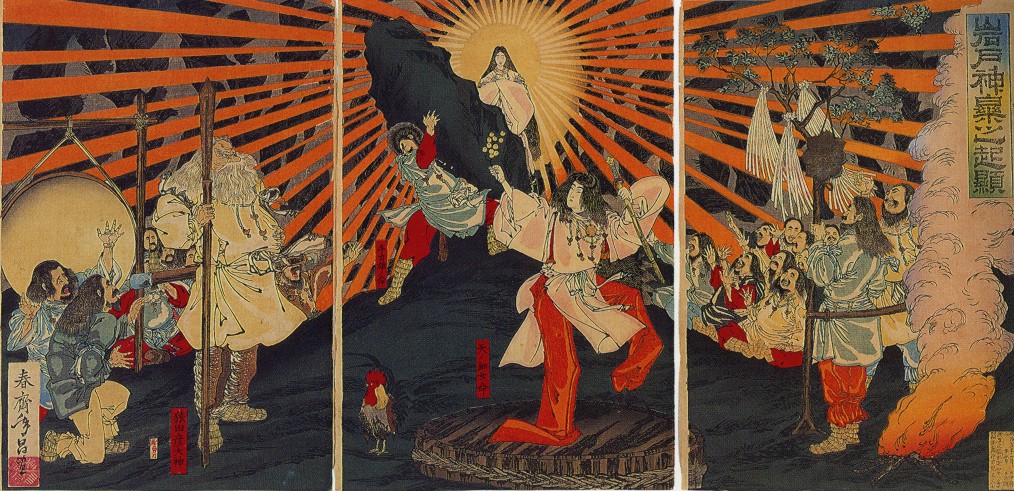
It is a Shinto ritual originally called Kamukura (divine seat). The gods were invited to sit on Kamukura as people danced with torimono (divine items) such as a stalk of sakaki-tree branch. The origin of this dance came from Ame no Uzume no Mikoto (the goddess of dawn, mirth, and revelry) performing a dance on oke (a bucket) near Amano Iwato (The Heavenly Rock Cave), purposely tearing her clothes off to lure Amaterasu Ohmikami (the goddess of the sun and the universe) out of the cave. As it made other deities laugh, this later became a ritual dance to entertain the gods. Kagura was performed in the Imperial Palace. At the same time, it was widely known and loved among the public. While Kagura has developed into many styles, two are commonly known: Mikagura, which was exclusively performed in the Imperial Palace, and Satokagura, which was performed for the public.
In the fourth year of the Choho period (year 1002), Mikagura was performed for Emperor Ichijo at Naishi-dokoro. This became an annual event and is now called Kashiko-dokoro Mikagura. Satokagura has a different style in each region. There are two very famous Satokagura: Takachiho Yokagura, which is performed from mid-November through the beginning of February, and Izumo Kagura, which tells the story of the Izumo Shinwa (Izumo mythology).
Related People, Things and Events
Books
Related Works
神楽面
Videos
Past Exhibitions
| Title | shusai | Place | open | close |
|---|---|---|---|---|
Institutions Holding Related Materials
高千穂神社境内の神楽殿では、三十三番の神楽の中から、代表的な「手力雄の舞」「鈿女の舞」「戸取の舞」「御神体の舞」の四番を毎晩奉納している。
出雲神楽の定期公演情報を掲載。