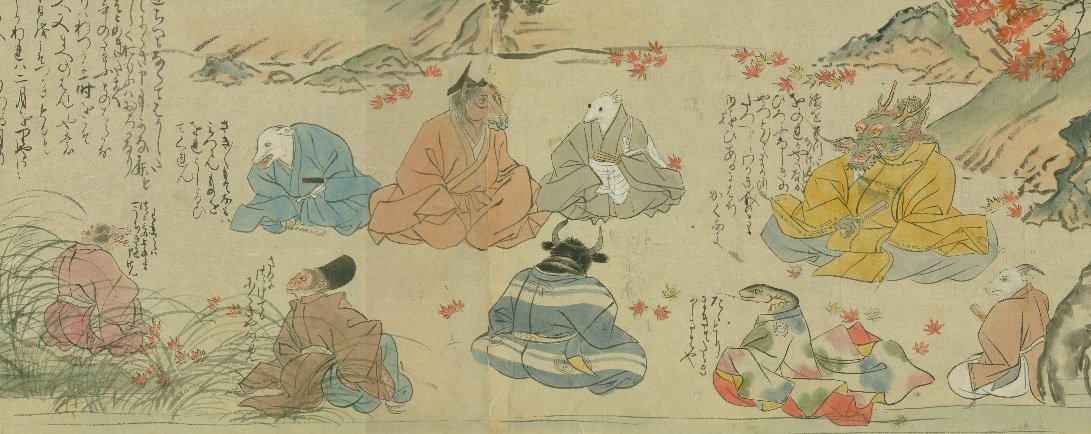
Zodiac Animals
Images of 12 Chinese zodiac animals available for your New Year's cards!
このページは、2019年11月30日に国立国会図書館が主催したイベント「ジャパンサーチ×エディタソン 新しいキュレーションを模索する」の参加者が作成したものである。
十二支とは、本来は、木星が十二年で天を一周することから、中国の天文学で毎年度における木星の位置を示すために点を十二分し、それぞれを動物の名前に当てた呼称である。日本では、ね(子)・うし(丑)・とら(寅)・う(卯)・たつ(辰)・み(巳)・うま(午)・ひつじ(未)・さる(申)・とり(酉)・いぬ(戌)・い(亥)とよむ。十二年ごとに一巡する年回りを表すほか、時刻や方角などを示すのに用いられる。
十二支の動物たち
Mice
Oxen
<p>The image of oxen pasturing among peach trees comes from the ancient Chinese Book of Documents (Shujing), where it symbolizes a ruler’s vow to live in peace without fighting. This work in the literati style indeed seems to express a vision of happy tranquility. The artist Oda Kaisen studied as a Shijō school painter under Goshun before turning to Nanga literati painting. </p>
Tigers
<p>The flowers-and-birds paintings and flowering plants paintings of Ogata Korin often display a standard or formal approach, but there also exist many examples of his work that show his humorous friendliness. Two examples are Yuima-zu (Vimalakirti) and this work. <br />A tiger sits cozily in front of a bamboo grove, glancing off to one side, like a mischievous boy. Kano Sanraku used similar motifs in his work Dragon and Tiger, but unlike Sanraku's Chinese-influenced confrontation between two strong powers, Korin's tiger is almost comical. <br />This style has been called giga, or “cartoon style.” If this were one of a pair, the counterpart dragon would certainly have been depicted with the same cute and humorous touch. The ability to paint this type of cartoon-like scene shows the freedom-of-thought of Ogata Korin.</p>
<p>本作品は『甌香譜』に掲載されなかった虎の皿です。『甌香譜』刊行直後の昭和7年(1932)第1回の寄贈で博物館に収められました。一方、パネルの『甌香譜』二十六番「明天啓赤絵虎中皿」は5年後の昭和12年第2回の寄贈で列品に加えられています(TG-1394)。<br /></p>
<p>「ヒュンベ(胸背)」は王、官吏の服に付けた紋章です。虎(豹(ひょう))は、武官が使用する胸背に許された図様です。文官と同じく正方形で、あらわされる動物の数や表現は時代によって異なります。図様における虎と豹は厳密な区別がなされていなかったようです。(130102_t105)<br /></p>
Rabbits
Dragons
<p>文様の部分だけ釉をかけ残して白磁を焼造し、上絵具(うわえのぐ)で彩る手法は、明時代中期の弘治(こうじ)(1488~1505年)、正徳(せいとく)(1506~21年)の官窯でさかんに行われた。この作品は、精良な素地、端整な器形、繊細な彫り文様などに、正徳官窯の特色がよくあらわれている。<br /></p>
Snakes
Horses
<p>「都城型」と分類される土馬で、三日月形の馬面が確認できる。馬面の両側面には、線刻で目が描かれている。体部には目立った装飾はなく、抽象化が進んだ形式的な造形と評価できる。土馬は律令祭祀で用いられる祭具の一つであり、井戸や流路などの水辺での出土数が多い。祭祀の際に土馬を意図的に破壊する事例が目立ち、本品で見られる右後脚の欠損も、奈良時代の祭祀行為により生じたと見られる。奈良時代の欠損部位は、発見後の修復で復元されている。</p>
Sheeps
<p>This tile features a sheep's head with eyes and nostrils shaped like coins, as the sheep symbolized good fortune during the Han dynasty (206 BC–8 AD). It was placed at the entrance of underground tombs to ensure a peaceful afterlife.</p>
Monkeys
<p>This haniwa, or terracotta tomb figurine, splendidly portrays a monkey in mid-movement, as if startled by a sound.<br />As both arms and the lower half of the body are missing, the figurine's original shape is a mystery. However, a large mark indicates something was attached to the back, so it is thought this monkey may have once carried a baby. If this is the case, then perhaps the monkey is turning its face to the side to look at its child. Maybe this is a depiction of a mother caring for her young.<br />The face creates a striking impression with its overhanging forehead, childlike mouth, wide, almond-shaped eyes, and upper lip extending down from the small nose. The face is still tinged with a faint redness, too. All in all, the figurine brilliantly captures the characteristics of a monkey, despite its simplified, unsophisticated shape. No other monkey-shaped haniwa have been found, so this piece is also extremely valuable for the study of diversity in haniwa.<br />This figurine is attributed to the Okisu Dainichizuka Tumulus – scallop-shaped tumulus around 40 meters in length. A horizontal stone chamber, made of a rock called mica schist, still exists at the site today.<br /></p><br /><p>Tomb sculptures depicting monkeys are extremely rare. Traces on this monkey's back suggest it once carried a baby, which is now lost. The head is slightly turned as if to check on its baby. The maker deftly portrayed the expression of this mother monkey.</p>
Roosters
<p> 折りたたんだ羽と尾羽があり、足は表現されていない。首を上方に伸ばす特徴と体部下方に張り出した鍔状突帯の存在は、あたかも水面を泳ぐ水鳥の姿を現しているようである。色調が白色であることから白鳥を表現しているのかもしれない。 <br /></p>
Dogs
<p>Puppies with floppy ears were popular when the [ukiyo-e] artist Koryusai designed this woodblock print in the late 18th century.<br /></p>
<p>Haniwa are terracotta ornaments that were placed on or around the tombs of rulers during the Kofun period.<br /><br />This cute canine is one of the most popular haniwa in our collection. It has a collar around its neck, with a round bell attached to the collar, so it must have been a domesticated animal.<br /><br />Let's take a closer look at the dog's appearance. With its tail curled up stiffly, the hound seems on edge. It is breathing roughly with tongue thrust out and sharp teeth bared. This suggests the hound is depicted here in the act of barking at prey.<br /><br />Dog-shaped haniwa have also been found with figurines of hunters or men blowing horns. This paints a picture of how people used to hunt at that time. First, someone would blow a horn to scare out prey. A dog would then give chase, with the prey finally dispatched by a hunter with bow and arrow.<br /><br />Haniwa were usually made by coiling clay cords in a rounded fashion, so most haniwa are cylindrical, with human figurines made by attaching appendages to these cylindrical forms. With animal haniwa, though, the shape is a lot more complex. So how did the ancient folk make these complicated objects? Traces of the production process are often found inside haniwa. These include gradations formed during the cord coiling stage, for example, or marks where the clay has been smoothed by hand. The inside of this haniwa was examined using a CT scan. The scan revealed that the four cylindrical supporting legs were made first. The belly area was then formed by laying clay cords over the legs, with the back, neck and head added thereafter.</p>
Pigs
<p>Haniwa are unglazed terracotta clay ornaments that adorned the tumuli of powerful figures or kings. The almond-shaped eyes, deep-slit mouth, and distinctive nose reveal this to be a boar haniwa. The ridge ranging from the top of the head to the back of the neck represents the mane. The plump neck connects to a stout back tipped with a stubby tail. The design may seem quite simple, but it fully portrays the characteristics of a boar while splendidly conveying a sense of heft. However, a glance at the rear side reveals one unusual feature. Though real boars have cloven hooves located on the front of the legs, the hooves here are represented by semi-circular holes cut diagonally into the backs of the legs. These legs are actually more reminiscent of horse-shaped haniwa. The person who made this may have attached it horse legs by accident.<br /><br />Wild boar haniwa were often placed in kofun with dog haniwa to portray a scene of hunting. Dog haniwa were also found in the same tumulus as this boar. Though this boar may look adorable, the expressions convey the tension and fear of a boar pursued by the howls of chasing hounds. This haniwa was made during the late-kofun period. At this time, tumuli were decorated with a variety of scenes, with traditional house and tool-shaped haniwa now joined by haniwa resembling humans and animals, for example. These scenes are thought to depict funerary rites or the previous lives of the deceased. </p><br /><p>The boar's features are well rendered, including its almond-shaped eyes and mane on the back. <br /></p>
<p>Clay objects in the shapes of boars were ritual implements used to pray for abundant harvests and game, easy delivery, or the birth of many children. <br /></p>