Jump to main content
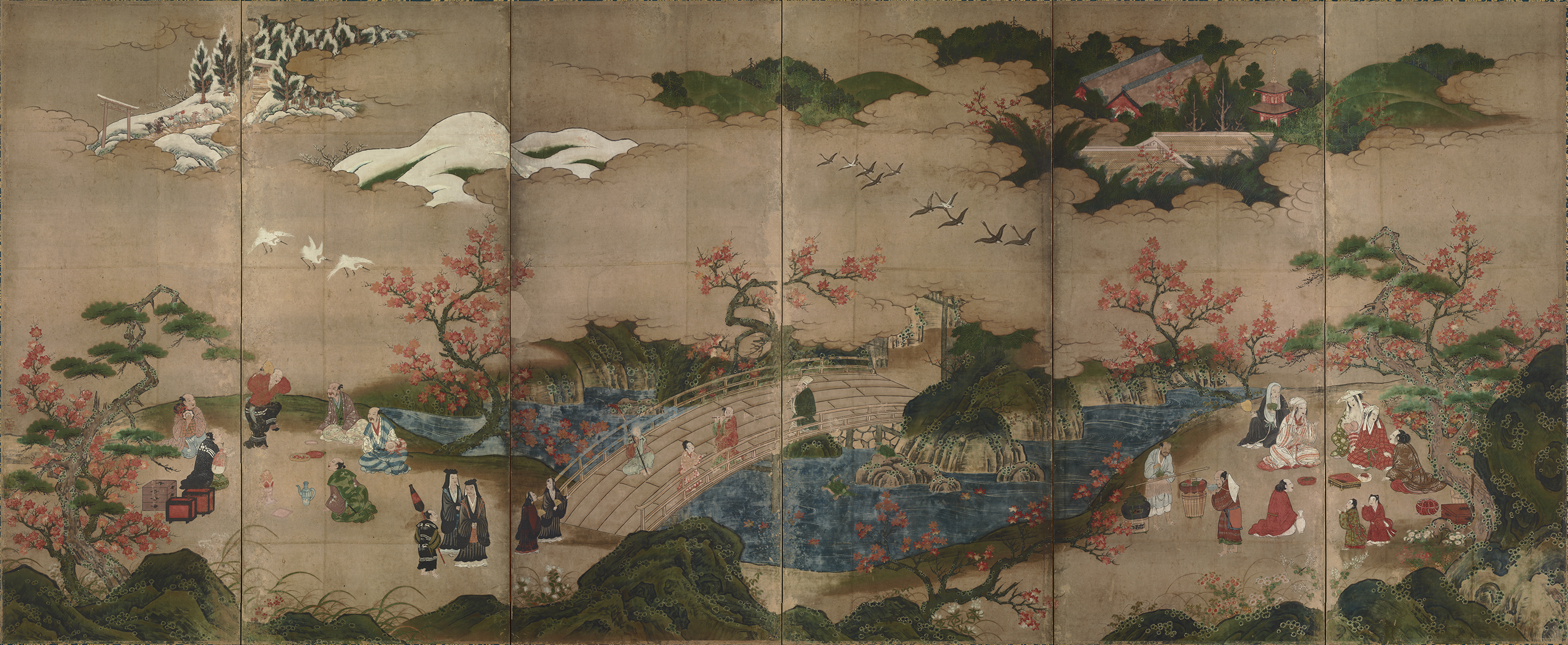
【国宝】観楓図屏風 / ColBase(東京国立博物館蔵)

Autumn in Japan

Embracing Autumn in Japan with Traditional Seasonal Words

Nowadays, most people think of autumn as the months from September through November. In the traditional classification of kigo seasonal words, however, autumn starts with risshu (around August 7) and ends on the day before ritto (around November 7). Kigo are words or phrases used to represent the seasons in haikai and haiku poems. They are based on the 24 solar periods of Japan’s traditional lunisolar calendar.

             For this reason, events such as Tanabata (Star Festival), celebrated in July in the old lunisolar calendar (August in the solar calendar), and Obon, celebrated in August in the old lunisolar calendar and in September in the solar calendar, themselves became seasonal words associated with autumn in the world of haikai poetry.

             There are also many other events and customs filled with traditional elegance and refined appeal through which Japanese people appreciate the blessings of nature, such as Jugoya, in which people celebrate the autumn harvest moon by decorating with susuki (Japanese pampas grass) and autumn flowers and plants, the Double Ninth Festival celebrated on September 9 and also known as the Chrysanthemum Festival, and Momijigari, the tradition of visiting mountainous areas, fields, Buddhist temples and Shinto Shrines to enjoy the blushing leaves of the maple trees.

             Another view traditionally associated with autumn in Japan is the rural landscape of rice fields colored in the golden hues of the ripe rice stalks. Seasonal words and expressions such as ine (rice), ine-kari (harvesting the rice), ina-zuka (sheaf of rice), and ine-no-nami (the golden waves of rice) convey the ambience of autumn as a season of bountiful harvest. Autumn rural scenes have inspired numerous poems such as:

Ine tsukete uma ga iku nari ine no naka

Horse trudging through a rice field

harvested rice stalks

on its back

—Shiki Masaoka


Ichiri ikeba ichiri fuku nari ine no arashi

Walking through the vast fields

a whirlwind through ripened rice

comes blowing

—Soseki Natsume  

Events and customs of autumn

At the Star Festival, which originated in Chinese mythology, women make wishes to improve their skills.

Obon is a Buddhist memorial ceremony for ancestors. It is held from July 13-15 on the lunar calendar, or August 13-15 on the Gregorian calendar.

A night of moon viewing and setting out food on the 15th of the lunar Eighth Month to pray for a good harvest

Also known as the Chrysanthemum Festival, this annual event of Chinese origin occurs on the 9th of the lunar Ninth Month

It is said that rice farming started around the end of Jomon era in Japan. Since the Yayoi era, it has become the foundation of agricultural culture, and is deeply connected to Japanese customs.

Foliage Viewing Figures Prominently in a Noh Piece and Other Performances

Sumo is a type of wrestling where Rikishi (wrestlers) fight each other in a dohyo (sumo ring). Sumo has a long history, going back to the Kofun era, which can be seen in Haniwa (unglazed pottery) shaped in the form of Sumo wrestlers. In the Nara era, Sumo was contested as an agricultural divination ritual in the imperial court – it reached its peak during the Edo era.

Flora of autumn

Asagao is an annual of the Convolvulaceae Morning Glory family. It was a popular flower for gardening, and exhibitions were held frequently.

A deciduous tree of the Rosaceae family, appreciated in Japan for its delicious fruit and lovely blossoms used as decorations for spring festivals

キキョウ科の多年草。秋の七草の一つ。8~9月ごろに青紫色の釣鐘形の花が咲く。家紋の「桔梗紋」は桔梗の花・葉・茎の形が図案化されたもの。本図は、葛飾北斎筆「桔梗にとんぼ」。「桔梗活けてしばらく仮の書斎哉/正岡子規」などの句に詠まれている。

This flower, abundant in Japan, appears in the crest of the imperial family and is also the national flower of Japan

ブドウ科の落葉性つる植物。初夏に黄緑色の小花が咲き、秋に房状の実が垂れ下がる。日本にはヤマブドウなどの野生種があり、栽培種としては、ヨーロッパ種とアメリカ種が主である。「黒きまで紫深き葡萄かな/正岡子規」などの句が詠まれている。

There are the Seven Herbs of Spring and the Seven Herbs of Autumn, each group consisting of seven herbs of the season

マツタケ目キシメジ科の食用キノコ。旬は10月。香り高く美味なためさまざまな料理に活用され、秋の味覚を代表する食材。栽培方法が確立されておらず、すべて天然もの。「松茸や知らぬ木の葉のへばり付く/松尾芭蕉」などの句に詠まれている。            

イネ科の多年草。別名「尾花」とも呼ばれ、十五夜のお月見に飾られる。『万葉集』中の山上憶良の歌に詠まれており、秋の七草のひとつに数えられる。「山は暮て野は黄昏の薄哉/与謝蕪村」などの句に詠まれている。

バラ科の落葉高木。日本における西洋リンゴの栽培は、明治時代に本格的に導入された。4~5月ごろに花が咲き、8~11月ごろに実を結ぶ。「もぎたての林檎手で拭きぬ子の儀式/加藤楸邨」などの句に詠まれている。

A tall deciduous tree in the family Ebenaceae, cultivated since ancient times for a variety of uses, including its edible fruit; long a part of the Japanese lifestyle

A phenomenon in which the green leaves of trees turn color; also, the crimson leaves themselves

Fauna of autumn

カマキリ科の昆虫の総称。緑色または褐色で、前脚が鎌状に曲がり、他の昆虫を捕獲する。「かまきりのゆらゆら上る芒哉/正岡子規」などの句に詠まれている。本資料は、永樂保全作「色絵月に蟷螂文茶碗」。

エンマコオロギ、ツヅレサセコオロギなど、バッタ目コオロギ科に属する昆虫の総称。雄は夏から秋にかけて鳴く。「蟋蟀が深き地中を覗き込む/山口誓子」などの句に詠まれている。本図は、初代歌川広重筆「秋海棠にこおろぎ」。

トンボ目の昆虫の総称。頭部に大きな複眼、透明の羽をもつ。日本には、オニヤンマ、イトトンボ、シオカラトンボなど約200種類が分布。「とどまればあたりにふゆる蜻蛉かな/中村汀女」などの句に詠まれている。本資料は、江戸中期の「蝶蜻蛉尽葵紋蒔絵蝶形兜」。

A migratory bird that flies to Japan in the winter, the goose has been consumed in Japan since ancient times for its delicious taste

The Japanese crested ibis is a pelican-like bird of the Ibis family. Since the Meiji era, its population has dropped sharply due to overhunting to collect its feathers. It is designated as an endangered species and special natural treasure.

A familiar game animal known for its prolificacy, depicted on paper currency in the Meiji period

The deer belongs to mammalian order of Artiodactyla. Deer are found in Japan from Hokkaido through to Okinawa, and are classified into seven regional subspecies.

The artist Mitsuoka painted this scroll of quails and autumn flowers together with his son Mitsunari. Both worked as painters for the imperial court in Kyoto.

セキレイ科に属する鳥の総称。全長20センチ前後で、水辺にすむ。長い尾を上下に振って歩く様子が尾で地面を叩いているように見えることから「石たたき」とも呼ばれる。「鶺鴒がたたいて見たる南瓜かな/小林一茶」などの句に詠まれている。本図は室町時代の作品で、狩野派の画家によるものと見られる。

Fish and shellfish of autumn

マイワシ・ウルメイワシ・カタクチイワシなどの海水魚の総称。一般的にはマイワシを指す。稚魚はしらす。日本での漁獲量が多く、日本の水産上重要な種。「鰯やく煙とおもへ軒の煤/室生犀星」などの歌に詠まれている。

スズキ目スズキ科の海水魚。貝塚などから骨が出土しているため、古代から盛んに利用されてきたと見られる。成長により名称が変わる出世魚である。「籠あけて雜魚にまじりし鱸哉/正岡子規」などの句に詠まれている。

サンマ科の魚。秋の味覚を代表する魚の一つ。太平洋北部に広く生息し、日本では北海道と東北地方海域を中心に水揚げされる。「夕空の土星に秋刀魚焼く匂ひ/川端茅舎」などの句に詠まれている。

スズキ目ハゼ亜目に属する魚類の総称。日本ではマハゼ、ハゼクチなど約150種のハゼが知られている。秋の彼岸頃に獲れるマハゼを「彼岸ハゼ」と呼ぶ。「鯊釣の小舟漕ぐなる窓の前/与謝蕪村」などの句に詠まれている。

A fish that has been an essential and familiar part of Japanese food culture since ancient times

A freshwater fish in the family Cyprinidae, popular as food and widely sought after as game fish

References

  1. 『世界大百科事典』(japanknowledge)
  2. 『日本大百科全書』(japanknowledge)
  3. 『国史大事典』(japanknowledge)
  4. 『日本の歳時記』コロナ・ブックス編集部 編,平凡社 
  5. JapanKnowledge所収コンテンツの最終アクセス日は、いずれも2021/12/20