Jump to main content
/

Shinkan: Handwritten Imperial Writings (2)

Notable handwritten imperial writings from the Nanboku-cho period through the Muromachi period

Shinkan is a term encompassing all types of handwritten writings by emperors. The diverse range of types includes diaries, records, documents (letters and other papers written by hand, in kanji or in kana characters, etc.), eiso (waka draft poems), kaishi (poetry sheets), tanzaku (poetry written on narrow strips of paper), sutra and other scripture transcriptions, postscripts to manuscripts and transcriptions, and inscriptions on paintings.

Two items written by Emperor Shomu of the Nara period (710–794) are the oldest existing examples, followed by items from Empress Koken and Emperor Junnin (one each). From the Heian period (794–1185), writings from Emperors Saga, Uda, Daigo, Gosuzaku, Goshirakawa, and Takakura have been handed down. From the Kamakura period (1185–1333) onward, there are many items from Emperor Gotoba and emperors who preceded him including Emperors Tsuchimikado, Gosaga, Gofukakusa, Kameyama, Gouda, Fushimi, Gofushimi, Goninjo, and Hanazono. A considerable number of writings have been preserved from emperors of the Nanboku-cho period (1337–1392), including dozens of items from Emperors Godaigo and Gomurakami. An extremely large collection of writings is extant from emperors of the Muromachi period (1336–1573) through the Edo period (1603–1868), starting with Emperor Gokomatsu.

Principal parts of this collection (excluding items from emperors of the Northern Court) are compiled in the Imperial Academy-edited Shinkan Eiga (“Distinguished Imperial Writings”). Shinkan writings are valuable resources for historical research in all fields, from political and economic matters to studies of religion, scholarship, literature, and art. They also serve as precious cultural properties revealing emperors’ personal histories, individual characters and dispositions, cultural literacy, and so on.

Nanboku-cho period (1337-1392)

後村上天皇(1328-1368)の「宸翰消息(部分)」。後醍醐天皇の皇子で征西将軍であった懐良(かねよし)親王宛、正平2年(1347・北朝貞和3年)9月頃の消息。当時薩摩にあった親王に上方の戦況を伝える。

長慶天皇(1343-1394)の「宸筆御願文(部分)」。北朝方との合戦に雌雄を決して勝利することを願った願文。元中2年(1385・北朝至徳2年)9月10日付。金剛峯寺蔵。

後亀山天皇(?―1424)筆。応永元年(1394)11月15日付。観心寺蔵。

後光厳天皇(1338-1374)と尊円法親王(1298-1356)の応答の消息。親王から天皇へ書かれた消息の行間に天皇が返事を書いている。このように受け取った手紙の行間に返事を書いた形式の手紙を「勘返状」という。尊円法親王は、伏見天皇の第六皇子。能書で知られ、青蓮院流の流祖。後光厳天皇も若年から親王に書を学んでいる。 

後円融天皇(1358-1393)の宸翰消息。 嘉慶元年(1387)正月に、天皇が雅楽の旋律に関して臣下に諮問した消息。後円融天皇は北朝5代の天皇で、後光厳天皇の皇子。名は緒仁。永徳二年(1382)に皇子の幹仁親王(後小松天皇)に位を譲った。

後小松天皇(1377-1433)の和歌懐紙。応永21年(141)12月19日、称光天皇(後小松天皇皇子)の即位の際に書かれたもの。「愚詠 わたりますはしめの/時と臣も南の/とのに/いて事つゝ」。

Muromachi period (1336-1573)

称光天皇(1401-1428)が自ら書写した「論語抄」の一冊。応永27年(1420)の奥書がある。

後花園天皇(1419-1470)のものと伝える色紙。上下は雲紙に金泥で草の下絵が描かれている料紙。『新古今和歌集』の和歌「あけくれは昔をのみぞしのぶぐさ葉末の露に袖ぬらしつつ」が散らし書きされている。

後土御門天皇(1442-1500)は後花園天皇の第一皇子で、母は嘉楽門院信子。名は成仁。皇位を嗣いでまもなく応仁の乱が起こり、下剋上の世相のなか、三十六年間にわたり在位した。この三首の和歌懐紙がいつ書かれたものかは定かではないが、ゆったりとしたその筆跡は天皇の穏やかな人となりをよく表す。

重要美術品。

文明13年(1481)、後土御門天皇29歳の時の宸翰著到(ちゃくとう)和歌短冊。御製(ぎょせい)各一首の短冊11枚に、侍臣7人の短冊118枚が残る。著到和歌とは、日数と人数を決め、毎日所定の場所に集まり、事前に定めておいた題によって、一人一首あて読む和歌のこと。

後柏原天皇(1464-1526)は、後土御門天皇の第一皇子。名は勝仁(かつひと)。詩歌をよくした天皇として知られる。また、能筆として名高く、その書風は後世、後柏原院流の名で呼ばれた。漢字・仮名ともに豊潤な筆使いに特徴がある。

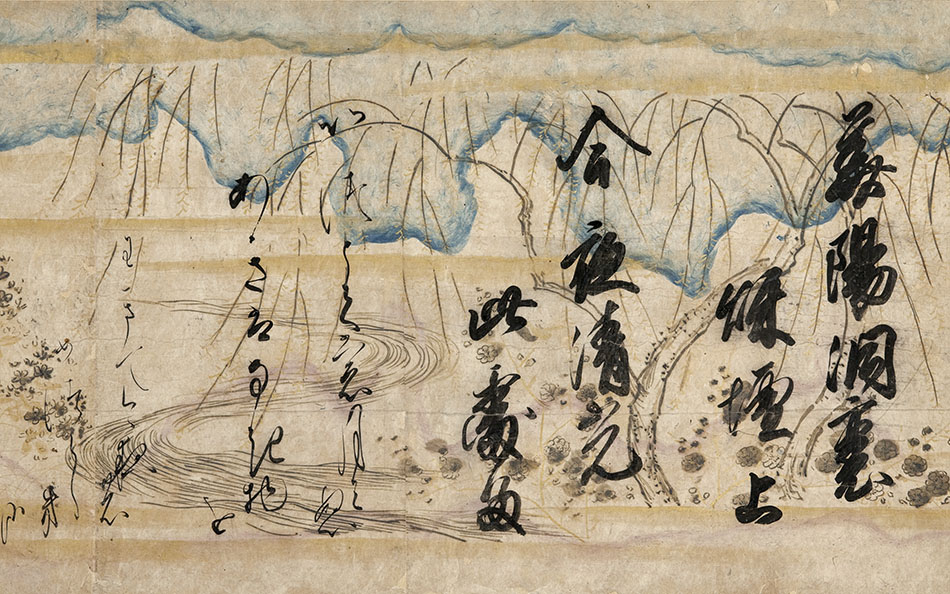
後柏原天皇の筆による唐の詩人・白居易の詩「華陽洞裏 秋壇上 今夜清光 此處多」と平安時代中期の歌人・藤原雅正の和歌「いつとても 月みぬ あきは なき物 を わきて今夜の めづらしき哉」(『後撰和歌集』)の書写。

後柏原天皇の筆による『和漢朗詠集』の書写。写されているのは『和漢朗詠集』巻下、慶賀に収められている橘正通(たちばなのまさみち)の漢詩と、作者未詳の和歌である。

後奈良天皇(1456-1557)が「暁萩」以下の題で詠んだ歌七首を記し、歌会等に先だって点者に評を求めた「詠草」。各題の一首目の歌に見える点は点者が加えたもの。点者は最初の「さらに又」の歌をとりわけ高く評価しており、「殊勝々々」という賞賛の言葉を書き加えている。後奈良天皇の歌にはしばしば父帝の後柏原天皇が点を加えており、ここに見える点も同帝のものかもしれない。

後奈良天皇が「初鶯」の題で詠んだ「山さむみ」と「けふに明て」の二首の歌のうち、最初の「山さむみ」に点がつけられている。点者はこちらの歌をよしとしたわけであるが、ただ、そこにも「うくひすも」を「うくひすの」にするなど、三カ所にわたって添削が施されている。

後奈良天皇は大永6年(1526)後柏原天皇のあとを受けて践祚したが、戦乱の世に即位式を挙行する費用がなく、10年後にようやく即位したことで知られる。無署名で歌の二行が揃って書かれているのが宸筆の短冊の特徴。

後奈良天皇の筆跡は、書流史上、後柏原院流にその名を連ねており、父帝の豊潤にしてのびやかな書風に酷似する。この短冊は、自署に「知仁」とあるところから、即位以前の親王時代の執筆と知る。歌題は別筆。

Emperor GoNara (1496-1557) was born the second prince of Emperor GoKashiwabara (1464-1526) and ascended to the throne in 1526 to become the 105th emperor of Japan. However, since constant upheavals in the capital had depleted government funds to officiate his coronation, it was ten years before he was formally enthroned. Amidst the general political developments that precipitated the decline in imperial authority, Emperor GoNara was deeply aware of his role. In 1540, he hand-copied the Heart Sutra, praying for the salvation of his subjects from the famines and epidemics of the time, and dedicated each handscroll of the manuscript to the many Ichinomiya Shrines across the nation. The academically-inclined emperor had received private tutoring in Japanese and Chinese literature from Sanjonishi Sanetaka (1455-1537) and Kiyohara Nobutaka (1475-1550), and his enthusiastic copying of the classics contributed to the revival and flourish of literary pursuits.In calligraphic history, Emperor GoNara is listed under the GoKashiwabara-In School, and his hand closely resembles the brushwork left by his father.This exhibited tanzaku, written on brown ryoshi paper richly decorated with gold mud paintings of wisteria, clouds and a pond, is a copy of Priest Jien (1155-1225)’s poem contained in the Collection of Ancient and Modern Poems (Jp: Kokin Wakashu). As such, the tanzaku is not signed, and the second line is indented, which was customary etiquette when quoting others’ works.

Emperor GoNara (1496-1557) was born the second prince of Emperor GoKashiwabara (1464-1526) and ascended to the throne in 1526 to become the 105th emperor of Japan. However, since constant upheavals in the capital had depleted government funds to officiate his coronation, it was ten years before he was formally enthroned. Amidst the general political developments that precipitated the decline in imperial authority, Emperor GoNara was deeply aware of his role. In 1540, he hand-copied the Heart Sutra, praying for the salvation of his subjects from the famines and epidemics of the time, and dedicated each handscroll of the manuscript to the many Ichinomiya Shrines across the nation. The academically-inclined emperor had received private tutoring in Japanese and Chinese literature from Sanjonishi Sanetaka (1455-1537) and Kiyohara Nobutaka (1475-1550), and his enthusiastic copying of the classics contributed to the revival and flourish of literary pursuits.In calligraphic history, Emperor GoNara is listed under the GoKashiwabara-In School, and his hand closely resembles the brushwork left by his father.

天正2年(1574)3月、正親町天皇(1516-1593)が名香として知られる蘭奢待の小片を九条稙通に下賜するにあたり、同人に宛てた散らし書きの消息。蘭奢待は織田信長の奏請によって二片を切り取ることが許され、一片は信長に下賜された(『信長公記』)。文中の「ふりょに勅封をひらかれ」には、強引ともいえる信長の要請に応じざる得なかった天皇の無念さがにじむ。二紙にわたって書かれた消息の一枚目。

二紙にわたって書かれた消息の二枚目。

天正5年(1577)8月、正親町天皇が荒廃していた近江正法寺(大津市)の再興にあたり、諸国から奉加を募るべきことを醍醐寺理性院の堯助に命じ た消息。2枚続きに書かれている。同寺は西国三十三所観音霊場の第十二番札所として古くより貴賤の信仰を集め、また「ちよくくわん所」とあるように勅願寺でもあった。「女房奉書」は、天皇に近侍する女官が天皇の意思を奉じて執筆する仮名の文書のことだが、天皇みずからが筆を執ることもあり、これを「宸翰女房奉書」と呼ぶ。

二紙にわたって書かれた消息の二枚目。文末に「りしやうゐんとのへ(理性院殿へ)」という宛名が記されている。

正親町(おおぎまち)天皇(1517~93)は、後奈良天皇の第一皇子。名は方仁(しげひと)。その流麗な書風は、父帝後奈良天皇と同じく、後柏原天皇の書の流れをくむ。戦乱の世の天皇にふさわしく、その筆跡には強いはりが感じられる。

Emperor Ogimachi (1517-93) was born the second prince of Emperor GoNara (1497-1557). In infancy, his name was Michihito but was called by the pet name “Chachimaru”. The prince’s initiation rite was celebrated in 1533, at age 17, and in 1557, he was finally enthroned. Due to the financial crisis of the imperial household, his enthronement was not celebrated until three years later (1560), when the emperor was 40 years of age. However, support from warlords Oda Nobunaga and Toyotomi Hideyoshi contributed to the restoration of imperial authority, saving the imperial household from total decline. In 1586, Emperor Ogimachi abdicated the throne to his grandson, who would later become Emperor GoYozei (1571-1617), and he died six years later, at age 77.Loyal to the tradition and teachings of his forefathers, including his grandfather Emperor GoKashiwabara (1464-1526) and his father, Emperor Ogimachi was devoted to the preservation of the arts and literature, and he left a number of poetry anthologies. His powerful, free-flowing calligraphic style is classified under the GoKashiwabara-In School. This exhibited Tanzaku is signed “Michihito”, with the brushwork showing great confidence. They were perhaps written in the prince’s 30s, before his enthronement.

Emperor Ogimachi (1517-93) was born the second prince of Emperor GoNara. In infancy, his name was Michihito but was called by the pet name “Chachimaru”. The prince’s initiation rite was celebrated in 1533, at age 17, and in 1557, he was finally enthroned. Due to the financial crisis of the imperial household, his enthronement was not celebrated until three years later (1560), when the emperor was 40 years of age. However, support from warlords Oda Nobunaga and Toyotomi Hideyoshi contributed to the restoration of imperial authority, saving the imperial household from total decline. In 1586, Emperor Ogimachi abdicated the throne to his grandson, who would later become Emperor GoYozei (1571-1617), and he died six years later, at age 77.Loyal to the tradition and teachings of his forefathers, including his grandfather Emperor GoKashiwabara and his father, Emperor Ogimachi was devoted to the preservation of the arts and literature, and he left a number of poetry anthologies. His powerful, free-flowing calligraphic style is classified under the GoKashiwabara-In School. This exhibited tanzaku is signed “Chachimaru” and was likely written when the prince was in his early teens, although the hand shows innate talent.