古墳の守り人〜埴輪が語る1500年前の暮らし〜
こんにちは。本日は当館へお越し頂きありがとうございます。是非ご覧ください!
館長あいさつ
当館では、埴輪についてご観覧頂けます。埴輪は、古墳の上に並べられた単なる飾りではありません。死者の魂を守ったり、鎮めたりすることであることと共に昔の人々の生活の様子を映し出す物でもあります。当館では、筒、船、家、動物、人物といった形のバリエーション豊かな埴輪を通じて、当時の人々の心に触れていただければ幸いです。
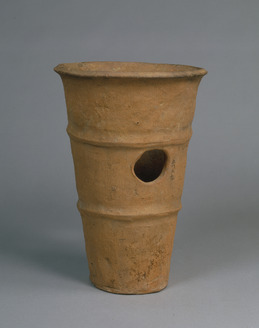
円筒埴輪
- Cylindrical Tomb Sculpture (Haniwa)
群馬県寄贈,Gift of Gunma prefecture,東京国立博物館,Tokyo National Museum
館長からの一言
埴輪と言えば、人の形をした埴輪を思い浮かべる人が多いと思いますが、実際に古墳から出土数が圧倒的に多いのは、土管のような形の円筒埴輪です。円筒埴輪は4世紀から6世紀頃の300年以上にわたり、数多くの古墳で使用されてきました。墳丘に並べることで、古墳を区画し、荘厳化する意味があったと考えられています。この展示品は、比較的新しい6世紀の円筒埴輪です。一見シンプルですが、当時の境界意識を伝える欠かせない存在として、まず最初にご紹介しました。
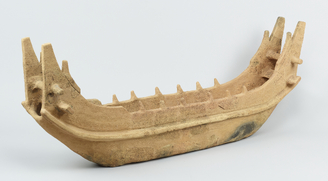
船形埴輪
- Tomb Sculpture ("Haniwa"): Boat
東京国立博物館,Tokyo National Museum
<p> This is a haniwa shaped like a boat. Haniwa are unglazed terracotta clay ornaments that adorned the kofun burial tumuli of powerful figures or kings. The sides of the boat's body have plank-like walls. These are fastened together horizontally by two pieces of lumber at the bow and two at the stern. The boat was not made by simply hollowing a block of wood. The upper section has a firm structure, so the boat looks equipped to deal with the gentle ripples of a harbor and the wild waves of the open seas.<br /> The boat has neither a mast to hoist a sail nor an engine, so it was propelled forward by rowers with oars. There are twelve protuberances around the edge, six on each side. These are the rowlocks where the oars would fit. Each rower would hold an oar by both hands and would row facing backward. That is why the rowlocks are inclined in the opposite direction to the forward-facing bow. The boat might not actually have required 12 rowers: perhaps the artisan wanted to create the impression of a boat impressive enough to require 12 rowlocks. The design seems quite simple, but it still provides a good glimpse at how boats were built back then. This boat-shaped haniwa paints a picture of oceanic exchange at the time. Perhaps it also symbolized how the soul of the tomb's occupant had embarked on a new journey.<br /></p><br /><p>This sculpture of a large boat intended for sailing on the open sea may have symbolized the departure of the soul of the tomb's occupant. The design seems quite simple, but it provides a good glimpse at how boats were built back then. </p>
館長からの一言
本展示は、船の形をしている船形埴輪という物です。主に、5世紀から6世紀頃に使用されてきました。死者をあの世へと送る乗り物とする考えがあり、1つの古墳から多く出土することは少ないです。全国ではまだ71例程しか確認されておらず、大変貴重な埴輪とされています。(2019年時点)
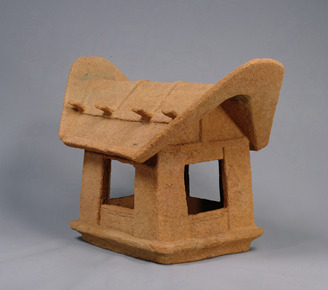
家形埴輪
- Tomb Sculpture (Haniwa): House (Ceremonial Structure)
東京国立博物館,Tokyo National Museum
<p>House-shaped tomb sculptures played a central role among others and were often placed on the ground above important sections of a tumuli. Several of them were combined probably to represent a powerful ruler's residence.</p>
こちらは、家形埴輪です。3世紀から7世紀頃に使用されてきました。家の形をしていますが、非常に屋根が大きいように見えます。このような特徴的な屋根を入母屋造りというそうです。また、家形埴輪は当時の建築の様子を伝えてくれる数少ない史料です。
動物形埴輪
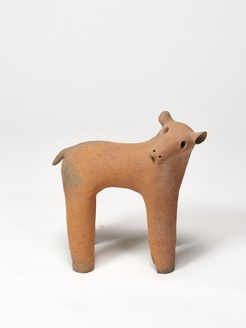
- <i>Haniwa</i> terracotta in the shape of a deer
九州国立博物館,Kyushu National Museum
<p>「埴輪 犬」として重要文化財に指定されているが、各部の特徴から鹿を表現した形象埴輪(動物埴輪)と考えられる。頭頂部を除くほぼ全身が良好に残る。焼成は良好で赤褐色を呈し、全体にハケ調整が施されている。頭部周辺は特に仕上げが丁寧で、ナデやケズリを多用して仕上げられている。目は楕円形で、鼻は2つの円孔で表現する。口は大きく開き、両端は線刻される。耳はピンと立ち、横向きである。角が付く部分が欠損して後補されており、本来角が付いていたかは不明。胴および頭部は中空で、尻尾は下方にまっすぐに伸びる。尻尾の下には透かし孔を1つ開けている。長い四脚を持ち、各脚端の踵に当たる部分は斜めに切り落とされる。群馬県佐波郡境町大字境上武士(現在の伊勢崎市)天神山古墳出土と伝わる。</p>
館長からの一言
本展示は、古くから「後ろを振り向く犬」として親しまれ、重要文化財にも登録されています。しかし近年の研究では、その特徴から「実は鹿ではないか」という説も有力視されています。 どちらに見えるか、ぜひじっくり観察して想像してみてください。
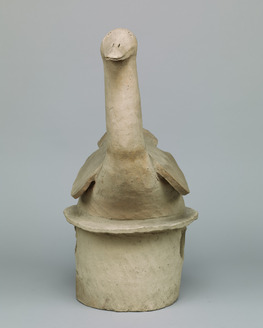
- Tomb Sculpture ("Haniwa"): Waterbird
東京国立博物館,Tokyo National Museum
<p> 折りたたんだ羽と尾羽があり、足は表現されていない。首を上方に伸ばす特徴と体部下方に張り出した鍔状突帯の存在は、あたかも水面を泳ぐ水鳥の姿を現しているようである。色調が白色であることから白鳥を表現しているのかもしれない。 <br /></p>
館長からの一言
本展示は、水鳥の埴輪です。水鳥にはその強い生命力で死者の魂を呼び戻して欲しいとの願いが込められていると考える説もあります。
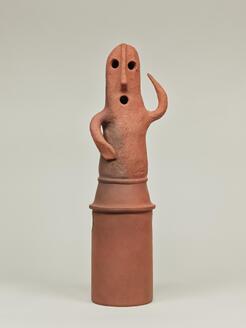
人形埴輪
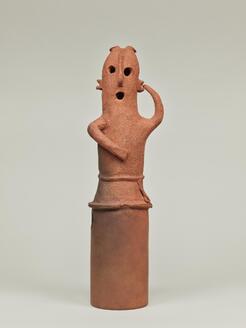
- Tomb Sculpture ("Haniwa"): Dancing Person
東京国立博物館,Tokyo National Museum
<p>These are haniwa, or terracotta tomb figurines. They stand with left arms raised and eyes and mouths wide open. These endearing expressions and striking poses have earned them the name 'Dancing People.' Haniwa were made of clay and placed on or around tumulus known as kofun. Some were placed at the top or base of the tombs, while others were positioned on the surrounding embankments. Early figurines were cylindrical. These were followed by haniwa shaped like houses, tools, weapons, armor, and boats, for example, as well as humans and animals.<br />These two human-shaped figurines are among the most popular haniwa in the Tokyo National Museum's collection, but there is still a lot we don't know about them.<br />For a start, are they male or female? <br />The smaller figurine is wearing a sickle around its waist, while its hair is tied in bunches on either side of the face. This is thought to represent a men's hairstyle known as mizura, so we know the smaller figurine is male. The larger figurine has none of these distinguishing characteristics, so we can't tell if it is male or female.<br />The next question we have to ask is, are they really dancing?<br />Human-shaped haniwa are often found grouped together. This has led some to suggest they were placed in tombs to depict the funeral ceremonies that occurred when the tomb's occupant passed away. Others suggest they depict rituals performed for the gods while the deceased was still alive. Another explanation says they recreate scenes of the deceased's triumphs during life.<br />These haniwa were excavated from the Nohara Tumulus in Kumagaya City, Saitama Prefecture. A number of figurines discovered here seem to represent humans participating in a religious ceremony. It is likely this pair also played some kind of role during a ceremony. So perhaps they danced like this during the rite? Unfortunately, there is no clear answer to this question.<br />However, haniwa striking the same poses are often found with sickles attached to the waist. Furthermore, an increasing number of similar figurines have been found next to horse-shaped haniwa. This has led some to suggest they might be representations of horse leaders or horse keepers. It is certainly easy to imagine this pair pulling the reins of a horse with their raised hands.<br />What do you think the figurines are doing?<br />Incidentally, this museum's official mascot, Tohaku-kun, is modelled on these Dancing People haniwa. </p><br /><p>In Japan, from around the 3rd to the 7th century, powerful rulers were buried in tomb mounds adorned with clay figurines. The two figurines here, though popularly known as “dancing people,” may represent individuals pulling on horses’ reins. They were likely part of a larger arrangement of figurines expressing the ruler’s authority.</p>
館長からの一言
埴輪と言えばこれ。と個人的には思います。「踊る埴輪」は、6世紀後半に制作された物で、埴輪の中でも最終形態に近いものです。それゆえに当初に造られた意味合いが薄れ、表現の退化も進んだものと思われます。埴輪 踊る人々は、埴輪としては新しい時代に制作されたもの。特徴的なポーズは、王のマツリで踊る姿とする説のほか、馬の手綱を曳く姿という説もあります。
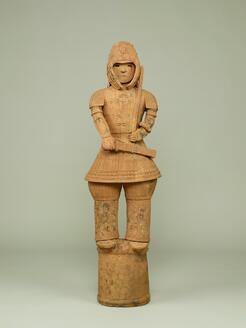
- Tomb Sculpture ("Haniwa"): Warrior in "Keikō" Armor
東京国立博物館,Tokyo National Museum
<p>A haniwa terracotta tomb figurine of a warrior, this National Treasure is the pride of the Tokyo National Museum.<br /><br />Clad in full-body Keiko armor, this dashing figure also carries a sword, a bow, and a quiver of arrows. The figurine offers us a valuable insight into the appearance of the warriors who roamed the Kanto region in the 6th century.<br /><br />Let's examine the helmet first. With its face protector and neck guard, the shape is unique to the Japanese archipelago. Small, clay studs are affixed to the helmet bowl. This is probably a faithful recreation of how the bowls were made by riveting iron plates together. It seems the armor itself also consisted of small, iron plates laced together. The armor also features a skirt-like part protecting the thigh area. Even the smallest features are faithfully rendered, such as the parts protecting the shoulders and knees, the arm and shin guards, and the shoes. The loop ties on the back show how the armor was fastened together with string.<br /><br />Let's look at the weapons now. A long, thick sword is attached to the waist and the warrior holds a bow in his left hand. The device wrapped above the left hand is probably there to protect the wrist when the warrior is drawing the bow. The quiver on his back contains five arrows with their heads pointing upwards. This warrior certainly seems fully-equipped for battle.<br /><br />Several examples of haniwa warriors with similar features have also been excavated in the vicinity of Ota City in eastern Gunma Prefecture, close to where this figurine was found. They share the same high level of craftsmanship and superlative expressiveness, thus suggesting that area was once home to a group of specialist haniwa manufacturers.</p><br /><p>This is the only human-shaped tomb sculpture, called [haniwa], that was designated as a National Treasure in Japan. Realistically rendered, it represents a fully-armed warrior. </p>
館長からの一言
本展示は、群馬県太田市飯塚町から出土した武人の埴輪です。挂甲の武人はその優れた造形などが高く評価され、なんと1974年に国宝に指定されました。
展示を見終わった人へ
本日は本館を最後までご観覧いただき、ありがとうございました。古墳の周囲の人々はそこにどのような願いを込められたのでしょうか。現代の私たちから見ると可愛らしく見える埴輪にも、深い理由があります。この展示を通じて、皆さんが埴輪のことを好きになって貰えたら幸いです。
展示関連イベントについて
『芝山はにわ祭』
開催日時:毎年11月第二日曜日(2026年は11月8日)
会場:芝山公園
主催:芝山町
概要:芝山はにわ祭は、毎年11月の第二日曜日に、町をあげて開催されるお祭りです。時空を越えて蘇る古代の祭礼や、巫女の舞、国造に仕える鎧をまとった武人らの隊列もあります。