元禄・化政文化の絵画展
館長挨拶
このページでは元禄・化政文化の浮世絵、版画を紹介しています。町人の間で流行した元禄文化と庶民の間で流行した化政文化の違いを浮世絵と版画の観点から見て紹介していこうと思います。
この展示について(展示の趣旨)
現代とは少し違う「芸術」というものを浮世絵、版画を通して皆様に紹介し、他の芸術に目をむけてもらうために作成しました。
紹介する絵を作成した年
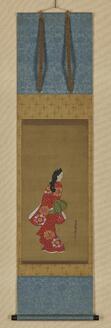
見返り美人図
- Beauty Looking Back
菱川師宣筆,By Hishikawa Moronobu (died 1694),東京国立博物館,Tokyo National Museum
<p>This ukiyo-e painting was hand-drawn by Hishikawa Moronobu. A woman in a vivid red garment has stopped to look back. We can only see the side of her face, but from this and her appearance from behind, we can still catch a good glimpse of the fashion trends of the day. She sports a trendy hairstyle, with her long hair tied in a loop at the end. The comb in her hair seems to be made of expensive tortoiseshell. She is wearing a furisode, or a garment with long, swinging sleeves. It features large chrysanthemum and cherry blossom roundels on a luxurious, glossy ground dyed in red. This was also a fashionable design at the time. These motifs were probably rendered using embroidery, gold leaf, and tie-dyed dots. Moronobu was originally a master of garment decoration using a technique that involves embroidery and the pressing of gold and silver foil. This probably explains why he was so good at depicting these kinds of intricate designs. The ends of the woman's obi belt hang low on the left and right. This fastening style was popularized by a famous contemporary actor of female roles. We don't know who this woman was modelled on, but she must have been an extremely fashionable sophisticate. Moronobu's paintings of beauties were very popular and were said to epitomize the women of Edo, as Tokyo was formerly known.</p>
館長からの一言
この浮世絵は1639年ごろに菱川師宣が描いたとされる「見返り美人図」です。菱川師宣は安房国(現在の千葉県)で七人兄弟の四男として生まれ、生まれた日は1630年頃ではないかと言われていますが正確なことはわかっていません。幼いころから絵が好きで、独学で絵を学び、文章を少なく、挿絵の大きい絵本を世に広めると大ヒットし庶民からの人気を得ました。師宣は江戸の庶民を題材とした風俗画を描いていて、他の作品としては「歌舞伎図屏風」などがあります。
一瞬振り返って見えた横顔が描かれており髪型は当時はやった玉結びと呼ばれる髪型です。着物の帯も吉弥結びと呼ばれる当時流行りのものでした。しかし、そのモデルはわかっていません。菱川師宣が描いた女性たちは「師宣の美女こそ江戸女」と称賛されるほどの人気ぶりでした。現代では1948年に5円切手の図案として採用されており、記念切手の代表的な作品の一つとなっています。この文化財を選んだ理由は、受験をした頃から資料集を通してとても美しいものだなと思い、元禄文化を象徴するいい絵だと思ったからです。
引用文献
・This is media アートをもっと好きになる美術・芸術メディア 『菱川師宣の浮世絵「見返り美人図」を解説!見どころはどこ?』https://media.thisisgallery.com/20214081 2026年2月12日参照
・鋸南町「菱川師宣記念館 菱川師宣とは」https://www.town.kyonan.chiba.jp/site/hishikawamoronobukinenkan/2460.html2026年2月14日参照
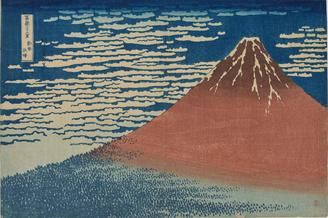
富嶽三十六景
- Mild Breeze on a Fine Day from the Series Thirty-Six Views of Mount Fuji
葛飾北斎筆,By Katsushika Hokusai (1760–1849),東京国立博物館,Tokyo National Museum
<p>This woodblock print was produced by the ukiyo-e artist Katsushika Hokusai in the late Edo period. It is one of a series of works called Thirty-Six Views of Mount Fuji. It is also one of the most famous Japanese pictures in the world.<br /><br />The “mild breeze” of the title refers to a gentle wind that blows in from the south. The foot of Mount Fuji spreads out expansively. There are no human figures and the scene focuses on the grandeur of nature. The most distinctive feature is the reddened mountain surface. Perhaps this redness is the color of Fuji's volcanic surface on a clear day, or maybe the mountain has been dyed this color by the dawn sunlight.<br /><br />This is a woodblock print, but the same block can produce different results depending on the printing technique. Some versions of Mild Breeze on a Fine Day use lighter colors for the sky and Mount Fuji. This creates a sense of the landscape changing color as the morning sun slowly rises. However, this version from Tokyo National Museum's collection uses more vivid hues for the blue sky and the red mountain. This emphasizes the sense of Mount Fuji captured on a hot, clear day. These variations enhance the enjoyment of woodblock prints.</p>
館長からの一言
富嶽三十六景は葛飾北斎が描いた木版画で全46枚あるうちの1枚です。葛飾北斎は、1760年、東京都葛飾区北斎通り付近で生まれました。本名は川村時太郎で、のちに鉄蔵と改名しました。6歳ごろから絵に強い関心を持ち始め、家業の鏡師を継がずに貸本屋の下働きになり、そこでたくさんの本を読んで学び、絵師の道を目指しました。しかし、1827年、北斎は脳卒中になり、その翌年には妻も亡くなるということが起きました。しかし、北斎は精力的に作画を開始し、1831年、富嶽三十六景を完成させました。のちに10枚追加され、46枚になりました。ところで、葛飾北斎の「葛飾」の部分は、生まれた場所が武蔵国葛飾郡だったことから名乗ったと言われています。
この絵は赤色で描かれている富士山、「赤富士」が印象に残っている方も多いと思いますが、この絵は元々白色で版元と呼ばれる現代の出版社の立ち位置にいる人達が赤色の方が売れるのではないか、と指図したことにより赤くなったという説もあります。なおこの絵は、静岡県側から描いたのか、山梨県側から描いたのかわかっていません。版画なので、もっと赤いものもあれば、もっと淡い色のものも存在するなど 1枚 1枚違った雰囲気が味わえます。この絵を選んだ理由は、富士山は青いものに白の雪というイメージとは違いとても印象に残っていたからです。
引用文献
北斎先生! ぼくらの知っている葛飾北斎は氷山の一角にすぎない「第6回 赤富士は赤くないんです」https://www.1101.com/hokusai/2005-10-28.html2026年2月12日参照
刀剣ワールド 「浮世絵師葛飾北斎の生涯」https://www.touken-world-ukiyoe.jp/ukiyoe-artist/katsushika-hokusai/2026年2月14日参照
墨田北斎美術館 「北斎について」https://hokusai-museum.jp/modules/Page/pages/view/4012026年2月14日参照
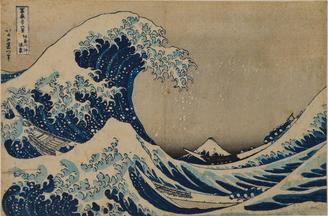
- Thirty-six Views of Mount Fuji: The Great Wave Off the Coast of Kanagawa
葛飾北斎筆,By Katsushika Hokusai (1760-1849),東京国立博物館,Tokyo National Museum
<p>[The Great Wave] is the most iconic and well-known print of Hokusai's [Thirty-six Views of Mount Fuji]. <br /></p><br /><p>This woodblock print was designed by the ukiyo-e artist Katsushika Hokusai in the latter half of the Edo period, which lasted from 1603 to 1868. It is one of a series of works called 'Thirty-six Views of Mount Fuji.' It is probably the most famous Japanese artwork in the world and Hokusai was included in the United States' Life Magazine's '100 People in the World who Left the Most Important Achievements in the Past 1,000 Years.'<br /><br />With Mount Fuji in the background, a huge wave unfurls against a dark sky that hints of an approaching storm. Boats with many oarsmen are swept up in the waves. In real life, boats like this wouldn't stand a chance in waves this big. The artist has probably eschewed realism in favor of a more exaggerated, dramatic representation. The contrast between the violent dynamism of the waves and the calm, triangular shape of distant Fuji give perspective to this work.<br /><br />This print and other early works in the Thirty-six Views of Mount Fuji series often feature 'Berlin Blue,' a pigment that was introduced to Japan from Europe during this time. As such, these works speak volumes about Hokusai's interest in the latest things of the time.<br /></p>
館長からの一言
この絵も上の絵と等しく富嶽三十六景の 1枚です。富嶽三十六景は、元々ちゃんと36枚で終わらせようとしていましたが、絶大な人気で、予定から10枚増えた46枚となっています。北斎はこの絵を4枚の版木で8回の刷りを経て、たった6色のみを使ってこの景色を表しています。中央右にある船は押送船(おしおくりぶね)といい、新鮮な魚を江戸に届けるために作られた、スピード重視の小型舟です。なので、船はその分揺れ、船員も必死にしがみついているようにも見えます。この絵はタイトル通り神奈川県の風景をイメージして描かれたものです。なので富士山もより遠くに見えるように富士山の左右が濃い色になっています。この絵を選んだ理由は、やっぱり葛飾北斎の絵といえばこの大波と富士山だと思い、このページを作るにあたって外せない絵だなと思ったからです。
引用文献
もっと知りたい。浮世絵の「今」と「むかし」北斎今昔 『アーカイブ:数字でわかる北斎「神奈川沖浪裏」の世界的評価とその魅力』https://www.adachi-hanga.com/hokusai/page/know_432026年2月12日参照
東海道五十三次
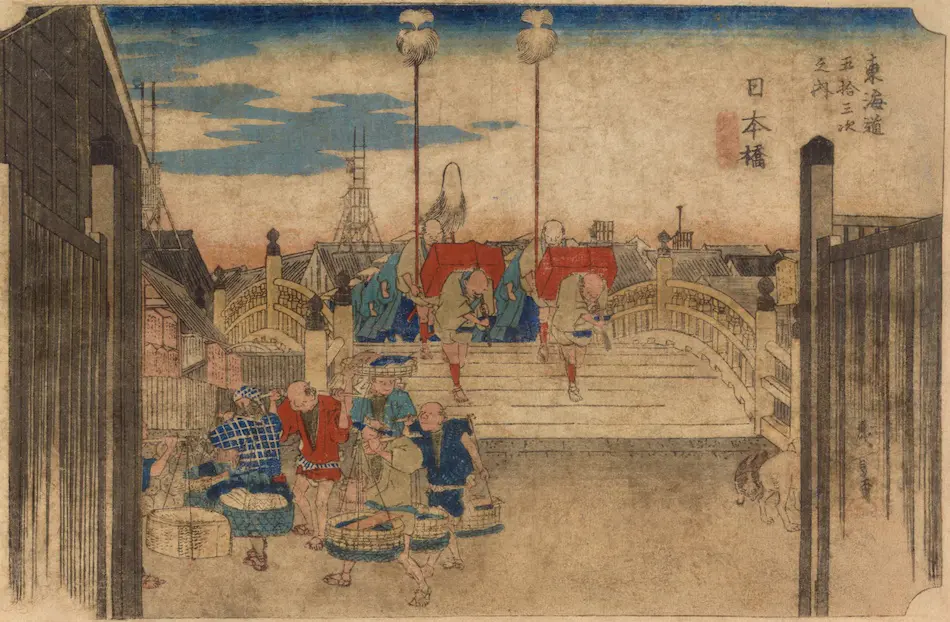
- Fifty-three Stations on the Tokaido: Morning Scene at Nihonbashi Bridge
歌川広重,Utagawa Hiroshige
現在の東京都中央区にあたる。東海道の起点・日本橋の朝の景色。朝焼けを背に大名行列が橋を渡り始める様子が窺える。先箱持ちを先頭に毛槍と続き、陣笠の従士たちが整然と列をなしている。手前には魚河岸から帰った魚屋や野菜売り、犬の姿を見ることができる。左右に開いた大木戸の間から覗くような視点が面白く、大木戸の縦格子と毛槍の縦のラインと橋の板目の横のラインが画面に一定のリズムを与え、堅固な構図を作り上げている。
館長からの一言
この絵を描いた歌川広重は1797年江戸城の馬場先門の近くの八代洲河岸にあった定火消の屋敷で生まれました。幼名は徳太郎で鉄蔵、重右衛門、徳兵衛と改名しました。安藤広重と呼ばれることもありますが、本人はこの名前を使用したことはありません。祖父は、田中徳右衛門という津軽藩の弓術師範です。広重は幼少期の頃から絵に関心を持っていましたが、発表作はありませんでした。13歳の時に父母を亡くし、父を継いで役人の道を歩み始めました。しかし絵の道を諦めたわけではなく、浮世絵師歌川豊国の弟弟子の歌川豊広に入門を申し込みますが、断られ、諦めずに求めると豊寛も入門を許したといいます。豊広の広の字と地震の重右衛門の名を合わせて広重と名乗ったと言われています。
東海道五十三次という江戸時代の東海道上にある宿場と始点終点の55地点を絵にしたのが東海道五十三次です。下に東海道上の宿場の地図を載せているので、気になる人はみてください。この絵はその中で 1番目の絵として知られています。橋の上で歩いているのは大名行列、左下方向にいるのは魚屋です。日本橋は魚河岸があり、商いが盛んでした。右上にはタイトルが刻まれており、朝之景の部分は赤いハンコで書かれています。この絵を選んだ理由はこの絵には景色の他に大きく大勢の人物が描かれており、とても興味を持ったからです。
引用文献
知足博物館「東海道五十三次 日本橋 朝之景」https://chisoku.jp/tokaido/00_nihombashi/2026年2月13日参照
刀剣ワールド 「浮世絵師歌川広重の生涯」https://www.touken-world-ukiyoe.jp/ukiyoe-artist/utagawa-hiroshige/2026年2月14日参照
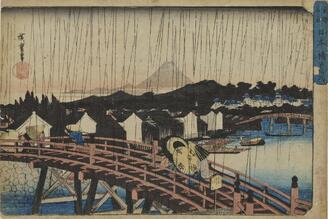
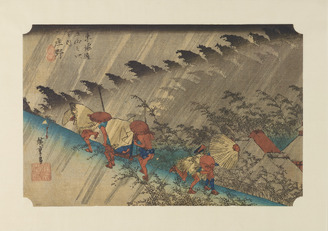
- Sunshower at Shōno from the Series Fifty-Three Stations of the Tōkaidō Road
歌川広重筆,By Utagawa Hiroshige (1797–1858),東京国立博物館,Tokyo National Museum
Hiroshige created many works about the Tokaido Highway, a major road linking Tokyo and Kyoto. His most popular series on this theme was the Hoeido edition of Fifty-three Stages of the Tokaido Highway, published by Takenouchi Magohachi and Tsuruya Kiemon. This print, which includes the subtitle “rain shower,” is one of the best works from that series. The rain falling through gradated shades of gray and black is particularly impressive.(20140225_h102)イタリック:Fifty-three Stages of the Tokaido Highway
館長からの一言
この絵も上と同じ東海道五十三次の 1枚です。庄野とは三重県の地名で、この絵では突然の激しい雨で慌てて走っている様子が描かれています。白雨とは夕立を意味する言葉です。よほど強い雨なのか奥の林はとても揺れているように見えます。山道なので、斜めの線が基調となっています。よく見ると傘には「竹のうち」「五十三次」と描かれています。この作品を選んだ理由は、東海道五十三次の中でもあまり天候がよくないものはあまり少なく、とても印象に残っていたからです。
引用文献
町田市立国際版画美術館「『東海道五十三次』庄野 白雨」https://hanga-museum.jp/collectionimage/list0042026年2月13日参照
展示を見終わった人へ
5つの展示を見てどう思ったでしょうか。ぼくは元禄の華やかな絵と、化政の美しい風景画を見て、文化の違いによって雰囲気が大きく変わることに感動しました。皆さんもこれらの文化や他の文化に少しでも興味関心を持っていただけるととても嬉しいです。
これらの展示に関連するイベント
富嶽三十六景…国立西洋美術館「北斎 冨嶽三十六景 井内コレクションより」2026年3月28日〜6月14日https://www.nmwa.go.jp/jp/exhibitions/2026hokusai.html
東海道五十三次…太田記念美術館「浮世絵おじさんフェスティバル」2026年 1月6日〜3月1日https://www.ukiyoe-ota-muse.jp/ukiyo-e-ojisan-festival/