縄文土偶
〜館長から挨拶〜
本日は「the土偶博物館」をご観覧いただきありがとうございます。
この展示では縄文人の個性豊かな文化や人々の祈りを展示しています。
なので、縄文人の想像力の世界を感じ取ってみてください。
〜展示について〜
この展示では、有名な土偶を集め、それを紹介していきます。
遮光器土偶、みみずく土偶、中空土偶などの模様や形についてそれぞれ特徴があります。
さらに、土偶は女性をイメージして作ったものが多く、安産や豊作などを願うために作られました。
この展示を通して縄文人の暮らしや生活などを想像してみてください。
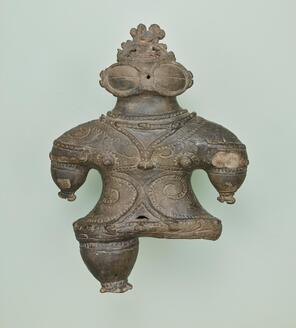
- Figurine ("Dogū") with Goggle-Like Eyes
東京国立博物館,Tokyo National Museum
This figurine, called [dogū], is one of the most famous of its kind in Japan. Its notable features are the large, goggle-like eyes, contorted body, and intricate patterns on the body.This dogu clay figurine was made during the Jomon period. It is one of the most famous dogu figurines in Japan. It was found during the Meiji era and named the 'Dogu with Goggle-shaped Eyes' because its eyes resemble goggles worn to protect the eyes from the glare of snow. However, this is now believed to be just an exaggerated depiction of the eyes. The ears, nose, and mouth are quite small compared to the large eyes. Furthermore, stubby legs and arms are attached to a broad-shouldered torso with a narrow waist. A closer inspection reveals traces of red coloring around the head and so on. It is assumed the entire surface was originally painted red.Dogu figurines are also valuable sources of information about contemporary Jomon fashions. For example, it is thought the crown-shaped projection on the head shows how women wore their hair tied up with a comb attached. The adornments around the neck are also said to represent necklaces and chest ornaments. The enjoyment of this dogu figurine is enhanced by trying to imagine how the Jomon folk used to dress.Dogu figurines emerged during the Incipient Jomon period and they always depicted women. This is apparently because women created and nurtured life, with the figurines subsequently used in rituals to pray for safe births, prosperous descendants, and bounteous harvests.
〜館長から一言〜
日本で最も有名な土偶の一つ。極端に大きな目の表現が遮光器(スノーゴーグル)に似ていたことから遮光器土偶と呼ばれています。デフォルメされた体の表現とともに、全身に覆うように施された文様が特徴的です。これは縄文時代に土でつくられた人形(ひとがた)の土偶です。現在では、遮光器をつけているのではなく、目を誇張した表現だと考えられています。大きな目とは対照的に、耳、鼻、口は小さく表されています。また、両肩の張りや、腰のくびれが誇張された胴体には、短い手足がついています。当時の人々のファッションを知る材料として土偶の姿が参考にされることもあります。頭にある冠のような装飾は、当時の女性が髪を結った様子やかんざしを表したと考えられています。また、首の周りの装飾は、首飾りや胸飾りを表現したといわれています。この土偶は女性が命を産みはぐくむことに由来し、安産、豊かな自然の恵みなどを祈る際に使われたためと考えられています。
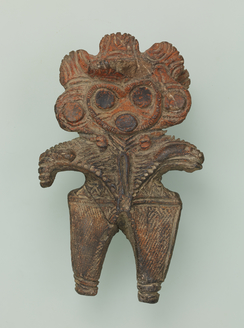
- Clay Figurine ("Dogū") with an Owl-Like Face
東京国立博物館,Tokyo National Museum
This dogū clay figurine was made during the Jōmon period, which lasted from around 11,000 BC to the 5th century BC. Dogū depict women and it is thought they were used to pray for a safe birth, the prosperity of one's descendants, or rich harvests. This dogū's large head and thin body prevent it from standing upright, so perhaps it was meant to be held in the hand or placed in something.The name of this dogū derives from its resemblance to a horned owl. The face is fringed by a heart, with the round eyes and mouth represented by thin pasted clay discs. The large protuberances on the head represent a comb and tied-up hair. There are also clay discs pasted onto the large ears. These portray oversized earrings inserted into holes in the ear lobes. Horned owl dogū proliferated in Japan's Tōhoku region from the latter half of the Late Jōmon period to the early half of the Final Jōmon period. A number of clay round earrings have also been found in this area. They come in a variety of sizes, some small and others up to 10 centimeters in diameter, but all were inserted into the ear, just like with this dōgu. In this way, dōgu figurines help us to envisage which fashions and hairstyles were popular back then.
〜館長から一言〜
極端にデフォルメされた顔の表現が鳥のみみずくに似ていたことから、「みみずく土偶」と呼ばれています。耳には丸い耳飾りをつけ、頭部の突起は結った髪型や櫛をさしている状態を表すと考えられている。土偶の身体表現は縄文時代の風俗をうかがう一材料となっている。この土偶も遮光器土偶と同じ人形(ひとがた)の土偶です。土偶は女性をあらわし、安産や豊かな自然の恵みを得ることを願って使われたと考えられています。この土偶は大きな頭の部分に対して身体は薄く作られ、自分では立つことができません。おそらく、手に持つか、何かに立てかけて使われていたのでしょう。 顔はハート型にふちどられ、丸い目と口は薄い粘土をはりつけてあらわされています。頭の大きな突起は、結った髪や、櫛(くし)を表しています。大きな耳にも、粘土で丸くピアスを表現しています。このみみずく土偶は、縄文時代後期の後半から晩期の前半にかけての関東地方で、いくつか見つかっています。同じ地域からは、土で作られた丸い耳飾りも数多く発見されています。小さなものから直径が10センチくらいある大きなものまで見つかっています。このように、土偶は当時の人々の流行のファッションや髪型を想像する手がかりにもなるのです。
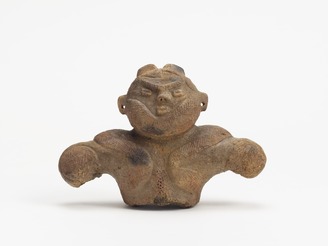
- Hollow clay figurine
九州国立博物館,Kyushu National Museum
This clay figurine is of a type mostly found in the Tōhoku region in the Late Jōmon period (about 1500–1000 BCE). Commonly seen on clay objects from this period, the lumps of clay that form the chest, as well as the sash-like erased cord markings, have been skillfully applied to this work. These erased cord markings, called surikeshi jōmon, are a decorative pattern identified by the incised lines dividing the cord-marked parts from other places where the cord marks have been smoothed away.The hollowing technique used to create this artifact and another from the Chobonaino site in Hokkaido (a National Treasure currently owned by the Hakodate City Board of Education) was also utilized to enlarge figurines during the same period. A rectangular vent at the back of its head prevented breakage during the firing process. X-ray CT scans have revealed a different, circular hole just below this opening that has been plugged up with clay. Initially, this circular hole may have been created as a gas vent, then later plugged up when it was decided to make the larger, rectangular vent in the figurine.
〜館長から一言〜
中空土偶は別名「カックウ」と呼ばれています。
縄文時代後期の東北地方を中心に分布する土偶です。乳房の貼瘤や襷状の磨消縄文は同時期の土器に見られる文様で、その表現を上手く取り入れて製作されています。この時期の土偶は、本品や中空土偶のように土器製作技術を用いて中空に作られ、大型化するものがある。また、本品の後頭部には焼成時の破損防止のため、横長の長方形の孔が穿たれている。
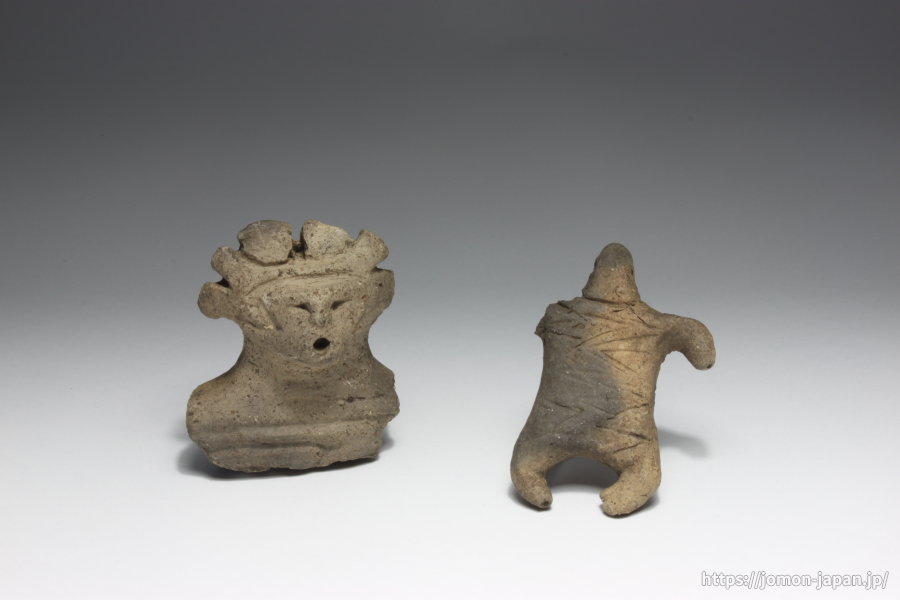
- Takasago Burial Site: Clay figurines
〜館長から一言〜
この土偶は少し小型で、外見がシンプルなことが特徴的です。
ですが、縄文人が祈りの意味を込めて作ったと考えられている。
- 山形土偶
東京国立博物館
〜館長から一言〜
この土偶も女性をイメージして作られていて、胸やお腹が強調されています。
さらに、体の模様が細かいのも特徴的で、他の山形土偶も調べてみたが、だいたいが同じような模様だった。

〜展示を見終わった人へ〜
この展示でそれぞれの土偶についている模様や形の意味や、縄文人の暮らし、ファッションについて考えたり、想像したりし、どのような思い出土偶を作ったのかなどの理解が深まれば幸いです。
この展示をご観覧いただきありがとうございました。
〜この展示に関するイベント〜
・土偶づくり体験ワークショップ
・縄文ファッション考えよう講座