Description
This clay figurine is of a type mostly found in the Tōhoku region in the Late Jōmon period (about 1500–1000 BCE). Commonly seen on clay objects from this period, the lumps of clay that form the chest, as well as the sash-like erased cord markings, have been skillfully applied to this work. These erased cord markings, called <i>surikeshi jōmon</i>, are a decorative pattern identified by the incised lines dividing the cord-marked parts from other places where the cord marks have been smoothed away.
The hollowing technique used to create this artifact and another from the Chobonaino site in Hokkaido (a National Treasure currently owned by the Hakodate City Board of Education) was also utilized to enlarge figurines during the same period. A rectangular vent at the back of its head prevented breakage during the firing process. X-ray CT scans have revealed a different, circular hole just below this opening that has been plugged up with clay. Initially, this circular hole may have been created as a gas vent, then later plugged up when it was decided to make the larger, rectangular vent in the figurine.
Data source
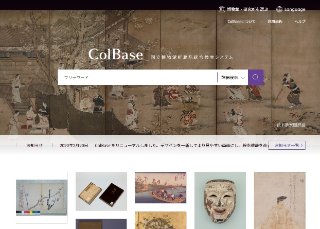
ColBase
"ColBase: Integrated Collections Database of the National Institutes for Cultural Heritage, Japan" is a service that enables a multi-database search of the collections in the four national museums (To...
Contents holder/Provider
Aggregator

National Institutes for Cultural Heritage
The National Institutes for Cultural Heritage (NICH) comprise four National Museums (Tokyo National Museum, Kyoto National Museum, Nara National Museum, and Kyushu National Museum) and two National Research Institutes for Cultural Properties (Tokyo National Research Institute for Cultural Properties, and Nara National Research Institute for Cultural Properties), as well as the International Research Centre for Intangible Cultural Heritage in the Asia-Pacific Region (IRCI) in Sakai City, for a total of seven institutions.
Last updated
July 20, 2026