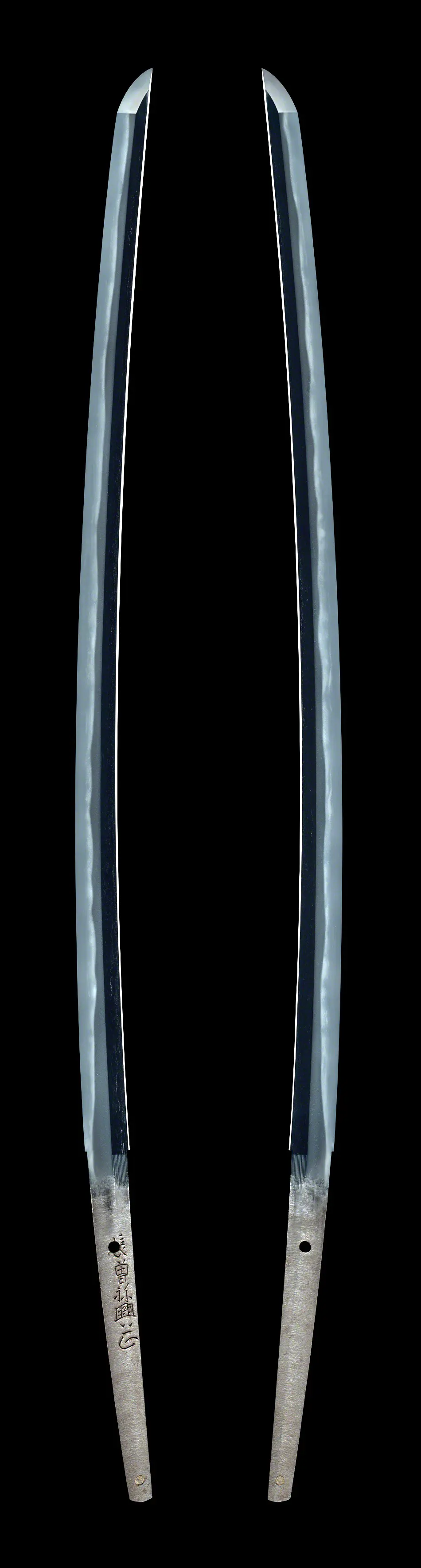
日本の刀
日本の刀の構造、種類について知る。
館長挨拶
元々刀が好きだったので興味を持ち、このタイミングで刀に詳しくなろうと思い調べました。
日本の刀の技術、歴史、用途、製造方法、種類をまとめました。日本刀の素晴らしさを皆さんに知って欲しくて作ったのでぜひ最後まで見ていってください!
1、日本刀の分類
日本刀は時代や用途によって「長さ」と「身に付け方」で主に4つに分類されます。
この分類は、主に刀の長さと身に付け方に注目して整理しました。
太刀(たち)平安〜鎌倉時代。刃を下にして腰に吊るします(佩く)。
長さ:二尺以上(約60.6cm以上)
打刀(うちがたな)室町〜江戸時代。刃を上にして帯に差します。いわゆる「刀」です。
長さ:二尺以上(約60.6cm以上)
脇差(わきざし)護身用や室内用で刀とセットで「二本差し」にします。
長さ:一尺以上二尺未満(約30.3cm以上 60.6cm未満)
短刀(たんとう)護身用や近接戦用で鍔(つば)がないものは「合口」と呼びます。
長さ:一尺未満(約30.3cm以下)
このように長さと身に付け方で整理すると、日本刀の違いが分かりやすいとおもいます。
2、日本刀の基本構造と名称
日本刀は大きく分けて、刀本体である「刀身(とうしん)」と、それを収める外装の「拵(こしらえ)」で構成されます。
よく言われる代表的な部分を中心にまとめました。
切先(きっさき): 先端部分です。
刃文(はもん): 焼き入れによって現れる、刃先の白い模様のことです。
鎬(しのぎ): 刃と棟(背)の間にある、縦に走る高い筋です。
地鉄(じがね): 刃文以外の鉄の肌で折り返し鍛錬による模様が出ます。
茎(なかご): 柄に収まる部分でここに作者の名前(銘)が刻まれます。名前が刻まれていないものを無銘と言います。
実際の写真と一緒に名前を見ると印象づくと思います。
3. 日本刀の歴史区分
日本刀はその製作時期によって、呼び名が変わります。
上古刀(じょうことう): 平安時代中期以前のもので、反りのない「直刀」が主流でした。
古刀(ことう): 平安中期〜慶長(1596年)のもので、地域ごとの個性が強いです。
新刀(しんとう): 安土桃山〜江戸中期のもので鉄が均質化し、華やかな刃文が多いのが特徴です。
新々刀(しんしんとう): 江戸後期のもので、古刀への回帰を目指した力強い作風です。
現代刀(げんだいとう): 明治以降〜現在の美術品としての製作が中心です。
この後日本の刀をたくさん紹介していこうと思うので、それを見て違いを楽しんでください!
様々な刀
- "Tachi" Sword, Known as “Dojikiri Yasutsuna”
伯耆安綱,By Yasutsuna,東京国立博物館,Tokyo National Museum
<p>Legend tells of how the warrior Minamoto no Raiko slayed a man-eating demon with this blade. Myths aside, it was without a doubt wielded by a number of famous generals.<br /></p>
平安時代を代表する刀工が作った刀が徳川将軍家に伝来しているのはロマンを感じる。
- Blade for a Long Sword (Tachi), Named “Koryū Kagemitsu”
長船景光,By Kagemitsu,東京国立博物館,Tokyo National Museum
<p>A prominent work of Kagemitsu, a member of the Osafune school in present-day Okayama prefecture, this sword features a texture and temper pattern of exceptional brilliance.<br /></p><br /><p>The tang of a sword is the blunt, narrow part around which the hilt, or grip, is fitted. When the sword is stored away, the tang is fitted into a hilt and the sword is sheathed in a scabbard. The upper section of this sword's tang features relief images of a dragon entwined around a sword on one side and a Sanskrit character on the other. The dragon is a depiction of Kurikara Ryuo, the dragon form of Fudo Myoo, or Acalanatha in Sanskrit, with the Sanskrit character also representing the Buddhist deity. Fudo Myoo was believed to burn away all hindrances and problems, so he was often engraved on Japanese swords. The length of this sword was shortened as it passed down from owner to owner, so when the tang is fitted into the hilt, the dragon is partially concealed and appears quite small. For this reason, the sword is known as “Koryu Kagemitsu.” “Koryu” means “small dragon” in Japanese, while “Kagemitsu” refers to the sword's creator. Kagemitsu belonged to the Osafune school of swordsmiths and he was active in the first half of the 14th century in the southern part of modern-day Okayama prefecture. This sword is renowned as one of his representative works.<br /><br />The metal surfaces of Japanese swords have wood grain patterns that resemble the rings of a tree. The extremely-fine pattern on this sword appears black and it contrasts with the whiteness of the blade edge. A gleaming temper pattern conveys a sense of tension as it sits between these two extremes. As the accompanying diagram shows, the temper pattern features small semi-circles that all incline in the same direction. This is a common trait of swords made by Kagemitsu and his pupils.</p>
刀剣に緻密な倶利伽羅龍の彫刻を備えた、備前長船派を代表する洗練された一振りです。
- Katana: Signed ‘Bizen-no-Kuni Ju Osafune Katsumitsu’ / ‘Eisho Juni-nen Ni-gatsu Kichijitsu’ (February 1515)
勝光,Katsumitsu
本作は、庵棟(いおりむね)、身幅(みはば)と重(かさ)ねは尋常、反り頃合い、中鋒(ちゅうきっさき)で、腰反(こしぞ)り、茎(なかご)は寸詰まりの典型的な末古刀(すえことう)姿を示しており、鍛えは、杢目(もくめ)肌が詰み、処々板目(いため)肌が流れ、刃文は直刃調、刃縁(はべり)締まりごころで小沸(こにえ)つき、ところどころほつれて、鎺元(はばきもと)にしたがいわずかに小さく乱れる。帽子は直ぐに先尖(さきとが)りごころに小丸(こまる)。彫刻は表裏とも丸止めの棒樋(ぼうひ)、加えて添樋(そえび)がある。茎(なかご)には、表裏に作者と年紀銘がある。俗銘は切られていないが、次郎左衛門尉勝光の入念(にゅうねん)作である。
室町時代後期の「末古刀(すえことう)」らしい、力強く引き締まった姿と、緻密な彫り込みが美しい一振りです。
- Tachi: Signed ‘Nagamitsu’
長光,Nagamitsu
本作は、生(う)ぶ在銘で、腰反(こしぞ)り深く、小鋒(こきっさき)。刃文は細直刃(ほそすぐは)調にきわめて小さい小乱れを交じえるなど比較的大人しい出来(でき)である。茎(なかご)には個性ある長光の二字銘がある。鎌倉期のものは無銘ものが多いが、長光は現存在銘刀が多い刀工の一人でもある。
鎌倉時代の名工・長光による作品で、気品のある細い刃文(直刃)と、当時の武士の好みを反映した優雅な反りが特徴です。
- Long Sword (Tachi), Kiku Gosaku with Hairline Chrysanthemum Engraving
菊御作,Kikugosaku,京都国立博物館 Kyoto National Museum,Kyoto National Museum
<p>Long Sword (Tachi)<br />(Kiku Gosaku)<br />With hairline chrysanthemum engraving<br /><br />Go-Toba(1180–1239) was the first emperor ever to ascend without<br />receiving the three imperial regalia. The imperial sword<br />was then lost at sea during the 1185 Battle of Dannoura.<br />Go-Toba later became fascinated with swords,<br />even quenching blades himself with help from imperial<br />smiths (goban kaji). The chrysanthemum crest he used<br />on these is now the imperial emblem.</p>
後鳥羽上皇自らが作刀に関わったとされる伝説的な刀で、茎(なかご)に刻まれた「十六弁の菊紋」が皇室の象徴として輝いています。
- Blade for a Long Sword ("Tachi"), Named "Ōkanehira”
古備前包平,By Kanehira,東京国立博物館,Tokyo National Museum
<p>The curved, single-edged Japanese sword was perfected in the 1100s, coinciding with the rise of the samurai in warfare and politics. This blade was crafted by the master swordsmith Kanehira during this era. Today, it is considered one of the most valuable Japanese blades in existence due to its age and exceptional craftsmanship.<br /></p>
「日本刀の最高傑作」と称されることも多い一振りで、他に類を見ない圧倒的な大きさと、古備前派の力強い地鉄(じがね)が圧巻です。



展示をご覧いただき、ありがとうございました。日本刀の世界はいかがでしたでしょうか。
時代ごとに武士が求めた「美」と「機能」の形はさまざまです。
一振り一振りに込められた刀工の情熱や、それを受け継いできた人々の歴史を感じていただけたならよかったです。「鳥居反り」や「備前鍛冶」の知識を持って、また別の機会に本物の刀を眺めてみると、新しい発見があると思います!