お城の博物館
労作展でお城の模型を作ったことでさらに興味を持ったため。
お城
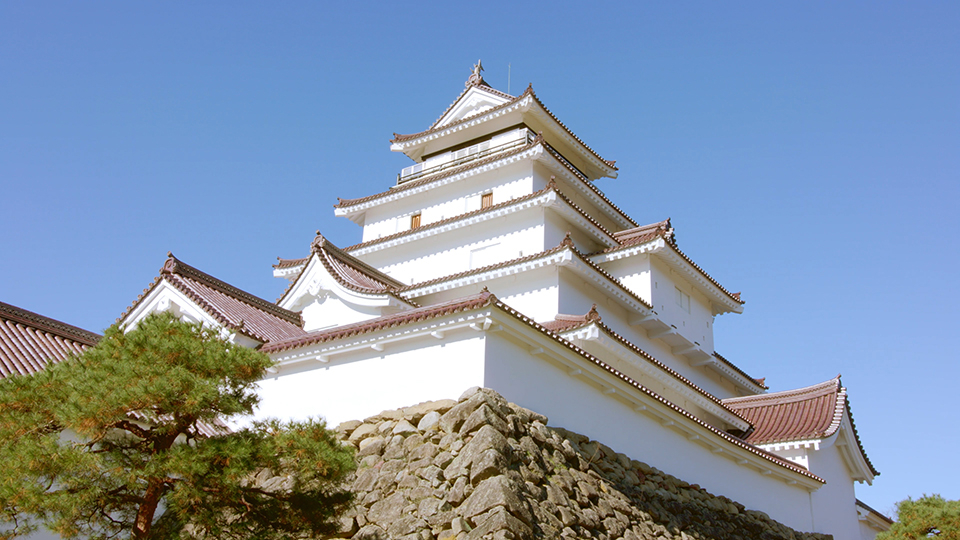
- Tsuruga Castle
Famed for an intense, month-long siege by government forces during the Boshin Civil War in 1868, Tsuruga Castle holds a special place in Japanese history. The original castle was demolished in the early Meiji period (1868 ? 1912), but its replacement accurately replicates the appearance of the main tower, right down to its white walls and distinctive red roof tiles. Tsuruga Castle justified its reputation for being impregnable by holding out even when surrounded by 10,000 soldiers of the newly formed Meiji government and bombarded by about 2,500 shells in a single day. Eventually, the trapped forces loyal to the Tokugawa shogunate surrendered and the castle fell. A few years later, the badly damaged castle was demolished, although its stone walls were left in place. The main tower standing today is a reinforced-concrete replica built in 1965 based on documents including photos taken before the castle was torn down. In 2001, a turret and the nagaya long corridor connecting it to the main tower were reconstructed using techniques and methods from the Edo period (1603 ? 1867). Tsuruga Castle is the only one in Japan that has a main tower with red roof tiles. The replica initially had black tiles, but these were replaced in 2011 to recreate the original appearance. The red tiles, which once were quite common on Japanese castles, have an iron glaze that enables them to withstand the Tohoku region’s bitter winter cold. The main tower’s observation platform offers spectacular views of the surrounding area, including the many cherry trees that blossom each spring. While the original castle is no more, one of its Edo-period structures has survived. Before the castle was demolished, a small three-story building from the castle was relocated to nearby Amidaji Temple, where it still stands today.
館長からの一言
この城は幕末の戊辰戦争で約2500発もの弾丸が打ちこまれたにも関わらず、耐え抜き、明治時代になって石垣以外が取り壊されたが、復元されて今も佇んでいます。
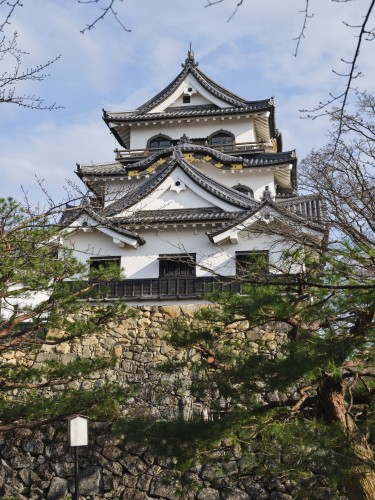
- Hikone Castle
Hikone Castle is situated on top of a small hill, with commanding views over nearby Lake Biwa. It was constructed in the early 17th century by the Ii family, retainers of the powerful warlord Tokugawa Ieyasu (1542-1616). Hikone was spared the mass dismantling of castles that occurred in the late 19th century, and as a result boasts many original buildings compared to other castles. The main keep, a designated National Treasure of Japan, is a three-story wooden structure on top of a stone base. It is one of the few remaining original castle keeps in Japan, and although comparatively small, the keep’s elaborate gables and ornate decorations give it an elegant appearance. At the foot of the castle’s hill is the Genkyu-en Garden, added in 1677. A strolling path encircles a large pond, and the tea house in the garden was used by the castle’s lord for tea ceremonies. A museum on the castle grounds holds the treasures of the Ii family, such as their armour, helmets and swords. You can also view less warlike items such as the family’s tea utensils and Noh theatre costumes.
館長からの一言
この城は戦いのためというよりも、茶会をしたり能をしたりすることなど、居城としての物が多くあります。
また、とても華やかな姿であるため、「月明・彦根の古城」として琵琶湖八景にも選ばれています。
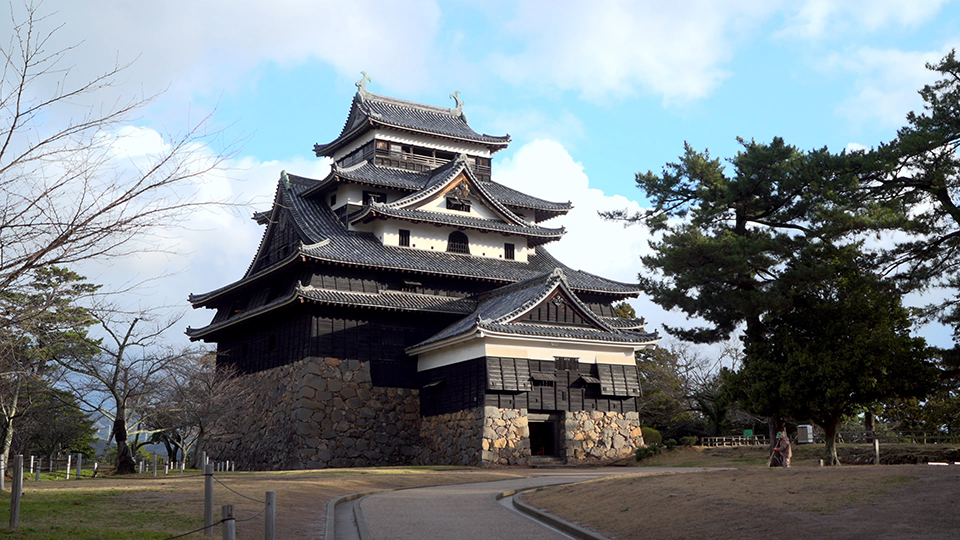
- Matsue Castle
Matsue Castle was built on top of a hill near the edge of Lake Shinji in Shimane Prefecture. Surrounded by 200 cherry trees, it is one of only 12 original castles that currently exist in Japan. It is also called “Plover Castle” because of its beautiful appearance similar to a plover spreading its wings. The castle was built by Horio Yoshiharu, a feudal lord known for his talents in designing strong, functional castles. It took five years to build, and was completed in 1611. Horio and his grandson ruled here, but were succeeded by the Matsudaira clan, direct descendants of the shogun Tokugawa Ieyasu (1543 - 1616). The main tower has a black wooden exterior, and an interior with five floors and a basement. The top floor offers a 360-degree view of the castle grounds, the city, and Lake Shinji. The castle was prepared to face battle at any time. Holes from which rifles could be fired are found in the outer walls throughout the castle. There are also small openings along the walls of the second floor, from which big rocks could be dropped to fend off enemies trying to climb up the stone walls. The basement was used to store daily goods in case the castle came under siege, and also had a well 24 meters deep that could provide drinking water at all times. Nowadays, samurai armor, helmets, and swords are on display.
館長からの一言
これは戦いに非常に特化している城で、城内の至る所には鉄砲を撃つところがあり、石垣を登る敵兵を撃退するための「石落」、最上階では360度周りを見渡すことができます。
- 若松城跡
上杉家の会津への国替えは、直江兼続と石田三成の指揮のもと行われました。上杉家は若松城を拠点として、領内の統治体制を固めていき、新しい国作りに乗り出しました。<br><br>(この動画は、2009年に取材したものです)
館長からの一言
この城は上杉家の拠点として、領内の統治体制を固めていき、新しい国作りに乗り出しました。
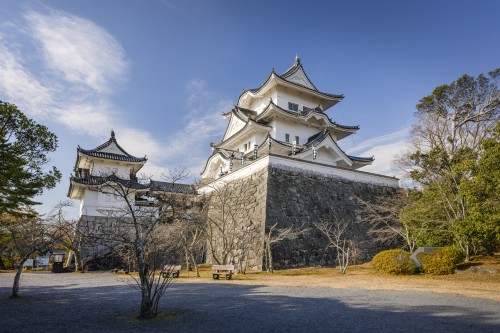
- Iga Ueno Castle
The towering stone walls of this hilltop castle are among the tallest in Japan at about 30 meters high. Iga Ueno Castle was built over 400 years ago for local lords, and the current structure was rebuilt from the same materials as the original. The castle has displays of swords, armor, scrolls, and taiko drums, and within walking distance are the Ninja Museum of Igaryu and a museum dedicated to legendary poet Matsuo Basho (1644 - 1694). The city holds a five-week ninja-themed festival from early April to early May and a festival in October that includes a parade of elaborate floats and a “procession of ogres.”
館長からの一言
この城は日本有数の石垣の高さを誇り、地面から天守頂部まで50メートル近くあります。ここに城が築かれる以前は平楽寺という寺院があり、そこは要塞としても機能していたといわれています。