昔から今までのお金
ここではたくさんのお金を扱っています!
館長からの挨拶
昔から今までのお金の館長です。ここには皆さんがよく知っている小判やあまり知られていない富本銭や和同開珎などを取り揃えております。ぜひお楽しみください。
この展示について
この展示は皆さんが今でもよく使うお金について興味を持ちその歴史について調べてみました。このそれぞれのお金に関する時代なども挟んでおります。よーく理解してみてください。
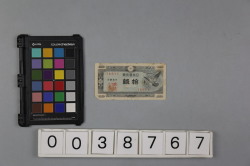
主に明治時代〜昭和時代に流通
主に江戸時代に流通
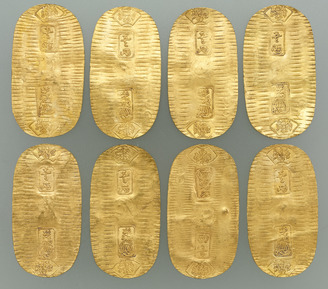
- Gold Coins ("Koban")
東京国立博物館,Tokyo National Museum
<p>Characterized by various marks and seals, [koban] coins were in circulation throughout the Edo period (1603–1868). They were mainly made of gold-silver alloys of differing ratios depending on when they were minted.<br /></p><br /><p>The koban and ichibukin are gold coins that circulated during the Edo period, which began in the 17th century. Both were made of a gold-silver alloy, and because the ratio used varied over time, it is possible to determine the approximate date a coin was issued by examining its composition. Four ichibukin were equal to one koban.<br /><br />The koban is a flat ellipse, the front of which is marked with fine horizontal lines. A vertical inscription reads “one ryo,” and paulownia crests, long used as symbols of government authority, are visible on its upper and lower ends. The back side of the koban, in contrast, is stamped with small, circular emblems in its lower left section. These circular emblems were stamped into the coins over the course of production to guarantee their quality. Some koban were stamped with more marks that are even smaller. These marks were impressed into the koban by money changers when the coins were used to certify their value. The front of the ichibukin is likewise marked with paulownia crests and the horizontal inscription “one bu,” written from right to left.<br /><br />The coins you see here were discovered in 1956 in Ginza, Tokyo, one of Japan’s foremost shopping districts. During the Edo period, there was a mint for coins in Ginza. These coins were discovered by chance in a dumping site for earth and sand during the reconstruction of a commercial building in Ginza. They consisted of 208 koban and 60 ichibukin. This news was reported with surprise day after day. The details of why this cache of money was buried in the ground, however, remain unknown. It has been a custom in Japan to bury money in the ground, either to appease the land or to hide it for safekeeping, since ancient times. These coins must also have been buried for some purpose.</p>
館長からの一言
皆さんがよく知ってそうなザ・昔のお金、実際はそんなに昔じゃないのです。
主に中国の漢時代に流通
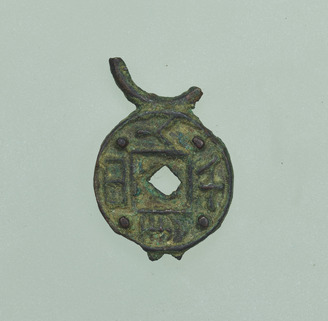
- Riruqianjin Coin
東京国立博物館,Tokyo National Museum
<p>時計回りに吉祥句「日入千金」の四字を鋳込んでおり、日々お金が入ってくるようにとの願いをこめたのでしょう。今は欠損していますが、銭の一端には指輪のような環が、もう一端には穴のあいた小さな突起がありました。身に着けるための工夫と考えられます。<br /></p>
館長からの一言
和同開珎や富本銭とは違う聞いたことのないような日入千金銭、その秘密は意外なものです。
皆さん昔のお金に興味は持てましたでしょうか?他にもここには載っていませんが色々な紙幣・硬貨があるのでぜひ知ってみてください!
主に飛鳥時代〜奈良時代に流通
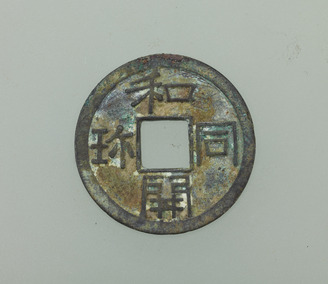
- Coin(Wadō Kaichin/Kaihō)
東京国立博物館,Tokyo National Museum
<p>和同開珎+わどうかいちん、わどうかいほう+は日本で最初の流通用の鋳造貨幣です。「続日本紀+しょくにほんぎ+」によれば、和銅元(708)年に武蔵国秩父郡の銅が献上されたことがきっかけで鋳造されたといいます。近年、富本銭+ふほんせん+が日本の最初の銅銭であることが分かりましたが、富本銭はまじないに使われたという説があります。<br /></p>
館長からの一言
日本で最初の流通用のお金皆さんは知っていたでしょうか?
- Fuhonsen
内蔵寮寄贈,Imperial Household Ministry,東京国立博物館,Tokyo National Museum
<p> 方孔の上下に「富」「本」の文字、左右に七曜文を鋳出す。その存在は江戸時代から知られていたが、昭和61年に(1986)に平城京跡で出土して、古代の貨幣と確かめられた。近年、富本銭の鋳型が発見された飛鳥寺池遺跡は、その製造地であった可能性が高い。 <br /></p>
館長からの一言
昔のお金の秘められた事実をとくとご覧あれ

展示関連イベントについて