聖徳太子
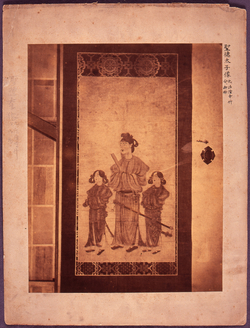
- Portrait of Prince Shotoku, Jinshin Survey Photographs
横山松三郎撮影,By Yokoyama Matsusaburo (1838-84),東京国立博物館,Tokyo National Museum
聖徳太子が16歳の時の姿の像
- Prince Shōtoku
東京国立博物館,Tokyo National Museum
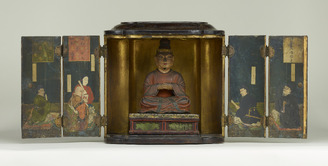
<p>聖徳太子の像とこれを納める厨子+ずし+です。像と厨子はもともと別のものが後世に取り合わせられたと考えられますが、厨子の扉には太子の『勝鬘経+しょうまんぎょう+』の講義を聞いた5人を描きます。像の姿はこのときとは異なる摂政+せっしょう+の姿とみられますが、どちらも聖徳太子の伝記に関係するものです。<br /></p>
平安末期に作られた坐像
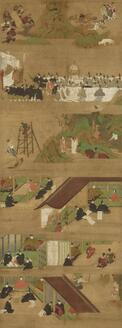
- Illustrated Biography of Prince Shōtoku
上野法橋・但馬房筆,By Kōzuke no Hokkyō and Tajima no Bō,東京国立博物館,Tokyo National Museum
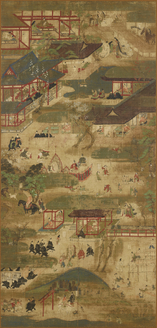
<p> N1の聖徳太子絵伝につぐ太子絵伝の古い遺品。太子の生涯を編年的にまとめた『聖徳太子伝暦』にもとづいて、70余りの事蹟を4面に描く。各面は事蹟内容をおおむね四季に分類して配置し、各幅ごとに桜、梅、藤、紅葉、雪山を描いて季節を表わしている。こうした四季絵的太子絵伝は、類例も少なく貴重である。<br /> 古様でおだやかな作風を示し、修理の際に発見された裏打紙の墨書から嘉元3年(1305)上野法橋と但馬房の二人によって描かれたことがわかる。平成22年、重要文化財に指定された。<br /></p>
14世紀に描かれた聖徳太子の生涯を4面に分けて描かれたもの
- Portrait of Shotoku-Taishi
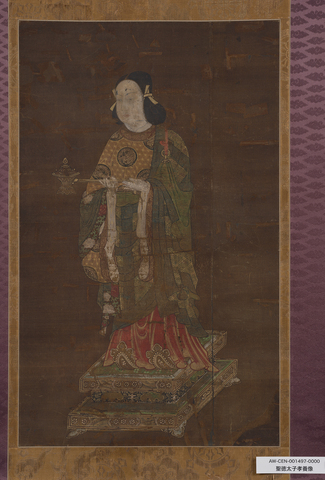
聖徳太子〈574-622〉は、推古天皇の摂政として、官位十二階・十七条憲法の制定、新しい国家体制の基礎となし、遣隋使の派遣による大陸文化の導入、さらには深く仏教に帰依して四天王寺・法隆寺を建立するなど、古代の政治・文化に偉大な功績を残したことで、わが国歴史上最も著名な人物の1人である。死後まもなくして、その遺徳をしのび礼拝・供養する聖徳太子信仰が起こり、日本仏教の祖として、時代・宗派を超えて篤く信奉された。まず、中納言藤原兼輔が、延喜17年〈917〉に『聖徳太子伝暦』(2巻)を編んだ。これは、太子の事跡を編年体に叙述したもの。太子受胎の伝説から薨去まで、太子の生涯にわたる。さらに大化改新(645年)や太子一門・蘇我氏の滅亡まで含んでいる。延久元年〈1069〉には絵師秦到貞によって『聖徳太子伝暦』を絵画化した障子絵が作られるなど、これに準拠した彫刻や画像・絵伝がつぎつぎに制作された。なかでも太子絵伝は、四天王寺絵堂の壁画、法隆寺絵殿の障子のほかに、絵巻や掛幅など、さまざまな形式で制作された。本図は、太子孝養像の一種で、太子16歳の絵姿。父用明天皇の病気平癒を祈る姿を表わしたとされるもの。髪を美豆良(古代男子の髪型の一種。頭髪を左右に分け、これを束ねて耳のあたりで結ぶ)に結い、袍の上に袈裟を着けた童形で、両手で柄香炉を持つ立像という典型的な姿に描かれている。装飾性の強い豪奢な色彩や台座・香炉の形から、室町時代・15世紀の制作と思われる。また、二重の框座(かまちざ)に乗る画像は珍しい。
聖徳太子が16歳の時の姿の像
- Seated Prince Shotoku
高村光雲作,By Takamura Koun (1852-1934),高村光雲氏寄贈,Gift of the artist,東京国立博物館,Tokyo National Museum
<p>小像ながら、険しい表情を浮かべる聖徳太子の姿がよく表わされている。「老猿」などの大作で知られる高村光雲は、日本近代を代表する彫刻家のひとり。徹底した観察による写実表現が特徴。宮内省から名誉ある帝室技芸員に任命された記念に、作者本人から寄贈された。<br /></p>
大正に作られた像
- Illustrated Biography of Prince Shōtoku
川合玉堂氏寄贈,Gift of Mr. Kawai Gyokudō,東京国立博物館,Tokyo National Museum
<p>Prince Shotoku was a political figure in ancient Japan. He created the Seventeen Article Constitution and developed a system for ranking officials into 12 grades. In doing so, he helped establish a centralized government based around the emperor. He also played a key role in spreading Buddhism throughout Japan by building temples like Shitennoji and Horyuji.<br /><br />This work depicts his life and is comprised of three hanging scrolls. The first scroll shows 11 scenes of the Prince's life from age 16 to 21. The second scroll displays 13 scenes from age 22 to 29. The third scroll jumps forward 24 years after the Prince's death to depict the assassination of Soga no Iruka, an event that led to the Taika Reforms of 645. Because of this gap, scholars believe this work originally consisted of eight scrolls.<br /><br />These scrolls depict a number of interesting episodes. There are too many to describe here, so we will introduce just one. Take a look towards the bottom of the second scroll. Prince Shotoku is seen riding a black horse. This tale took place when he was still in his twenties. The Prince was presented with horses from several countries and he recognized that one of them was a sacred horse. According to legend, when he mounted this steed, they both flew high into the sky and disappeared among the clouds. They crossed Mount Fuji and travelled through Japan's provinces for three days before returning. This scroll shows the Prince effortlessly guiding his horse over a snowcapped Mount Fuji.</p><br /><p>Prince Shōtoku (574—622) played a major role in establishing Buddhism in Japan. This scroll is his illustrated biography.<br /></p>
聖徳太子が生涯で行ったことが絵に描かれている
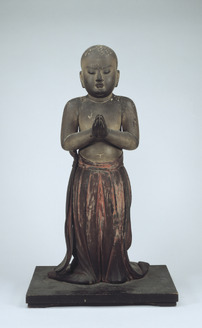
- Prince Shōtoku
東京国立博物館,Tokyo National Museum
<p>Buddhism was introduced to Japan via the Korean Peninsula in the mid-6th century after it had spread across much of mainland Asia. Following its arrival, a courtier named Prince Shōtoku played a crucial role in spreading Buddhism. Prince Shōtoku was regent to the empress in the 7th century and was active at the heart of the early Japanese state. He erected temples in many places, including present-day Nara and Osaka, and built the foundation for the development of Buddhism in Japan. Almost immediately after his death, a religious following sprang up devoted to Prince Shōtoku that passed on numerous stories of miraculous episodes in the prince’s life. Paintings depicting these episodes along with sculptures of the prince at different ages were produced. The 13th century in particular saw a dramatic increase in religious devotion to Prince Shōtoku and a commensurate rise in the numbers of works featuring him.<br /><br />This sculpture is one such work and depicts Prince Shōtoku at the age of two. It is based on the legend that the two-year-old prince turned to face east and chanted the Buddhist invocation namubutsu. He is wearing a red divided skirt, and the ends of a belt-like cord that holds the skirt in place hang at his right hip. His legs are hidden under his skirt, the hem of which drags behind him.<br /><br />The sculpture’s head is large in proportion to its body as a whole, but the work skillfully captures the round appearance of a young child’s body. The lines carved on the prince’s hands and belly further emphasize his plump build. In contrast, his expression, with his eyebrows slightly knit and the corners of his eyes raised, conveys an impression of mature intelligence.</p><br /><p>Prince Shōtoku (574–622) played a crucial role in spreading Buddhism in Japan. He was deified after his death and became associated with many legends. This sculpture shows him at the age of two, when he supposedly brought his hands together in prayer and chanted, Praise to Buddha Amida.</p>