Description
The term tenmoku, which refers to black-glazed tea bowls in general, is said to have been derived from Mount Tianmu in northern Zhejiang Province. Yuteki (oil-spots) tenmoku tea bowls, however, were produced at the Jian kilns in Fujian Province and they are also known as Jianzhan. The name yuteki describes the gold, silver and blue iridescent spots resembling the oil drops floating on the surface of the water. They are the result of crystallization of the iron contained in the glaze. The gold band covering the mouth rim is not only for reinforcing the mouth rim but also for visual attraction. This work was brought into Japan during the Kamakura period (1185-1333) and owned by kanpaku or imperial regent Toyotomi Hidetsugu (1568-1595), which was later handed down through the Nishihonganji temple, the Mitsui Family of Kyoto and the Sakai Family of Wakasa Province (present-day Fukui Prefecture). Three lacquer trays from the Southern Song dynasty accompany this bowl.
Data source
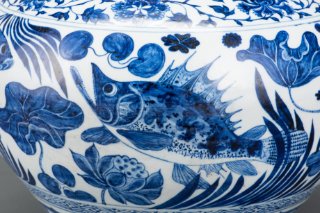
The Museum of Oriental Ceramics, Osaka Collection Search
This database provides access to the images and information of 172 works (Chinese ceramics, Korean ceramics, and Japanese ceramics) that represent the collection of The Museum of Oriental Ceramics, Os...
Contents holder/Provider
Aggregator
The Japanese Council of Art Museums
The Japanese Council of Art Museums (JCAM) supports the accomplishment of mission of art museums and seeks to assist art museums in fully basing their activities in a social context. The organization holds an annual meeting, memorial forums at annual meetings, lectures, Curatorial Study Meetings, and Study Group activities every year. The information and reports generated by these various activities are then expected to be shared with member museums, the greater art-related world and the general public. JCAM was founded in 1952 with the aim of providing a forum for art museums in Japan to think and act together. The organization was registered as a general incorporated association on April 1st, 2020 and includes over 450 members (full members, individual members and supporting members).
Last updated
September 10, 2024