Kimono (Kosode) with Curtains Featuring Autumn Leaves 小袖 淡紅縮緬地幕紅葉模様こそで うすべにちりめんじまくもみじもよう
Description
This garment, called a kosode, or “small sleeve,” for its small wrist openings, became the model for the modern kimono. Its motifs of curtains and autumn foliage make use of indigo for a striking contrast with the orange ground. Long curtains like those pictured were made of many joined pieces of cloth and used to enclose areas. In combination with autumn leaves, they evoke the chapter “An Autumn Excursion” from the Heian-period (794–1192) novel The Tale of Genji. Basing clothing designs on a work of literature is characteristic of Japanese artistic expression.
The curtains are decorated with auspicious overlapping circles, scale-like waves, and other traditional patterns that were used at the imperial court since ancient times. The detailed patterns on the curtains and autumn leaves were created using a dyeing technique called yūzen. In yūzen dyeing, the outlines of patterns are drawn using fine lines of paste. Colored dyes are then brushed onto the fabric so that the dye stays within the paste outlines to create pictorial designs. Even flower petals are depicted with colorful gradations. The front and back of the garment form a single continuous pattern. It was likely designed to be displayed as well as worn.
This garment is thought to have been worn by a wealthy townswoman. The design on the sleeves cuts off partway, suggesting that it was originally a long-sleeved garment for an unmarried woman and that the sleeves were cut short after her marriage.
The design of this kimono was hugely popular in the latter half of the Edo period (1603–1868). Featuring curtains with fall foliage, it is based on the chapter titled An Autumn Excursion from the 11th-century Japanese literary masterpiece, [The Tale of Genji].
Data source
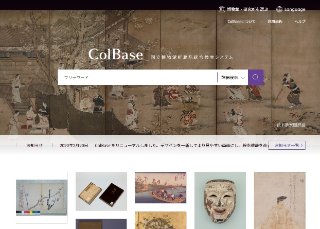
ColBase
"ColBase: Integrated Collections Database of the National Institutes for Cultural Heritage, Japan" is a service that enables a multi-database search of the collections in the four national museums (To...
Contents holder/Provider
Aggregator

National Institutes for Cultural Heritage
The National Institutes for Cultural Heritage (NICH) comprise four National Museums (Tokyo National Museum, Kyoto National Museum, Nara National Museum, and Kyushu National Museum) and two National Research Institutes for Cultural Properties (Tokyo National Research Institute for Cultural Properties, and Nara National Research Institute for Cultural Properties), as well as the International Research Centre for Intangible Cultural Heritage in the Asia-Pacific Region (IRCI) in Sakai City, for a total of seven institutions.
Last updated
July 20, 2026