Description
This extremely valuable Buddhist statute dates back to the Nara period in the 8th century. The almond-shaped eyes and fresh, plump features are characteristic of Buddhist statuary from this period.
The textures of the sculpture are also noteworthy. Take the way the hair is tied up fluffily on the top of the head, for instance, or the way the garments over the statue's legs and plinth cascade down gracefully with naturalistic folds. This soft, realistic expression is typical of the wood-core dry lacquer technique used to make this statue.
This technique involves carving out a rough shape in wood and then applying a paste-like mixture of lacquer and wood pulp to refine the shape. Smaller features like the fingers have been fleshed out by applying this lacquer and pulp mixture to a wire core. The general structure of the statue can be observed by examining the damaged left arm. This technique combines the typically sharp features of a wood carving with the gentle, rounded softness of dry lacquer. However, the technique was costly and it involved a lot of time and effort, so it was not used much in later periods.
This statue was actually part of a triad composed of Yakushi Nyorai, or Bhaisajyaguru in Sanskrit, flanked by Nikko Bosatsu, or Suryaprabha, and Gakko Bosatsu, or Candraprabha. The slight left tilt of this Nikko Bosatsu statue is probably because it was designed to lean close to the central image of Yakushi Nyorai.
This figure represents the Bodhisattva of Sunlight, a lesser god who serves Yakushi, the Buddha of Medicine. Artisans made the figure over 1,200 years ago from a putty-like mixture of natural lacquer and sawdust, giving the body and robes a soft, naturalistic appearance. Later, this technique fell into disuse because it was extremely fragile and expensive.
Data source
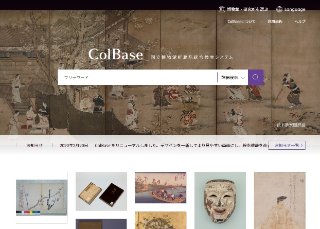
ColBase
"ColBase: Integrated Collections Database of the National Institutes for Cultural Heritage, Japan" is a service that enables a multi-database search of the collections in the four national museums (To...
Contents holder/Provider
Aggregator

National Institutes for Cultural Heritage
The National Institutes for Cultural Heritage (NICH) comprise four National Museums (Tokyo National Museum, Kyoto National Museum, Nara National Museum, and Kyushu National Museum) and two National Research Institutes for Cultural Properties (Tokyo National Research Institute for Cultural Properties, and Nara National Research Institute for Cultural Properties), as well as the International Research Centre for Intangible Cultural Heritage in the Asia-Pacific Region (IRCI) in Sakai City, for a total of seven institutions.
Last updated
October 5, 2026