Description
The lightly curled hair, straight nose and clear-cut features of this statue are characteristic of later Grecian sculpture. The meditative eyes, however, suggest Buddhist enlightenment.
This statue was brought from Gandhara, today's Peshawar district along the Upper-Indus River in Pakistan. Residents of this area have believed in Buddhism since ancient times; when Greek culture was later introduced, Buddhist sculptures produced in the region took on a unique Greco-Buddhist appearance. This statue may have been made in the late-2nd Century, when Gandhara's Buddhist sculpture production was at its peak.
Data source
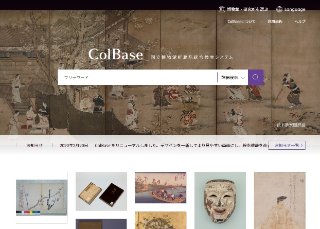
ColBase
"ColBase: Integrated Collections Database of the National Institutes for Cultural Heritage, Japan" is a service that enables a multi-database search of the collections in the four national museums (To...
Contents holder/Provider
Aggregator

National Institutes for Cultural Heritage
The National Institutes for Cultural Heritage (NICH) comprise four National Museums (Tokyo National Museum, Kyoto National Museum, Nara National Museum, and Kyushu National Museum) and two National Research Institutes for Cultural Properties (Tokyo National Research Institute for Cultural Properties, and Nara National Research Institute for Cultural Properties), as well as the International Research Centre for Intangible Cultural Heritage in the Asia-Pacific Region (IRCI) in Sakai City, for a total of seven institutions.
Last updated
July 20, 2026