Thousand-Armed Kannon (Sahasrabhūja); Kannon (Avalokiteśvara) 千手観音像・木造観音立像せんじゅかんのんぞう・もくぞうかんのんりゅうぞう
Description
This statue is well-known as one of the rarest examples of wooden statues in which an independent Buddhist painting was contained. Although several parts are damaged and missing, this statue is recognized as Jūichimen Senju-kannon (Sahasra-bhuja) and the date of production is considered to be the late Heian period. The painting may have been made slightly earlier than that. Although the size is small, the painting shows a dignified Buddhist figure with a decorated canopy and a seat. The contrast of red and green is a key-note of the coloring, and various colors and gold and silver foils are finely arranged. Depiction is not accurate, and a gentle air can be sensed in this picture. The arms, which are arranged as if they were part of the halo, modify the unfamiliar appearance of the figure. Among Kannon's belongings, most the weapons are omitted probably by intention, and the bowl is represented as a lacquered bowl. These aspects indicate that some court noble worshipped it privately.
Data source
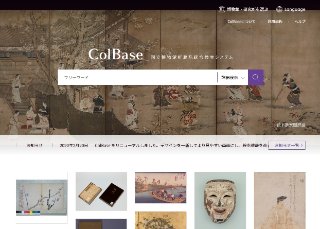
ColBase
"ColBase: Integrated Collections Database of the National Institutes for Cultural Heritage, Japan" is a service that enables a multi-database search of the collections in the four national museums (To...
Contents holder/Provider
Aggregator

National Institutes for Cultural Heritage
The National Institutes for Cultural Heritage (NICH) comprise four National Museums (Tokyo National Museum, Kyoto National Museum, Nara National Museum, and Kyushu National Museum) and two National Research Institutes for Cultural Properties (Tokyo National Research Institute for Cultural Properties, and Nara National Research Institute for Cultural Properties), as well as the International Research Centre for Intangible Cultural Heritage in the Asia-Pacific Region (IRCI) in Sakai City, for a total of seven institutions.
Last updated
July 20, 2026