Description
This work comes from a set of two 6-panelled folding screens. Painted by Hishikawa Moronobu, an ukiyo-e artist from the early Edo period, it depicts a theater used for performances of kabuki, one of Japan's traditional performing arts, though only the right-hand screen is on display today.
The entrance of the theater is shown on the right. Signboards on either side of the entrance list the performances, while several men tout for customers. The stage lies beyond the entrance. On it, the entire cast is dancing flamboyantly. The audience is chatting, laughing, and generally having a riotous time as it sits watching from the floor. One child is seated on his mother's lap while another mother is breastfeeding. On both sides of the stage, ladies of high standing watch through bamboo blinds alongside men sitting separately behind folding screens. These are probably the best seats in the house. The facial expressions, gestures, and fashions of the performers and audience are depicted in a vivid, meticulous fashion. The painting skillfully conveys the vibrancy of the theater experience.
At 170 centimeters high, the screen is around 20 centimeters larger than usual. This suggests it was made by special commission.
Data source
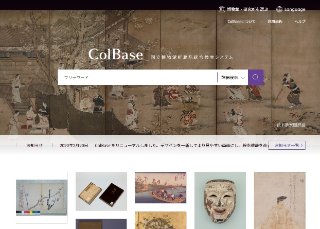
ColBase
"ColBase: Integrated Collections Database of the National Institutes for Cultural Heritage, Japan" is a service that enables a multi-database search of the collections in the four national museums (To...
Contents holder/Provider
Aggregator

National Institutes for Cultural Heritage
The National Institutes for Cultural Heritage (NICH) comprise four National Museums (Tokyo National Museum, Kyoto National Museum, Nara National Museum, and Kyushu National Museum) and two National Research Institutes for Cultural Properties (Tokyo National Research Institute for Cultural Properties, and Nara National Research Institute for Cultural Properties), as well as the International Research Centre for Intangible Cultural Heritage in the Asia-Pacific Region (IRCI) in Sakai City, for a total of seven institutions.
Last updated
July 20, 2026