Armor ("Gusoku") with a Two-Piece Cuirass and White Lacing 白糸威二枚胴具足しろいとおどしにまいどうぐそく
Description
It is said this armor was used by Tokugawa Yoshinao during the Siege of Osaka, which lasted from 1614 to 1615. Yoshinao was the founder of the Owari-Tokugawa house and the ninth son of Tokugawa Ieyasu, the military warlord who founded the Edo shogunate. The small silver platelets protecting the body area are threaded together with white-silk lacing. They must have shone vividly when the armor was first made. The unconventional helmet is shaped like the type of cap worn by government officials in ancient China.
Japanese armor changed greatly during the constant fighting of the 16th century. Armor was now designed to protect the whole body, and included a cuirass for the upper body, a helmet for the head, arm guards, thigh-and-knee guards, and shin guards. These parts also featured colored lacing and designs. This type of matching armor is known as “tosei-gusoku,” a name that means “modern armor.” The name was created to differentiate it from “mukashi-gusoku,” or “old-style(d) armor,” which was used up until the 16th century. Tosei-gusoku became the prevalent form of armor during the Edo period. The major parts of this set feature a unified color scheme of silver and white. This lends the armor an orderly, refined air. As this armor also shows, tosei-gusoku sets are often distinguished by the elaborate design of their helmets.
Data source
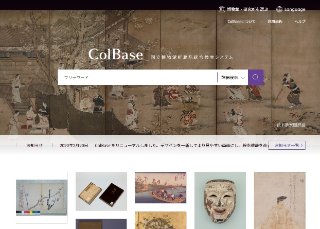
ColBase
"ColBase: Integrated Collections Database of the National Institutes for Cultural Heritage, Japan" is a service that enables a multi-database search of the collections in the four national museums (To...
Contents holder/Provider
Aggregator

National Institutes for Cultural Heritage
The National Institutes for Cultural Heritage (NICH) comprise four National Museums (Tokyo National Museum, Kyoto National Museum, Nara National Museum, and Kyushu National Museum) and two National Research Institutes for Cultural Properties (Tokyo National Research Institute for Cultural Properties, and Nara National Research Institute for Cultural Properties), as well as the International Research Centre for Intangible Cultural Heritage in the Asia-Pacific Region (IRCI) in Sakai City, for a total of seven institutions.
Last updated
July 27, 2026