Description
This cast-bronze relief mold is thought to have been used for making repoussé images. There are slightly variant repoussé images of Kannon at Tōshōdai-ji Temple that form the same mudra and hold the same attribute. The representation of the round face, the torso, and the softly textured draping of the robe follow the style of the early Nara period (710–794).
This figure, which has been formed from cast bronze, represents Kannon bosatsu (Skt. Avalokiteśvara). It appears to have been a convex mold for creating repoussé images. This Kannon statue has a single large-scale transformed Buddha (kebutsu) atop its head and exhibits the pronounced realism of the Tang Chinese style. A repoussé Buddhist statue is produced by setting a malleable bronze plate over this type of convex mold and hammering out the form with a mallet.
Data source
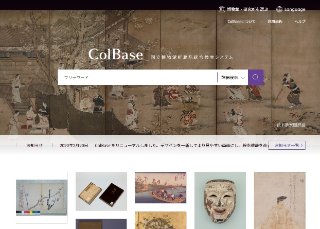
ColBase
"ColBase: Integrated Collections Database of the National Institutes for Cultural Heritage, Japan" is a service that enables a multi-database search of the collections in the four national museums (To...
Contents holder/Provider
Aggregator

National Institutes for Cultural Heritage
The National Institutes for Cultural Heritage (NICH) comprise four National Museums (Tokyo National Museum, Kyoto National Museum, Nara National Museum, and Kyushu National Museum) and two National Research Institutes for Cultural Properties (Tokyo National Research Institute for Cultural Properties, and Nara National Research Institute for Cultural Properties), as well as the International Research Centre for Intangible Cultural Heritage in the Asia-Pacific Region (IRCI) in Sakai City, for a total of seven institutions.
Last updated
July 20, 2026