Standing Eleven-headed Kannon (Jp. Jūichimen Kannon, Sk. Ekādaśamukha) 十一面観音立像じゅういちめんかんのんりゅうぞう
Description
This statue came from Shin Yakushi-ji Temple. The wooden mandorla was decorated with pigments, which was widely applied to the Buddhist sculptures at Nara in Heian period. The face was expressed in gentle appearance with downcast eyes, the slender body was expressed with narrow shoulders, and the robe was delicately carved in low relief; recognized as characteristic techniques transmitted in late Heian period.
{br=>[[]], content=>[This eleven-headed Kannon (Ekādaśamukha) on the lotus seat, stretching its right arm downward, holding a flower vase with its left hand, and twisting its waist slightly to the left, was originally kept in Shin-yakushi-ji temple in Nara as an attendant of the principal Buddha's image., The body and head parts were carved from a single piece of hinoki wood (Japanese cypress), which was then split into two parts (front and back) in order to allow the carving of the inside. The naked part of the body is coated with lacquer foil, and the garment is colored over a layer of white clay. Red color, which is extant on some part of the stole and the skirt, and the design of flowers painted on the front side of the skirt reflect the graceful way of selecting colors in the late Heian period. The modeling of this high statue with its small head, which emphasizes the tall body even more, the gentle face and smoothly curving lines of the drapes reflect the characteristics of sculptures in the late Heian period. The halo which is decorated with large arabesque vines, is also characteristic for the work done during the late Heian period.]}
{br=>[[], [], []], content=>[This statue of the Eleven-Headed Bodhisattva Kannon (J. Jūichimen Kannon; Skt. Ekādaśamukha-avalokiteśvara) used to be enshrined in the Main Hall of Shin-Yakushiji Temple in Nara as an attendant bodhisattva for the hall’s principal image of worship, a statue of the buddha Yakushi (Skt. Bhaiṣajyaguru). The figure’s additional heads are shown in two levels above the main head. A flower vase is held in the left hand extended forward at the elbow. The right hand is lowered gently at the figure’s side with the thumb and middle finger touching. A sense of serene, fluid movement is created by the line formed by this arm combined with the bodhisattva’s hip twisted slightly to the left as it stands atop a lotus pedestal. The figure emanates a soft elegance in its lower body’s elongated proportions, small facial features, sloping shoulders, and supple, rounded physique. A statue with a similar body is seen in Tōdaiji Temple’s Nigatsudō Hall, suggesting this was an established style used in Nara during the late Heian period (794–1185). The rendering of the wraparound skirt, with the hem raised to form an M shape exposing the ankles, is seen in statues from the early Heian period and was likely intentionally revived in this work., The halo and mandorla are rendered as wooden panels with painted vine scrolls rather than openwork decoration. Many such halos were made in this style in Nara., The lotus pedestal retains some of its original parts.]}
Data source
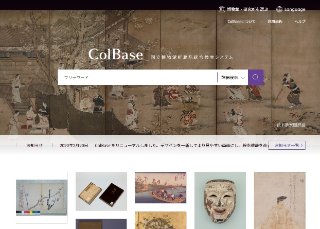
ColBase
"ColBase: Integrated Collections Database of the National Institutes for Cultural Heritage, Japan" is a service that enables a multi-database search of the collections in the four national museums (To...
Contents holder/Provider
Aggregator

National Institutes for Cultural Heritage
The National Institutes for Cultural Heritage (NICH) comprise four National Museums (Tokyo National Museum, Kyoto National Museum, Nara National Museum, and Kyushu National Museum) and two National Research Institutes for Cultural Properties (Tokyo National Research Institute for Cultural Properties, and Nara National Research Institute for Cultural Properties), as well as the International Research Centre for Intangible Cultural Heritage in the Asia-Pacific Region (IRCI) in Sakai City, for a total of seven institutions.
Last updated
July 20, 2026