Description
This string of fifteen goldfish is carved from agate. Each goldfish has large eyeballs and round bodies which give them a somewhat humorous appearance. The sculptor made skillful use of the red and white portions of the agate to evoke the mottled red and white scales of goldfish. In China, goldfish are popular as symbols of luck and abundant wealth because the Chinese word for “fish” has the same pronunciation as the word for “abundance.”
During the Neolithic period (10,000–4,500 BC) in China, people developed the art of carving and polishing particularly striking stones, like jade and agate, to create containers, tools, and other objects. Decorative art objects that made the most of each stone’s natural coloring, like these goldfish, were especially popular during the Qing dynasty (1644–1911). You could say that human ingenuity was used to further improve the already impressive natural qualities of the materials.
Goldfish were symbols of wealth. Here, fifteen goldfish carved from agate are strung together.
Data source
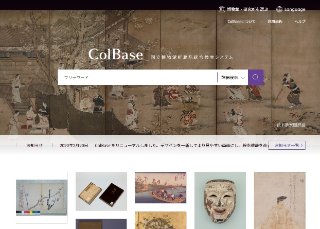
ColBase
"ColBase: Integrated Collections Database of the National Institutes for Cultural Heritage, Japan" is a service that enables a multi-database search of the collections in the four national museums (To...
Contents holder/Provider
Aggregator

National Institutes for Cultural Heritage
The National Institutes for Cultural Heritage (NICH) comprise four National Museums (Tokyo National Museum, Kyoto National Museum, Nara National Museum, and Kyushu National Museum) and two National Research Institutes for Cultural Properties (Tokyo National Research Institute for Cultural Properties, and Nara National Research Institute for Cultural Properties), as well as the International Research Centre for Intangible Cultural Heritage in the Asia-Pacific Region (IRCI) in Sakai City, for a total of seven institutions.
Last updated
September 21, 2026