Description
A Buddhist deity sits on a stool-like pedestal with his left leg pendant and his right leg bent and resting on his left thigh as he rests his chin in his right hand. The origin of sculptures featuring this contemplative posture with one leg pendant can be traced to the Gandhara region, located in present-day Afghanistan and Pakistan, which flourished from the 1st to the 5th century. Sculptures in this pose are known to have been used there to depict the historical Buddha meditating under a tree before becoming an ascetic. This pose also developed in India in connection with Avalokiteśvara, the bodhisattva of compassion, known as Kannon in Japan. In China, as in Gandhara, such sculptures seem to have usually represented the Buddha before he left home to become an ascetic. On the Korean Peninsula, it was apparently linked to the popularity of the belief that the bodhisattva Miruk, known as Miroku in Japan, would appear on Earth 5,670,000,000 years after the death of the Buddha. That belief became widespread, and as a result of its influence, contemplative, pendant-legged statues began to be produced in Japan as well. You can view several examples in the Gallery of Horyuji Treasures here at the Tokyo National Museum.
This sculpture’s expression is tranquil and conveys an impression of dignity. Its overall proportions are slender, but it has a slightly angular build. These are characteristic features of Buddhist sculptures made in 7th-century Korea, during the Three Kingdoms period in which the peninsula was divided into three nations—Goguryeo, Silla, and Baekje.
This sculpture’s highlights also include several highly detailed features which convey a rich sense of depth, such as its high, peaked crown, the locks of hair that hang from its shoulders, and the folds of the garment that covers its lower body.
A bodhisattva is a Buddhist god dedicated to saving others. This bodhisattva's posture represents a state of deep contemplation. Sculptures like this were widely produced on the Korean Peninsula in the 6th and 7th centuries.
Data source
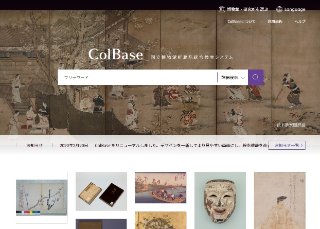
ColBase
"ColBase: Integrated Collections Database of the National Institutes for Cultural Heritage, Japan" is a service that enables a multi-database search of the collections in the four national museums (To...
Contents holder/Provider
Aggregator

National Institutes for Cultural Heritage
The National Institutes for Cultural Heritage (NICH) comprise four National Museums (Tokyo National Museum, Kyoto National Museum, Nara National Museum, and Kyushu National Museum) and two National Research Institutes for Cultural Properties (Tokyo National Research Institute for Cultural Properties, and Nara National Research Institute for Cultural Properties), as well as the International Research Centre for Intangible Cultural Heritage in the Asia-Pacific Region (IRCI) in Sakai City, for a total of seven institutions.
Last updated
July 20, 2026