Description
Here four poems, each with four lines containing five characters, are written in cursive script. The wild writing contrasts with the exceptionally smooth and luminous silk, creating a work of great strength.
This piece was created by Fu Shan, an artist who worked from the late Ming dynasty through to the early Qing dynasty. Fu Shan was born into a family of scholars, and was so bright that he ranked first among over 300 students by the time he was 30. However, in 1644, when he was 38 years old, the Ming dynasty collapsed. Instead of following the new Qing dynasty, Fu Shan would spend the rest of his life opposing it.
Fu Shan studied traditional calligraphy when he was young, and was known for his beautifully flowing writing. However, as time passed, he grew dissatisfied with the popular emphasis on well-executed and outwardly elegant writing, and became convinced that the most important thing was to move the brush freely. It’s said that he told his own children the following about calligraphy: “Even if you’re unskilled, you cannot give in to technique; even if your writing isn’t outwardly beautiful, do not create beauty which flatters.”
Fu Shan excelled in poetry, prose, calligraphy, painting, and seal carving. His calligraphy followed the style of Dong Qichang, although few of his works have survived.
Data source
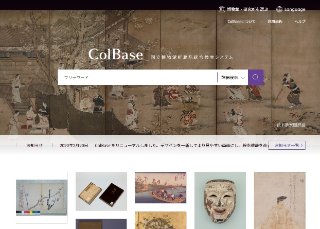
ColBase
"ColBase: Integrated Collections Database of the National Institutes for Cultural Heritage, Japan" is a service that enables a multi-database search of the collections in the four national museums (To...
Contents holder/Provider
Aggregator

National Institutes for Cultural Heritage
The National Institutes for Cultural Heritage (NICH) comprise four National Museums (Tokyo National Museum, Kyoto National Museum, Nara National Museum, and Kyushu National Museum) and two National Research Institutes for Cultural Properties (Tokyo National Research Institute for Cultural Properties, and Nara National Research Institute for Cultural Properties), as well as the International Research Centre for Intangible Cultural Heritage in the Asia-Pacific Region (IRCI) in Sakai City, for a total of seven institutions.
Last updated
June 1, 2026