Description
Toji Temple was established in 796 as one of two guardian temples for Heiankyo (present-day Kyoto), which had become Japan’s capital two years earlier. Toji, the “East Temple,” and Saiji, the “West Temple,” flanked Heiankyo’s famous Rashomon gate as spiritual bulwarks for the new city. While Saiji burned in 1233 and was never rebuilt, the main buildings of Toji have been repeatedly destroyed by fires or earthquakes over the years, but were always reconstructed in their original positions. To see this UNESCO World Heritage Site now is to see it centuries ago. Toji’s most recognizable structure is its five-story pagoda, the tallest wooden tower in Japan. The 55-meter-tall pagoda can be seen from many places across Kyoto and even shinkansen bullet trains as they pass near JR Kyoto Station. The inside of the pagoda, a National Treasure originally built in 826, is usually closed to the public, except for special events. Toji has been the headquarters of Buddhism’s esoteric Shingon sect since the ninth century. The kodo lecture hall houses 21 Buddhist statues that are among the oldest in Japan, and the kondo main hall is a National Treasure. The miedo building was the residence of Kukai (774 - 835), the monk who founded Shingon Buddhism and was placed in charge of Toji in 823. Kukai’s influence is still celebrated every morning, when a meal is served in front of a statue of him in a ceremony open to the public. Outside the temple buildings, the gardens are considered one of Kyoto’s best sites for viewing cherry blossoms. Illumination events also are held to show the flowers’ beauty at night. In addition to culturally significant buildings and treasures, Toji is a place to find a bargain: the lively Kobo-san flea market is held on the temple grounds on the 21st of each month, and an antiques market takes place on the first Sunday of the month. Most serious shoppers snap up the best deals when the market opens at 8 a.m.
Data source
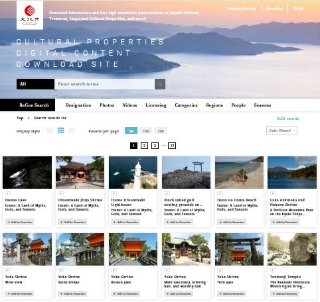
Cultural Properties Digital Content Download Site
Download information and free high-resolution photos/videos of Japan's National Treasures, Important Cultural Properties, and more!
Last updated
March 25, 2026