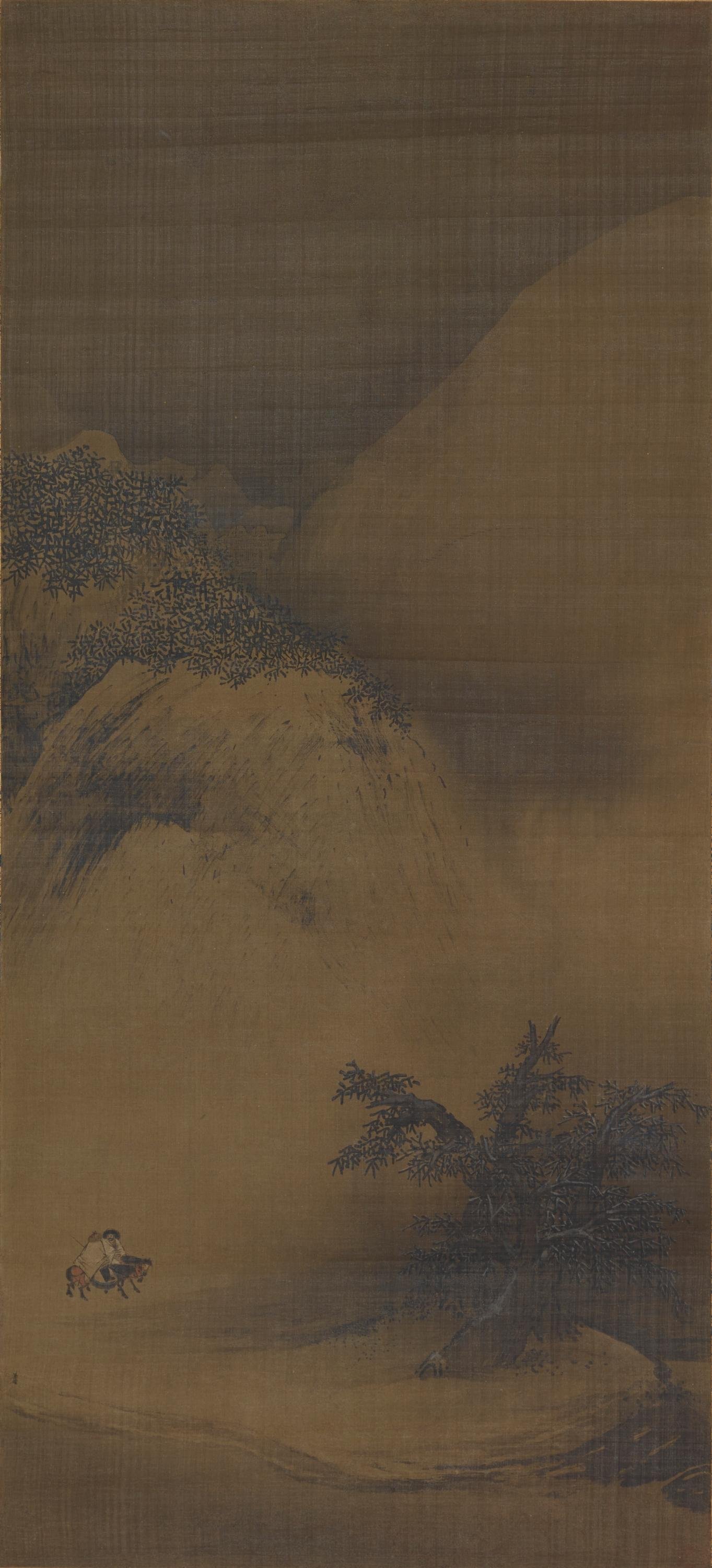
Higashiyama Treasures
Treasures collected by the Ashikaga shogunal family over generations, including the collection of the 8th Ashikaga shogun, Yoshimasa Ashikaga
The Higashiyama estate, the collection of artifacts of the 8th Ashikaga shogun, Yoshimasa Ashikaga, is referred to as Higashiyama Gomotsu (the Higashiyama Treasures). In a broader sense, however, it refers to the collection of treasures of successive generations of the Ashikaga shogunal family, with a focus on Chinese paintings. “Gomotsu” can also be read as “Gyobutsu.” In the collection there are calligraphic paintings stamped with “Tenzan” and “Doyu” seals by Yoshimasa’s grandfather, the 3rd shogun, Yoshimitsu, and with the “Zakkeshitsu-in” collector’s seal by his father, the 6th shogun, Yoshinori. Muromachi-dono gyoko okazari ki (Record of Ornamentation for the Imperial Procession to the Muromachi Palace) and Gyobutsu on’e mokuroku (Register of Treasures and Paintings) have been preserved as well. Items listed in the former work include Song- and Yuan-Dynasty Chinese paintings), Zen calligraphy, lacquerware, incense burners, vases, tea utensils, tea urns, tea caddies, which are thought to have formed the main basis of the collection. Noami, one of the shogun’s connoisseur attendants specialized in Chinese objects, compiled Kundai kan socho ki (Notebook of the Shogun’s Art Secretary), in which he grades and classifies items in the collection. With the fall of the Ashikaga Shogunate, the collection was dispersed, transferred to one household of the Miyoshi family and to wealthy households in the Kyoto region, later becoming parts of collections maintained by Nobunaga Oda and Hideyoshi Toyotomi.
Related People, Things and Events
Books
Related Works
平安時代、10~12世紀。国宝。伯耆安綱は平安時代を代表する刀工。なかでもこの太刀は、名物童子切(どうじきり)安綱としてとくに名高く、細かく不定形な小乱の刃文は複雑な変化をみせている。その名は、凶賊退治の名刀が酒呑童子(しゅてんどうじ)伝説などと結びついたと考えられ、天下五剣の一つとして、足利将軍家、徳川将軍家から越前松平家、津山松平家へと伝来した。
南宋、13世紀。国宝。嘉泰年間(1201-1204)頃の画院画家である梁楷の代表作。東山御物として本図を中幅とする三幅対として鑑賞された。これら三幅は、もとは足利義満の収蔵品であった。
南宋、13世紀。国宝。梁楷の山水画の代表作。東山御物として、「出山釈迦図」を中幅とする三幅対として鑑賞された。図の右上隅に「雑華室印」の印がある。
重要文化財。伝趙昌筆。趙昌は北宋時代の宮廷を代表する花鳥画家で、折枝花(花木の枝を切取ったような花の絵)の名手といわれた。本図は南宋時代・13世紀の作品と思われる。東山御物の由緒をもつ。
南宋、13世紀。重要文化財。伝馬麟筆。馬麟は南宋時代の宮廷画家である。梅花や雀などの表現にみられる繊細さは南宋院体画特有のものである。足利将軍家に伝わり、東山御物の由緒をもつ。
南宋、13世紀。重要文化財。かつては梁楷筆「六祖破經図」(三井記念美術館蔵)と対幅をなしており、両幅とも足利義満の「道有」印がある。東山御物に数えられる。
合子は、蓋付の小さい容器のことで、主に香合や化粧品入などとして用いられた。身は、中央に窪みのある平らな底部をもつ円形の器で、側面に線彫りで縦線を廻らす。蓋は、表面に型押しと線彫りで円形の枠を設け、その中に大きく牡丹唐草文をあらわし、肩には縦線の線彫りを施す。身・蓋ともに底部と口縁を除き、全体に淡い青磁釉をかける。本作品は、淡い灰色をおびた青緑色で、丁寧に彫り込まれた文様も繊細である。南宋時代(1127-1279)の作と考えられる。この時期のものは鎌倉や京都を中心に日本の寺院に伝来しており、室町時代には足利将軍家の座敷飾りにも用いられた。
重要文化財。瀟湘八景のうち「遠浦帰帆図」。牧谿が描いたという図巻を、景ごとに切断し、軸装に改めたものの一幅。足利義満の「道有」鑑蔵印が図の末尾に押され、のちには織田信長の所蔵を経た大名物。
模本、明治時代、19世紀。原本は元時代(13世紀)、国宝で東山御物だったとされる作品。男装の女官を描いているが、原本と本作は逆を向いている。
元、14世紀。重要文化財。伝顔輝筆。顔輝は南宋時代末から元時代の画家。本図は東山御物の由緒をもち、足利家ののち織田信長、石山本願寺などに伝来した。
南宋~明時代、13~17世紀。重要文化財。『筆耕園』は筑前福岡藩主の黒田家に伝わった唐絵手鑑。宋・元・明の画家の作品とされる60図が2帖に収録されている。本図は伝劉松年筆「官女図」。
池坊専応の書写による『君台観左右帳記(くんだいかんそうちょうき)』。慶長12年(1607)の写本(原本の日付は大永3年[1523]12月吉日)『君台観左右帳記』(『君台観』とも)は、室町時代の秘伝書。足利義政の同朋衆、能阿弥の著と伝えられ、東山御物の基本となる中国絵画、墨跡、漆器、香炉、花瓶、茶壺、茶入などを集大成した書物。原本はなく写本として残る。
Past Exhibitions
| Title | shusai | Place | open | close |
|---|---|---|---|---|
Institutions Holding Related Materials
As Japan’s representative museum, Tokyo National Museum collects, preserves, displays, and researches the cultural properties of Asia with a focus on Japan, and also provides educational programs.
Kyoto National Museum collects, preserves, displays, researches and provides educational programs focusing on cultural properties from Heian- through to Edo- period Japan, when the capital was located there.
唐物のうち特に足利将軍家伝来のものは東山御物として珍重された。その中でも東山御物の最高の格式をもつ梁楷筆の「出山釈迦図」と「雪景山水図」の三幅対が展示されるのに合わせて、東山御物を中心に東洋美術の名品を展示した。「展示作品リスト」の中には画像が見られるものもある。
東山御物の一つで、もとは三幅対であった梁楷筆の「出山釈迦図」「雪景山水図」と伝梁楷筆「雪景山水図」とが、三幅すべて東京国立博物館の所蔵品となった。これを記念した特集陳列「東洋の名品―唐物」のサイト。