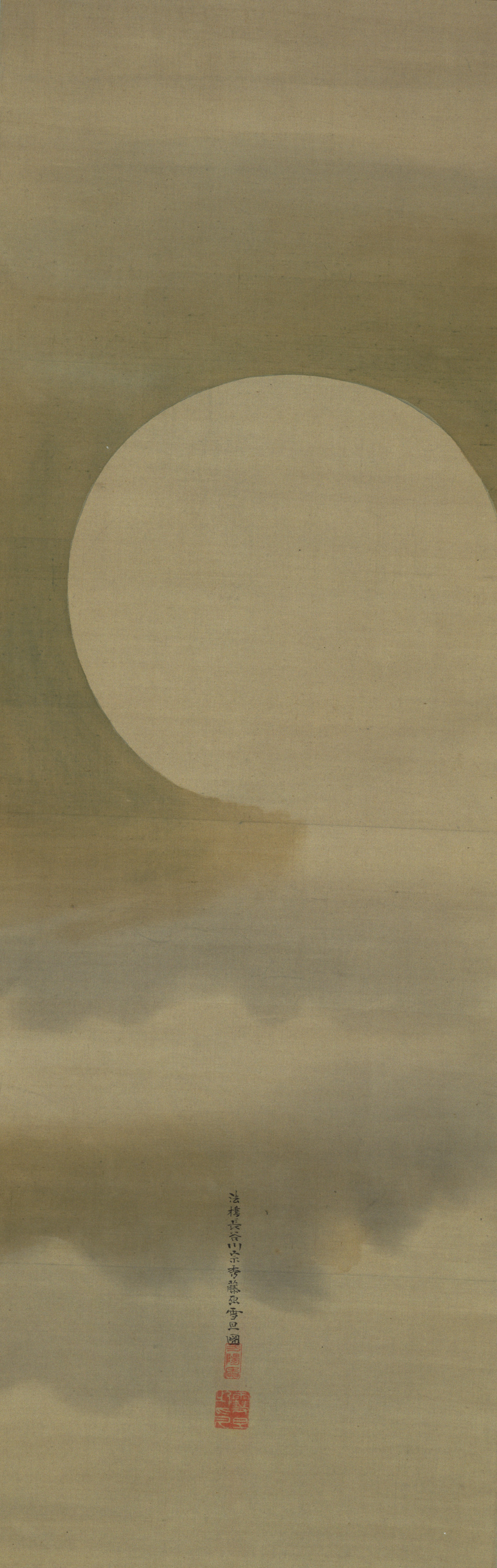
The Night of the 15th (Jugoya)
A night of moon viewing and setting out food on the 15th of the lunar Eighth Month to pray for a good harvest
Jugoya means the night of the full moon on the 15th of any lunar month. It is also called the evening of sango (3 times 5). But usually it refers to the night of the 15th of the lunar Eighth Month, when people set out dishes for the gods and view the bright mid-autumn moon. Dishes such as tsukimi dango (moon-viewing dumplings), sweet potatoes, and chestnuts decorated with Japanese pampas grass or autumn flowers are offered to the gods. In the past, parents were glad to see their children take the offerings back home.
The guidebook Zoku Edo sunago (The Sands of Edo, Continued, 1735) says that watching the bright moon on this night has been popular since the Tang dynasty in China, and that poets and dilettantes alike hope to have a clear sky on this night. Many people view the moon on a boat on, say, the Sumida or Shinagawa river in Edo.
The Night of the 15th is also called imo meigetsu (potato moon), so taro and other types of potatoes are often offered to the gods. It is said that a ritual originally linked to the potato harvest was later linked to the rice harvest with the spread of rice cultivation to become this celebration. In Bonotsucho Tomari, Minami Satsuma, Kagoshima Prefecture, a harvest festival on the night of the 15th has been passed down through the ages. In addition, on Yoron Island in Kagoshima Prefecture, a night dance is offered to the gods at the Kotohira Shrine on the site of Yoron Castle, praying for peace, rain, and abundant grain harvests. Both of these events are national intangible folk cultural properties. Another night-of-the-15th festival is the drum dance that occurs on the 15th of the lunar Eighth Month in Shiiba Village, Miyazaki Prefecture. The nursery song Jugoya otsuki-san (The Moon on the Night of the 15th), written by Ujo Noguchi and composed by Nagayo Motoori, was released in 1920. In addition, there is the custom of viewing the moon on the 13th of the lunar Ninth Month. The moon then is called mame meigetsu (bean moon) as opposed to imo meigetsu.
Related People, Things and Events
Books
Related Works
Videos
Institutions Holding Related Materials
京都市右京区にある真言宗の寺院。日本三大名月鑑賞地のひとつ。
奈良市の奈良公園内にある池。日本三大名月鑑賞地のひとつ。
滋賀県大津市にある真言宗の寺院。日本三大名月鑑賞地のひとつ。
毎年、中秋の名月の星空の解説とその日の星空をアップしている。
美の壺「お月見」回のダイジェスト。
子ども文化関連の資料を収蔵。子ども浮世絵は2,135点を公開している。キーワードやカテゴリで検索可。
References
- サンプルページ「十五夜」の項。
- サンプルページ「十五夜」の項。
- サンプルページ「十五夜」の項。
- 日立デジタル平凡社,平凡社