Gymnastics
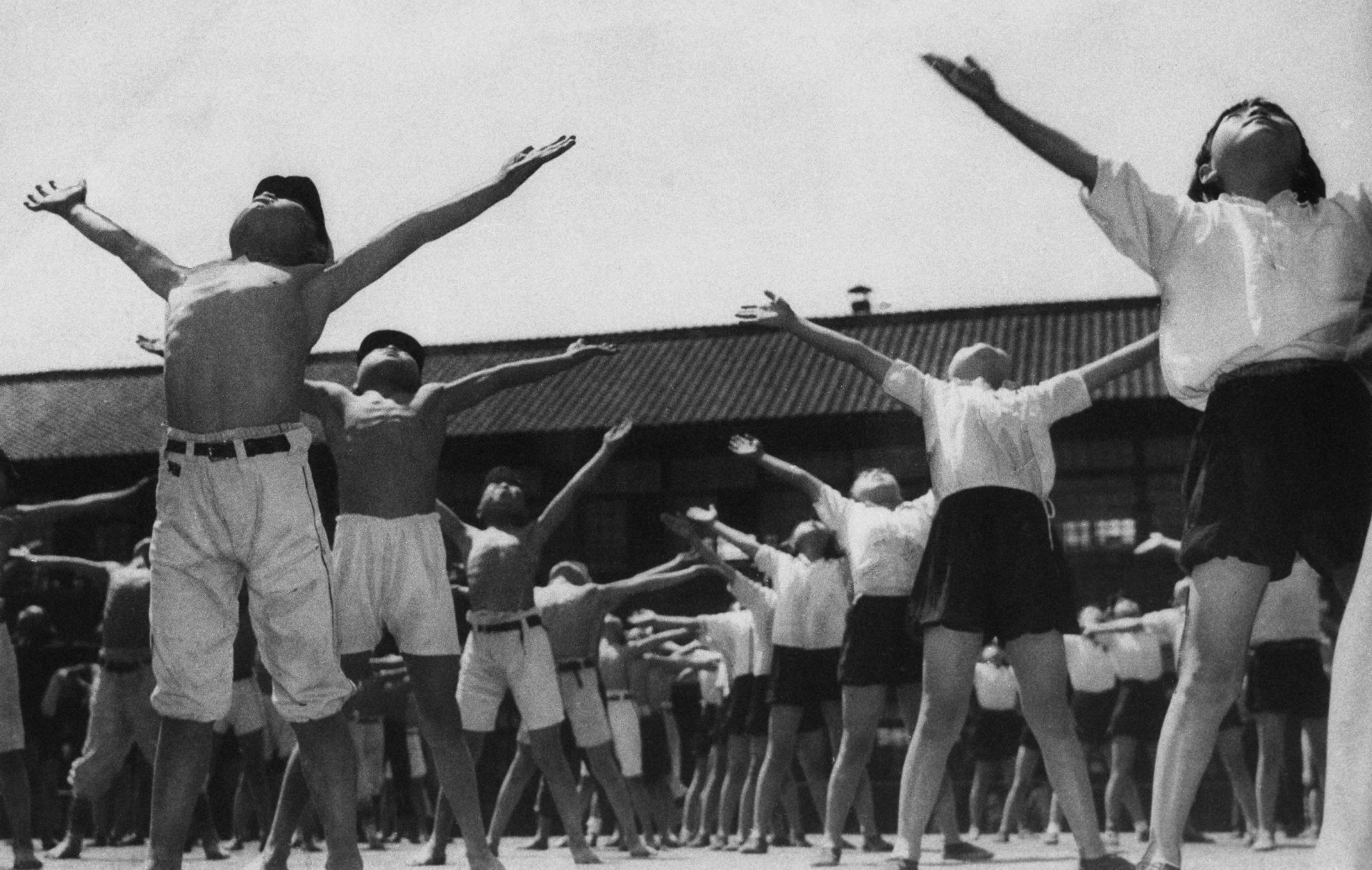
Gymnastics was introduced to the army in the Meiji era and spread through school education. As a competitive sport, there are six events for men and four events for women.
Taiso (gymnastics), was first introduced to the army during the Meiji era to build soldiers’ strength. In 1872, by proclamation of the ‘Gakusei’ education order, Taiso became a school subject area. It was renamed Taijutsu (martial arts), and was adopted as physical education for children. In 1878, the government established ‘Taiso Denshujo’, the School of Gymnastics, to train gymnastics instructors. Later, the Ministry of Education enacted ‘The Syllabus of School Physical Training', which established gymnastics as an official school subject in 1913. NHK, the Japan Broadcasting Corporation, began broadcasting Radio Taiso (Radio Calisthenics) in 1928. In competitive Japanese gymnastics, there are six events for men- floor exercises, pommel horse, rings, vault, parallel bars and horizontal bar. The four women’s events are vault, uneven bars, balance beam and floor exercises. There are many techniques that bear Japanese gymnasts’ names, such as ‘Shirai’ (Kenzo Shirai) and ‘Tsukahara’ (Mitsuo Tsukahara).