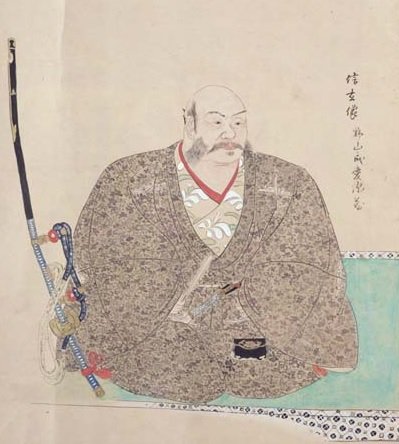
Takeda Shingen
A general of the Warring States period. He led his army corps against Oda Nobunaga and sought to take Kyoto, but died during this undertaking
1521-1573
Takeda Shingen was a general of the Warring States period. His childhood names were Taro and Katsuchiyo, and in his coming of age ceremony, he was given the name Harunobu. In government, he served as Master of the Palace Table and lord of Shinano Province (present-day Nagano Prefecture). In 1559 he became a Buddhist monk and assumed the sobriquet Tokueiken Shingen and was also called Hossho-in. Since the early Kamakura period (1180-1333), the Takeda family, a branch of the Seiwa Minamoto clan, served as military governor of Kai Province (present-day Yamanashi Prefecture) over many generations.
In the lunar Sixth Month of 1541, he exiled his own father, Nobutora, placing him under the supervision of Imagawa Yoshimoto, a daimyo in Suruga Province, and became head of the Takeda family. Shortly thereafter, he began an invasion of Shinano, thereby gaining ascendancy over daimyo lords Suwa, Murakami, and Ogasawara. From 1553 to 1564, he moved south, confronting Nagao Kagetora and Uesugi Kenshin of Echigo Province in Kita Shinano. This series of battles, known as the Battles of Kawanakajima, includes five major battles. Legend has it that in one of these battles, Shingen and Kenshin engaged in one-to-one combat on the Hachiman Plain in Kawanakajima.
Shingen also invaded adjoining western Kozuke Province, Hida Province, and eastern Mino Province. Around this time the Imagawa family of Suruga formed an alliance with the Hojo family of Sagami Province (the later Hojo, distinct from the earlier Hojo of the Kamakura period), but in 1567 Shingen betrayed the Imagawa family and attacked Suruga, and in 1569 he exiled Imagawa Ujimasa. At around the same time, Tokugawa Ieyasu attacked Totomi and wiped out the Imagawa family. Using this opportunity, Shingen betrayed his alliance with the Hojo family and faced them as enemies. There ensued battles in Sunto District, Izu, and other places, but in 1571 Shingen and the Hojo reached a peace agreement. He then set his sights on Kyoto, but he had to confront Tokugawa Ieyasu in front and had Oda Nobunaga behind him. In the Twelfth Month of the following year, 1572, he defeated the allied forces of Ieyasu and Nobunaga at Mikatagahara in a confrontation called the Battle of Mikatagahara. Later he attacked Mikawa Province and encircled Nobunaga. Then in the Fourth Month of the following year, 1573, while laying siege to Noda Castle in Mikawa (present-day Shinshiro in Aichi Prefecture), he fell ill, and along his retreat to Kofu, his home base, he died at Inadani Komaba in Shinano (present-day Achi Village in Nagano Prefecture). Shingen's successor, Takeda Katsuyori, concealed his death for three years. Finally, in the Fourth Month of 1576, a proper burial was performed. He is buried at Erin Temple in present-day Koshu, Yamanashi Prefecture. His posthumous Buddhist name is Erinji-den Kizan Genko Daikoji (the Great Buddhist Layman Mr. Kizan Gen at Erin Temple).
A historical source titled Koshu hatto no shidai (Ordinances of Kai Province, 1547) shows the area controlled by Shingen. In this source, Shingen's forces are labeled "the Takeda army corps," which indicates that his forces were considered a corps in service to the emperor. Early on, he built roads and established a post-horse system of communication. He also made efforts to develop mining, control flooding by building what are called "Shingen banks," and open up new land for cultivation.
Related People, Things and Events
Books
Related Works
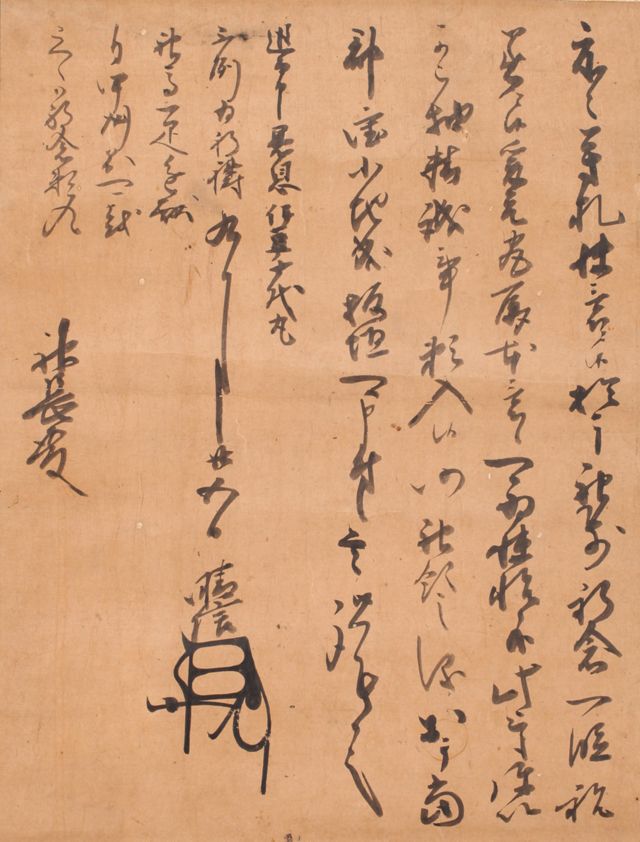
神長宛武田信玄書状
宛先の「神長(じんちょう)」は、諏訪大社上社の神職である神長官(じんちょうかん)のこと。本状は当時の神長であった守矢氏の当主に宛てたものと思われる。
武田信玄書状
永禄11年(1568)7月16日付で、信玄が越中の勝興寺第9代住職・顕栄(1509-1584)に届けた書状。勝興寺・瑞泉寺など越中の本願寺系寺院にとって謙信は警戒すべき危険な存在であった。このため、本願寺第11世・顕如(1543-1592)を含めた三者の間で、謙信に対抗する目的のやり取りがしばしば行われた。本史料はその一例。
遠刕味方ヶ原合戦図
布陣図
集古十種 : 印章 印章 二
武田信玄印 「信濃国諏訪社蔵天正六年文書之印」とある。
武田信玄軍艦之図
大日本海志編纂資料 海軍省が『日本海志』を編纂するために収集した資料で、第2次大戦後、駒場図書館に移された。水軍書と造船関係資料がとくに充実している。
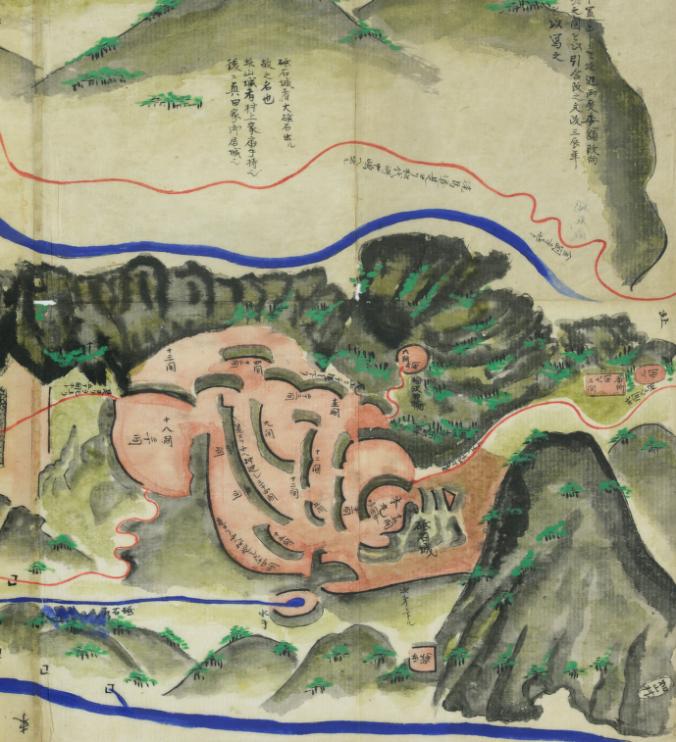
砥石城・米山城址絵図
この砥石城図は、興津正辰が著しておいたものを、藤田周義・落合保明の図と引き合わせて改訂し、さらに文政3年(1820)、近藤孝短主の図で訂正したものである。砥石城(上田市伊勢山)の名は大砥石が出ることによるが、戸石城とも書く。戦国時代、東北信に勢力を張っていた坂木(坂城町)の戦国大名村上義清が、小県方面に対する前線基地として築いたのが始まりといわれる。村上氏の最大の要害地である。その出城の米山城は東・南・西の三方が険しい谷に囲まれており、堅固な要害として知られる。本丸・出城ともに、昭和44年(1969)県の史跡に指定された。天文19年(1550)、信州への進出を図った武田信玄と村上義清との間で行なわれた砥石城をめぐる合戦(砥石合戦)が有名である。
「(武田信玄合戦図)」
絵師:芳宗、板元名:上総屋岩吉、出版年:嘉永2年(1849) 右上に身延山が描かれている。
[日本古城絵図] [第5帙 東海道之部 (4)] 65 古府中信玄古城絵図
古府中は戦国期の武田氏の本拠地であった甲府(府中)のことで、天正9年(1581)武田勝頼が移転した新府(現韮崎市)に対しての呼称。古府中は、文禄年間(1592-1596)からの甲府城建設に伴い南部の商工業者居住区域が新城下に組込まれ、北部の東西8町50間・南北15町2間は古府中村として再設定された(日本歴史地名大系『山梨県の地名』)。
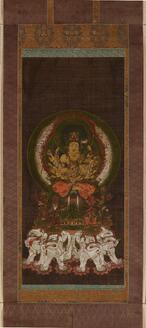
The Bodhisattva Fugen Enmei
1幅、作者:武田逍遥軒筆、安土桃山時代(16世紀)、絹本着色、84.2x37.9センチ 普賢延命像は、御産祈願や長寿延命を祈る普賢延命法の本尊とされている。台座の框部にある金泥の「逍遥軒筆」の款から、逍遥軒と号し、他にも数点の作品が伝わる武田信玄の弟・信廉(?-1582)の作と推測される。クセの強い像容は伝統的な仏画とは違う感覚を感じさせる。
(見聞編輯)貫珠録 花押朱印集 写
花押と朱印を集めたもの。花押は自署の代わりに書く記号で、印判と区別して書判(かきはん)という。他人の模倣や偽作を防ぐため種々の工夫がこらされている。この貫珠録には徳川家将軍の家康から10代家治までの花押朱印、紀伊尾張水戸の御三家、家康の三傑(井伊直正・本田忠勝・榊原康政)、武田家(信玄・勝頼・信虎等)、上杉謙信、今川義元、北条家5代、豊臣家5家老、総持寺・永平寺公文之璽、和歌四天王(頓阿・兼好・浄辦・慶雲)などの花押が「水戸花押藪」という書物や「畠山牛庵家蔵」などから採録されている。この書物の後半は、佐久の名刹にかかわる古文書の花押で、佐久市前山の貞祥寺へ永禄7年(1564)武田信玄、慶長2年(1597)仙石秀久、天正15年(1587)芦田康国などが与えた花押等、また田野口城主依田信蕃の蕃松院へ家光が与えた朱印状、武田信玄・勝頼の龍雲寺宛書判状、天正10年(1582)滝川一益の花押などが収められている。
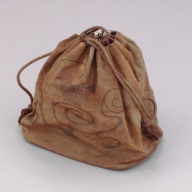
信玄袋
女持ちの雑貨を入れる袋物。信玄袋の名前の由来は、信玄弁当(三つ重ねの弁当)を入れたため、信玄(甲斐絹の隠語)を用いたため、信玄の肖像画の背後にある袋物に似ているためなどの説があるが不詳。
Portraits, ukiyo-e paintings, etc.
Twenty-Four Generals of Shingen Takeda
Battles of Kawanakajima
Videos
Past Exhibitions
| Title | shusai | Place | open | close |
|---|---|---|---|---|
Institutions Holding Related Materials
The National Diet Library (NDL), founded in 1948, is the library which belongs to the Diet. The NDL assists the activities of the National Diet. The Library collects and conserves materials and information both from Japan and abroad, serving as a foundation of knowledge and culture and providing library services to administrative and judicial entities and Japanese citizens.
As Japan’s representative museum, Tokyo National Museum collects, preserves, displays, and researches the cultural properties of Asia with a focus on Japan, and also provides educational programs.
The National Archives is an organization for preserving, as historical materials, public records and archives of importance transferred from state organs, and providing them for public use, with the aim of achieving appropriate preservation and use of such public records and archives that are kept in the National Archives or state organs as historical materials.
he National Museum of Ethnology, Japan (Minpaku) is the only research institute of cultural anthropology and ethnology in the world, that is equipped with one of the world’s largest museum facilities as well as post-graduate educational facilities.
The University of Tokyo is promoting the construction of digital archives. The University of Tokyo Archives, The University Museum, Information Technology Center, and University of Tokyo Library System collaborate on this project.
The Kansai University Open Research Center for Asian Studies (KU-ORCAS) will open up the university's "knowledge" to the whole society by making the digital archives accessible to all people around the world, as well as by opening up our research resources, research groups, research know-how, and research results. In addition to providing useful data not only to East Asian researchers but also to researchers in other fields, businesses, local governments, and citizens, we aim to return the results of our research to society by discovering new value in the humanities.
The Tokyo Fuji Art Museum is founded on November 3, 1983, in Hachioji, a thriving university town in the western suburbs of the Japanese capital. Priding itself as “a museum creating bridges around the world” to facilitate the exchange of different cultures, our museum has forged cordial relations with art museums and cultural institutes in 32 countries and territories to date. We do so by bringing the world’s finest works of art to Japan while reciprocating in kind by introducing the finest Japanese treasures to the world through special exhibitions that showcase their beauty and wonder through a unique new set of prisms and perspectives. Our museum possesses some 30,000 pieces of artworks from various periods and cultures including Japanese, Eastern and Western works, ranging from paintings, prints, photography, sculptures, ceramics and lacquer ware to armor, swords and medallions. Especially noteworthy is its outstanding collection of Western oil paintings that spans a five-hundred-year period from the Renaissance, Baroque, Rococo, and Romanticism to Impressionism and contemporary art, as well as its exceptional collection of photographic masterpieces that can give an overview of the history of photography from the birth of the photograph to the present age.
山梨県甲府市にある。
「風林火山史跡巡り」と題し、様々な史跡を詳しく紹介している。
公益社団法人やまなし観光推進機構
所在地は長野県長野市。
信玄の墓がある(山梨県甲州市)。
財団法人 歴史博物館 信玄公宝物館(山梨県甲州市)
External Links
『甲陽軍鑑』抜粋
山梨県立博物館の展示案内
長野市「信州・風林火山」特設サイト(ながの観光コンベンションビューロー)
武田信玄の生涯を紹介。東建コーポレーション監修。
武田信玄と上杉謙信の戦いを通して戦国時代を知る。
武田信玄像(江戸末、写)を見ることができる。
References
- サンプルページ「武田信玄」の項。
- サンプルページ「武田信玄」の項。
- サンプルページ「武田信玄」の項。