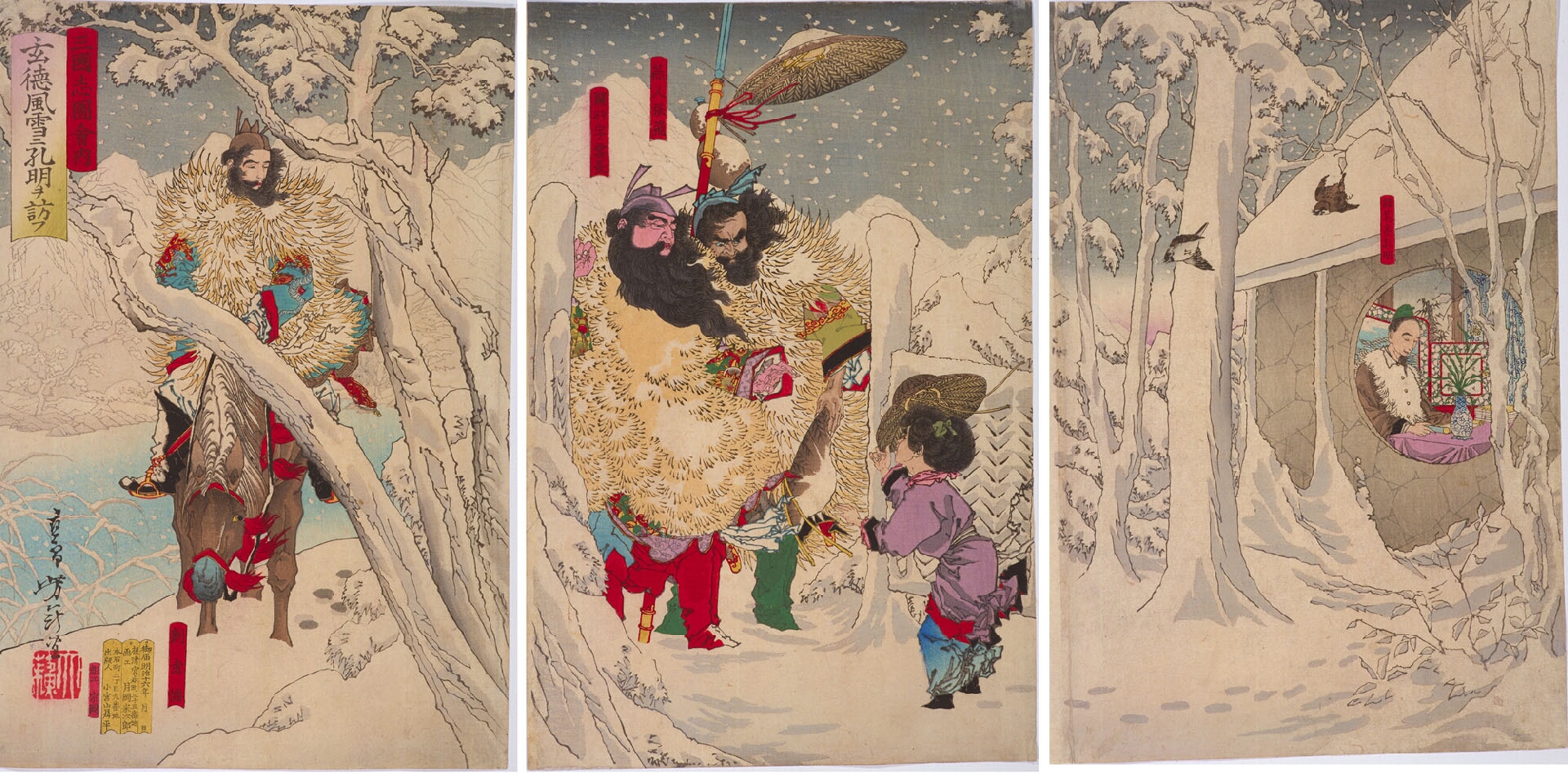
Tsukioka Yoshitoshi
An Ukiyo-e artist representing the late Edo period to the Meiji era. He gained popularity for his bold ideas and compositions, as well as his high painting skills.
1839-1892 (A.D.)
Tsukioka Yoshitoshi was an ukiyo-e artist from the late Edo period to the early Meiji era. His real name was Yoshioka Yonejirō, and his pseudonyms were Ikkaisai, Taiso and among others. He is said to have been adopted by his relative Tsukioka Sessai, thus taking the family name "Tsukioka". In 1850, at age 12, he became a disciple of Utagawa Kuniyoshi and named himself "Yoshitoshi". He began painting in earnest around 1860, and became a popular painter in 1866 when he collaborated with fellow student Ochiai Yoshiiku on a series of atrocity paintings called "Eimei nijyūhasshū-ku". He produced a diverse series of nishiki-e (multi-colored woodblock prints), mainly inspired by history and Japanese/Chinese folklore, which included historical paintings, warrior paintings, portraits of beautiful women, and horror paintings. He was well received for his creativity which he inherited from Kuniyoshi, his powerful and bold compositions, and his high painting skills that incorporated the realism of Western-style paintings, and was listed as the most popular Ukiyo-e artist in the book "Tokyō Ryūkō Saiken-ki" (Guide to Popular Trends of Tokyo) published in 1885. He was also active in the field of news reporting, producing nishiki-e related to events at the end of the Edo period and the Meiji Restoration, and the Satsuma Rebellion that took place in 1877, as well as "nishiki-e newspapers", which introduced events that appeared in newspapers with nishiki-e, and illustrations for "ko-shinbun", or newspapers for ordinary people. In 1882, he joined the newspaper, "Eiri Jiyū Shinbun-sha", and later the "Jiyū Tō" in 1884, and the "Yamato Shinbun" in 1886. At the same time, he also illustrated various books, including translated Western novels and reprints of Edo (present Tokyo) caricatures. His representative works include "Tsuki-no-Hyakushi", a series of 100 nishiki-e depicting Japanese and Chinese stories and folklore featuring the moon.The artist Mizuno Toshikata became his disciple.
Related People, Things and Events
Books
Related Works
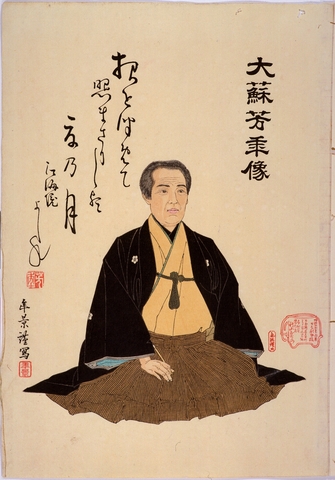
月百姿 大蘇芳年像
月岡芳年の弟子、金木年景が描いた芳年の死絵。芳年は、明治25年(1892)に、54歳で没した。「夜をつめて 照まさりしは 夜の月 江梅院よし年」と辞世の句も添えられている。
桃太郎豆蒔之図
安政6年(1859)。芳年の初期の作品。桃太郎が豆を蒔いて鬼を追い出しており、鬼の背後には薄墨でさまざまな疫神が描かれている。
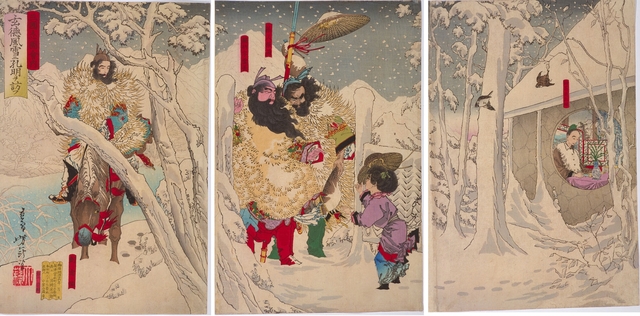
「通俗西遊記 黄風王」
元治元年(1864)。中国明代に成立した長編小説「西遊記」をテーマにした錦絵シリーズ。芳年の初めての本格的な物語絵の揃物。西遊記は、文化3~天保6年(1806~35)にかけて日本で読本が刊行されたが、錦絵シリーズとしての刊行は本作が最初。
「和漢百物語」 「小野川喜三郎」
慶応元年(1865)に刊行された「和漢百物語」は、日本と中国の怪奇譚をテーマにした、芳年の初期のシリーズ。解説は仮名垣魯文らが担当。本図は、大入道に煙管の煙を吹きかける名力士、小野川喜三郎を描く。
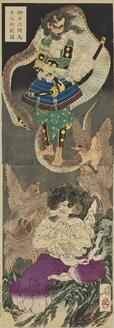
「豪傑奇術競」 「岩藤局」「大蛇丸」「仙冠者義虎」「大友若菜姫」「魔陀羅丸」「須美津冠者義高」「毛利宗意軒」「天狗小僧霧太郎」「楠胡摩姫」
明治2年(1869)。読本や合巻、歌舞伎に登場する、妖術奇術を使うキャラクターを一堂に集めた作品。
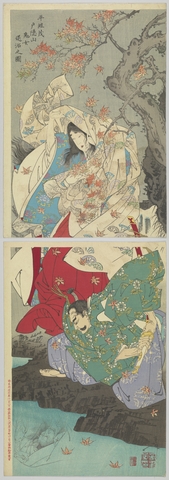
「英名二十八衆句」 「因果小僧六之助」
「英名二十八衆句」は、兄弟子の落合芳幾と14図ずつ分担して描いた合作。講釈や歌舞伎の刃傷場面を題材としたシリーズで、慶応2~3年(1866~67)刊行された。
月百姿 玉兔 孫悟空
明治18~25年(1885~92)の約8年間にわたって出版された月をテーマにした錦絵シリーズ。月岡芳年晩年の代表作。
くらびらき
明治24年(1891)。月岡芳年が制作した最後の錦絵。お正月の蔵開き(鏡開き)が描かれており、金太郎がまさかりで鏡餅を開き、その姿を山姥が隣で見つめている。
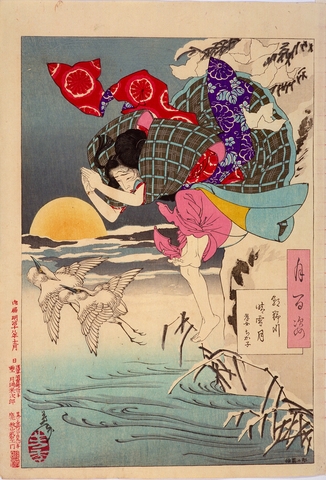
月百姿 朝野川晴雪月 孝女ちか子
明治18~25年(1885~92)の約8年間にわたって出版された月をテーマにした錦絵シリーズ。月岡芳年晩年の代表作。
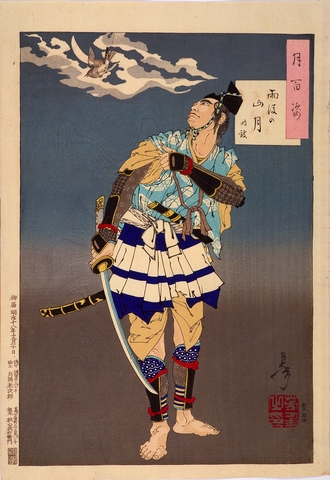
月百姿 雨後の山月 時政
明治18~25年(1885~92)の約8年間にわたって出版された月をテーマにした錦絵シリーズ。月岡芳年晩年の代表作。






Original paintings
Newspapers
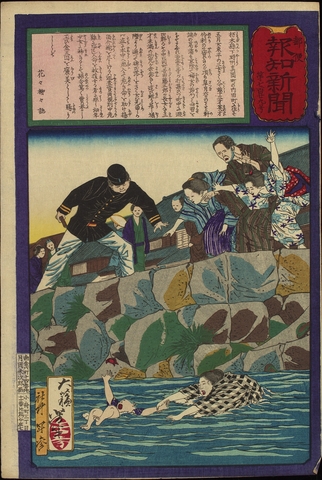
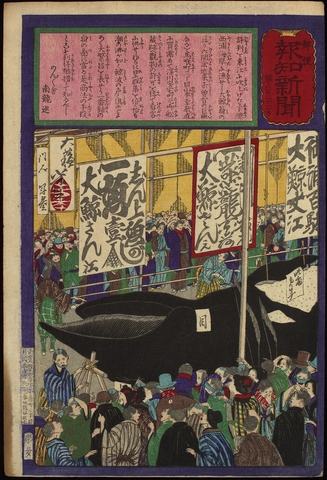
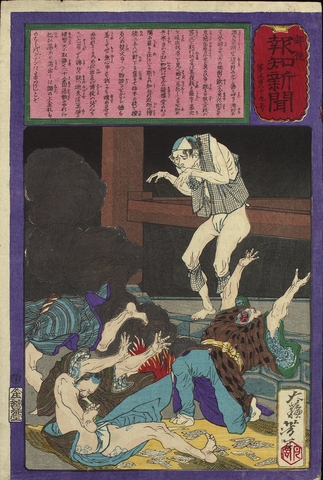
郵便報知新聞 第729号
「郵便報知新聞」を元記事に絵草紙屋から発行された錦絵新聞。新聞に掲載された事件を物語性をもたせたり、教訓を含めたりしながら錦絵で紹介する。月岡芳年は、写実的な筆致で「郵便報知新聞」の錦絵新聞を手掛け、人気を博した。
やまと新聞 第二百九十六号附録 やまと新聞附録 第十二 近世人物誌
「やまと新聞」の定期購読者特典として月一回配布された、月岡芳年の錦絵シリーズ「近世人物誌」。「やまと新聞」が始めた新聞の錦絵の附録は好評だったようで、他社も追随した。
かなよみ新聞 第八百九拾壹号
明治8年(1875)に仮名垣魯文によって横浜で創刊された小新聞。明治10年(1877)には東京に進出した。明治13年(1880)の廃刊まで、1400号が刊行された。


Historical paintings and war paintings
Paintings of beautiful women
Landscape paintings
Past Exhibitions
| Title | shusai | Place | open | close |
|---|---|---|---|---|
Institutions Holding Related Materials
- National Diet Library
The National Diet Library (NDL), founded in 1948, is the library which belongs to the Diet. The NDL assists the activities of the National Diet. The Library collects and conserves materials and information both from Japan and abroad, serving as a foundation of knowledge and culture and providing library services to administrative and judicial entities and Japanese citizens.
- 東京都立中央図書館(東京都港区)
江戸時代後期から明治時代中期の貴重な資料を保管する「特別文庫室」にて、月岡芳年の錦絵を多数所蔵。資料請求を行えば、室内で資料の閲覧が可能。
- 太田記念美術館(東京都渋谷区)
浮世絵専門美術館。五代太田清蔵が蒐集した約12,000点を含めた約14,000点の浮世絵を所蔵。月岡芳年の作品も所蔵し、企画展などで公開。
- 江戸東京博物館(東京都墨田区)
江戸東京の歴史と文化を実物資料や復元模型等を用いて紹介。月岡芳年の作品を所蔵。
- 近代日本人の肖像 月岡芳年(国立国会図書館)
月岡芳年の経歴、肖像を掲載。
- 江戸東京博物館 収蔵品検索 月岡芳年
江戸東京博物館に収蔵されている月岡芳年の作品が閲覧できる。
References
- 日立デジタル平凡社,平凡社
- 月岡芳年 [画],町田市立国際版画美術館 監修,二玄社
- 月岡芳年 [画],町田市立国際版画美術館 監修,二玄社
- 月岡芳年 [画],新人物往来社 編,新人物往来社
- 岩切友里子監修,平凡社
- 日野原健司 著,敬文舎