
日本の貨幣
〜館長あいさつ〜
こんにちは、館長です。ここでは日本で使われてきた貨幣についての展示をしております。ぜひ、最後までご覧になってください
〜この展示について〜
日本の貨幣の歴史をまとめました。昔の貨幣のシステムはどうなっていたのか、また、どのような硬貨・紙幣を使っていたのか気になり展示しました。
通貨
- Fuhonsen
内蔵寮寄贈,Imperial Household Ministry,東京国立博物館,Tokyo National Museum
<p> 方孔の上下に「富」「本」の文字、左右に七曜文を鋳出す。その存在は江戸時代から知られていたが、昭和61年に(1986)に平城京跡で出土して、古代の貨幣と確かめられた。近年、富本銭の鋳型が発見された飛鳥寺池遺跡は、その製造地であった可能性が高い。 <br /></p>
館長からの一言
富本銭は日本で最初である683年に鋳造されたとされている貨幣です。「民を富ませる基本は食と貨幣にあり」の故事に由来する「富本」の2字が刻まれました。
壬申の乱後、飛鳥浄御原令などで国内の天皇中心の体制を強化していた天武天皇が、683年に「銅銭を用い、銀銭を用いないように」との詔を発し、これに基づき、国家が主導して鋳造された(飛鳥池工房遺跡)と考えられています。富本銭は物の交換をする際に使われたという説と財産の象徴として墓に埋めるために作られた「まじない銭」だったという説の2説があり、未だに明らかになっていません。
- Coin(Wadō Kaichin/Kaihō)
東京国立博物館,Tokyo National Museum
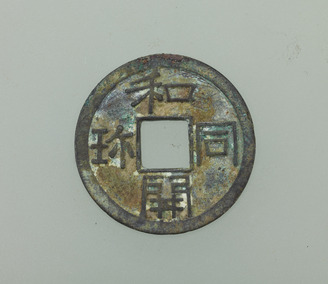
<p>和同開珎+わどうかいちん、わどうかいほう+は日本で最初の流通用の鋳造貨幣です。「続日本紀+しょくにほんぎ+」によれば、和銅元(708)年に武蔵国秩父郡の銅が献上されたことがきっかけで鋳造されたといいます。近年、富本銭+ふほんせん+が日本の最初の銅銭であることが分かりましたが、富本銭はまじないに使われたという説があります。<br /></p>
館長からの一言
和銅開珎は708年6月3日(和銅元年5月11日)に作られ、富士銭よりも後に発行されましたが全国的に流通し制度も整備されている最初の硬貨で本朝(皇朝)十二銭の1番目です。
本朝(皇朝)十二銭は708年の和銅開珎から963年の乾元大宝まで律令制下の日本で政府が鋳造した12種の銅銭です。当貨幣は発行当初から流通に苦労し、品質低下や物価の下落が問題となったため最終的に963年の乾元大宝を最後に官銭の発行は停止され、次第に流通しなくなったとされています。
- 宋銭
藤井定次郎氏他7名寄贈,東京国立博物館
館長からの一言
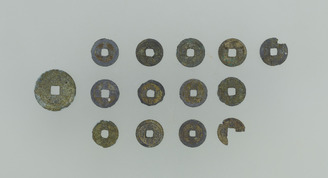
宋銭は鎌倉時代に平清盛が中国から日本に大量に輸入し、日本の実質的な基本通貨として流通するようになったとされています。また、日宋貿易の際に当時の船は軽すぎて転覆しやすかったため、日本に帰る時に重りとして船底に敷き詰め、持ち帰ったことが流通の始まりとも言われています。
- Gold Coins ("Koban")
東京国立博物館,Tokyo National Museum
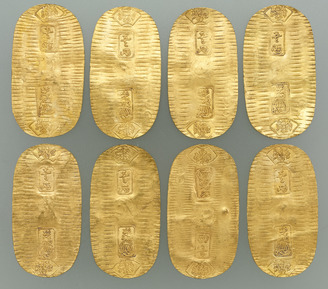
<p>Characterized by various marks and seals, [koban] coins were in circulation throughout the Edo period (1603–1868). They were mainly made of gold-silver alloys of differing ratios depending on when they were minted.<br /></p><br /><p>The koban and ichibukin are gold coins that circulated during the Edo period, which began in the 17th century. Both were made of a gold-silver alloy, and because the ratio used varied over time, it is possible to determine the approximate date a coin was issued by examining its composition. Four ichibukin were equal to one koban.<br /><br />The koban is a flat ellipse, the front of which is marked with fine horizontal lines. A vertical inscription reads “one ryo,” and paulownia crests, long used as symbols of government authority, are visible on its upper and lower ends. The back side of the koban, in contrast, is stamped with small, circular emblems in its lower left section. These circular emblems were stamped into the coins over the course of production to guarantee their quality. Some koban were stamped with more marks that are even smaller. These marks were impressed into the koban by money changers when the coins were used to certify their value. The front of the ichibukin is likewise marked with paulownia crests and the horizontal inscription “one bu,” written from right to left.<br /><br />The coins you see here were discovered in 1956 in Ginza, Tokyo, one of Japan’s foremost shopping districts. During the Edo period, there was a mint for coins in Ginza. These coins were discovered by chance in a dumping site for earth and sand during the reconstruction of a commercial building in Ginza. They consisted of 208 koban and 60 ichibukin. This news was reported with surprise day after day. The details of why this cache of money was buried in the ground, however, remain unknown. It has been a custom in Japan to bury money in the ground, either to appease the land or to hide it for safekeeping, since ancient times. These coins must also have been buried for some purpose.</p>
館長からの一言
江戸時代の貨幣は金や銀でつくられており金座や銀座で鋳造されていました。
次第に国内の金銀の産出量が減少すると、幕府は古い貨幣を回収して新しい貨幣に改鋳することなりました。そのため、江戸時代の貨幣はさまざまな種類があります。例えば、慶長小判、元禄小判、正徳小判などがあります。これらの小判は金の含有量が異なります。
- 明治通宝
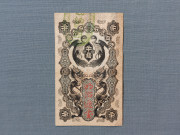
明治政府が明治5年(1872)に発行した紙幣。表面には「二十銭」「明治通宝」などの文字が、裏面には「九〇〇六 すむむ」などの文字が印刷されている。■画像の二次利用をする場合には、所蔵・撮影・提供などを「江差町教育委員会」として下さい。
館長からの一言
明治時代の貨幣は、明治通宝(10円札)、10円金貨、1円銀貨、1銭銅貨などがあります。
明治通宝とは、日本最初の紙幣として知られています。当初は、ドイツに依頼して発行していました。従来の硬貨とは異なり、物理的な価値はない点は注目すべきポイントです。
貨幣の歴史
〜展示を見終わった人へのメッセージ〜
最後まで、見てくださりありがとうございました。
過去を振り返ると、今の貨幣システムの高度さが実感出来ると思います。これを機に、お金の歴史や現在のシステムの興味を持っていただけたらうれしいです。