縄文時代
館長からのあいさつ
皆さんは縄文時代といえば何を思い浮かべますか。縄文土器や土偶など様々なものを思い浮かべると思います。この博物館は縄文時代のものを集めました。楽しんで見ていってください。
この展示について
この博物館は縄文時代に関するものを有名なものからあまり知られていないものまで集めました。
- 縄文土器 深鉢
國學院大學博物館
小形の深鉢。口縁部はやや外反する無文土器。胎土には繊維が多量に混入され、表面の調整は丁寧である。
この土器は縄文時代初期に作られたもので縄文土器の名前の由来になった縄の模様はなく形状も深型と呼ばれる縄文時代初期に多く作られたものの形をしています。
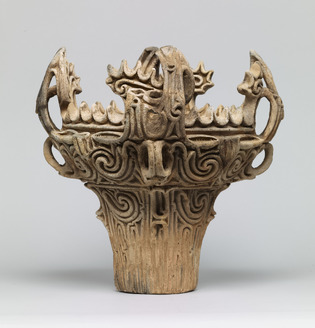
- Vessel with a Flame-Like Rim
東京国立博物館,Tokyo National Museum
<p>Many Japanese people have seen this kind of deep bowl with flame-like ornamentation in history textbooks. The Jomon period began around 13,000 BC and lasted for over 10,000 years. Bowls with flame-like ornamentation are the most decorative of all Jomon earthenware. They were produced during the mid-Jomon period, an era marked by an outstanding sense of form.<br />Decorations cover almost the entire surface of this object. This led some to suggest that it was used for ceremonial purposes. However, because it contains markings suggestive of boiling or burning, scholars now believe it was used to cook nuts, berries, or meat.<br />This bowl was excavated at the Shinano River basin in Niigata Prefecture. Many other similar objects were also unearthed in this area. It is intriguing how objects resembling blazing flames were produced in such a snowy region. The characteristic handles of bowls with flame-like ornamentation also resemble the comb of a rooster. When they made these objects, what images do you think the Jomon people had in their minds? What kind of images come to your mind when you look at this bowl?</p><br /><p>Pottery like this was crafted by hunter-gatherers who lived in Japan 5,000 to 4,000 years ago. It was used to boil nuts, meat, and other food. Scholars are unsure what the handles are meant to represent, but they are said to resemble leaping flames. Their dynamic shape illustrates the creative prowess of these ancient people.</p>
皆さんが縄文土器と言われたらまず思い浮かべ、教科書などによく載っているこの土器は、縄文時代中期に作られました。縄文時代の中期は華やかな装飾が施されている土器が多く、この火焔型土器も一つです。
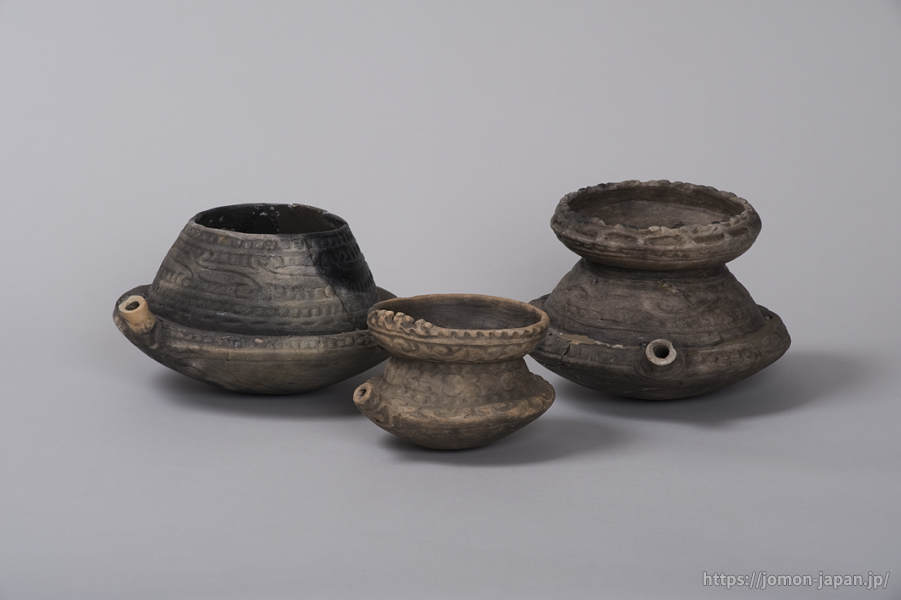
- Izumiyama Site: Kamegaoka-style pots
縄文時代の晩期に、東北地方から北海道南部にかけて、亀ヶ岡式土器がよく作られるようになりました。
亀ヶ岡式土器は、複雑に飾り立てた土器で、様々な形があり、赤や黒の色を塗った土器が多いことでも知られています。
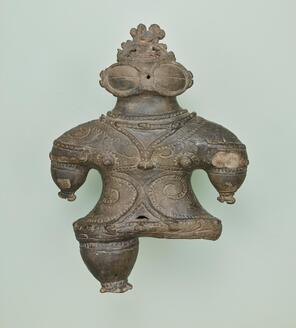
- Figurine ("Dogū") with Goggle-Like Eyes
東京国立博物館,Tokyo National Museum
<p>This dogu clay figurine was made during the Jomon period. It is one of the most famous dogu figurines in Japan. It was found during the Meiji era and named the 'Dogu with Goggle-shaped Eyes' because its eyes resemble goggles worn to protect the eyes from the glare of snow. However, this is now believed to be just an exaggerated depiction of the eyes. The ears, nose, and mouth are quite small compared to the large eyes. Furthermore, stubby legs and arms are attached to a broad-shouldered torso with a narrow waist. A closer inspection reveals traces of red coloring around the head and so on. It is assumed the entire surface was originally painted red.<br />Dogu figurines are also valuable sources of information about contemporary Jomon fashions. For example, it is thought the crown-shaped projection on the head shows how women wore their hair tied up with a comb attached. The adornments around the neck are also said to represent necklaces and chest ornaments. The enjoyment of this dogu figurine is enhanced by trying to imagine how the Jomon folk used to dress.<br />Dogu figurines emerged during the Incipient Jomon period and they always depicted women. This is apparently because women created and nurtured life, with the figurines subsequently used in rituals to pray for safe births, prosperous descendants, and bounteous harvests.</p>
この土偶は青森県にある亀ヶ岡石器時代遺跡から発見されたとても有名な土偶で亀ヶ岡文化を象徴する物です。亀ヶ岡文化とは亀ヶ岡石器時代遺跡から名付けられた文化であり、東北地方から、北海道南部で縄文時代晩期に栄えた文化です。
- 釣針(獣骨) 堤貝塚 縄文時代
-
動物の骨でできているこの釣り針は貝塚から見つかりました。通常の土だと酸性が強く腐ってしまいますが貝塚だとカルシウムが強く腐らずに発見することがでできます。またこの貝塚から発見されている釣り針は外側にかえしがあり、現代のものとは構造が異なります。


最後まで見ていただきありがとうございました。縄文時代に関することは分からないことも多く、これから新たに発見されるのが楽しみですね。