松尾芭蕉
江戸時代前期の俳人である。滑稽や俳謔を主とする俳諧を「蕉風」と呼ばれる芸術性の高い句風として確立した。後世では俳聖と呼ばれる日本最高の俳諧師の一人である。1644年に伊賀上野(三重県)で次男として生まれる。19歳のころ藤堂新七郎家に奉公し俳諧に親しんだ。1684年から85年にかけて『野ざらし紀行』、1687年から88年にかけて『笈の小文』、1688年8月には『更科紀行』の旅に出る。1986年の3月から9月に『奥の細道』の旅をし、1694年4月に『奥の細道』の素龍清書本が完成した。その後、10月12日に大阪南御堂前の貸屋敷で病没する。岐阜の大垣を気に入り、生涯で四回訪れた。
松尾芭蕉
松尾芭蕉が書いたものや作った句を集めた。
松尾芭蕉は自作の句や文章に改定の努力を惜しまない「推敲の人」であった。自筆の草稿本のほかに、推敲改訂を重ねた多くの写本が残されている。
直筆
Letter by Matsuo Basho
Matsuo Basho (1644-94) was a haiku poet who lived during the early Edo Period. Hailing from Ueno in Iga Province (today’s Mie Prefecture), he actually started out as a samurai, serving as attendant to Yoshitada (1642-66), the third son of Todo Yoshikiyo (?-1674), the Head of Samurai Affairs for the local Ueno government. Later, Basho went to Kyoto, where he studied Teimon School haikai (a school of haiku originated by Matsunaga Teitoku) under Kitamura Kigin (1625-1705) and calligraphy under Kitamuki Unchiku (1632-1703). After 1680, he lived in a house named Basho-An (lit. a hut made of banana leaves) in Fukagawa Town in Edo. Basho, however, is best known for his journeys throughout Japan that served as inspiration for many of his haiku poems, which were made popular in collections such as Nozarashi Kiko (The Records of a Weather-Exposed Skeleton), Oi-no-Kobumi (Travel-worn Satchel), and Oku-no Hosomichi (The Narrow Road to the Deep North). Incorporating the aesthetic values of sabi (an antique appearance), shiori (the identification of men with nature), hosomi (sensitivity) and karumi (transience), Matsuo Basho became the founder of a new style of haiku composition and trained numerous disciples, with Enomoto Kikaku (1661-1707) and Mukai Kyorai (1651-1707) being two of the most well-known. Immediately before his death, Basho composed one of his last pieces of this new style at a joint haiku party held at the home of Watarai Sonome (1664-1726) in Osaka. An extremely famous poem, know as his farewell verse, it goes as follows: “Taken ill on my trip, my dreams wonder through fields of withered grass.” While famous for his poems, Basho also wrote letters, many of which can be found in the Basho Shokanshu (lit. Collection of Basho’s Letters). The collection contains one in particular that he sent to his disciple Dosui on April 10, 1691, when Basho was 48. Basho writes, “You are a butterfly.” Because this same reference in used in the letter exhibited here, one can conclude that it too is addressed to Dosui. “You are a butterfly” was also the title of a composition, about a “butterfly dream,” found in Discussion on Making All Things Equal (Burton Watson’s translation) by Chuang-tzu (Ch. Zhuangzi; famous Taoist philosopher). In the dream, Chuang-tzu becomes a butterfly and, his awareness blurred, wonders if he is a philosopher who thinks he is a butterfly or a butterfly who dreams that he is a philosopher. The “butterfly dream” episode was often quoted to show elusive identity and the ephemeral nature of human life. In this letter, Basho likens his relationship with Dosui to the relationship between Chuang-tzu and the butterfly.
松尾芭蕉関係資料
蕉風俳諧の祖である俳聖松尾芭蕉に関連する一連の書跡で、伊賀市所蔵の2点を含め、伊賀市芭蕉翁記念館に一括収蔵されているものである。 これらの資料は、芭蕉が江戸や郷里上野、または旅先にて記したもので、芭蕉が凡兆・去来を相手にして巻かれた歌仙で、のちに『猿蓑』に収録された「市中は」歌仙巻子本、芭蕉の師である北村季吟から与えられた俳諧の作法書『埋木』(本文は芭蕉自筆、奥書は北村季吟)、芭蕉病没の2日前に兄半左衛門にあてて自らしたためた遺言状である松尾半左衛門宛書簡などの貴重な書状・書簡類の他、「古里や」発句切、「華咲きて」等五句発句切など高名な発句も含まれる。これらの保存状態は極めて良好であり、いずれも紙本墨書、『埋木』書冊本・列帖装、「市中は」歌仙の巻子、「中尾源三衛門 浜市右衛門あて書状」の巻子本以外は全て掛軸装である。 これらの書状・書簡類は、芭蕉研究の権威、大谷篤蔵氏監修の『芭蕉全図譜』(岩波新書刊)にも採録され、いずれも芭蕉真筆とみて間違いないものである。伊賀市出身の芭蕉の真筆資料がこれほどまとまって収蔵されている例はなく、芭蕉研究の基本的な資料としても県指定文化財にふさわしいものと考えられる。
Letter
松尾芭蕉は、江戸時代前期の俳諧師で、元禄時代に独自の蕉風俳諧を樹立した。芭蕉は書を北向雲竹に学んだといい、能書家としても知られる。芭蕉はこの消息の末尾に「十一日 はせを(ばしょう)」と自らの名をかなで記している。
Letter by Matsuo Basho
Matsuo Basho (1644-94) was a haiku poet who lived during the early Edo Period. Hailing from Ueno in Iga Province (today’s Mie Prefecture), he actually started out as a samurai, serving as attendant to Yoshitada (1642-66), the third son of Todo Yoshikiyo (?-1674), the Head of Samurai Affairs for the local Ueno government. Later, Basho went to Kyoto, where he studied Teimon School haikai (a school of haiku originated by Matsunaga Teitoku) under Kitamura Kigin (1625-1705) and calligraphy under Kitamuki Unchiku (1632-1703). After 1680, he lived in a house named Basho-An (lit. a hut made of banana leaves) in Fukagawa Town in Edo. Basho, however, is best known for his journeys throughout Japan that served as inspiration for many of his haiku poems, which were made popular in collections such as Nozarashi Kiko (The Records of a Weather-Exposed Skeleton), Oi-no-Kobumi (Travel-worn Satchel), and Oku-no Hosomichi (The Narrow Road to the Deep North). Incorporating the aesthetic values of sabi (an antique appearance), shiori (the identification of men with nature), hosomi (sensitivity) and karumi (transience), Matsuo Basho became the founder of a new style of haiku composition and trained numerous disciples, with Enomoto Kikaku (1661-1707) and Mukai Kyorai (1651-1707) being two of the most well-known. Immediately before his death, Basho composed one of his last pieces of this new style at a joint haiku party held at the home of Watarai Sonome (1664-1726) in Osaka. An extremely famous poem, know as his farewell verse, it goes as follows: “Taken ill on my trip, my dreams wonder through fields of withered grass.” While famous for his poems, Basho also wrote letters, many of which can be found in the Basho Shokanshu (lit. Collection of Basho’s Letters). The collection contains one in particular that he sent to his disciple Dosui on April 10, 1691, when Basho was 48. Basho writes, “You are a butterfly.” Because this same reference in used in the letter exhibited here, one can conclude that it too is addressed to Dosui. “You are a butterfly” was also the title of a composition, about a “butterfly dream,” found in Discussion on Making All Things Equal (Burton Watson’s translation) by Chuang-tzu (Ch. Zhuangzi; famous Taoist philosopher). In the dream, Chuang-tzu becomes a butterfly and, his awareness blurred, wonders if he is a philosopher who thinks he is a butterfly or a butterfly who dreams that he is a philosopher. The “butterfly dream” episode was often quoted to show elusive identity and the ephemeral nature of human life. In this letter, Basho likens his relationship with Dosui to the relationship between Chuang-tzu and the butterfly.
Mortar and Pestle
「元禄七の春/ほうらいにきかばやいせの初便/其としの冬/ありあけも三十日にちかし餅の音/ばせを」


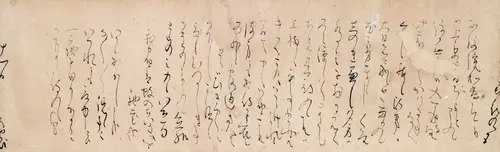


句
上田の散歩道松尾芭蕉の句碑
以前は広かった御岳さんの境内に、芭蕉の句「古池やかわずとびこむ水の音」の碑が建っていた。現在は住宅の軒に半分隠れている。
伊賀市長田芭蕉の森(俳句の庭)の松尾芭蕉句碑
貞亨4年冬の作。『野ざらし紀行』から帰ってからの芭蕉は名声を高めたのだが、貞享4年再び旅立ちの決意をする。その餞別の句会で詠まれた句。「しぐれ」は漢詩の世界では無常なもの、定め無きものを表すが、今度の旅もその心境であると言うことを強く表現した。冬の作。
伊賀市長田西蓮寺の松尾芭蕉・服部土芳句碑
この句は服部土芳の『蓑虫庵集』にあるもので、宝永6年なつのこと西連寺へ墓参りに訪れた土芳が、寺の床の間に「無常迅速」と題した、芭蕉のこの句があるのを知って詠んだという。
伊賀市富永新大仏寺の松尾芭蕉句碑
近年この句碑建立の由来書が見つかった。それによると建立者長月庵和翁の直筆で「俊乗の発願した昔のようにお寺が復旧した。芭蕉のかげろうの句をみなに知らせるため、住職が私に筆をとらせた」とある。通称丈六塚。丈六の本尊も今は石台上になく、その上には空しく陽炎が。
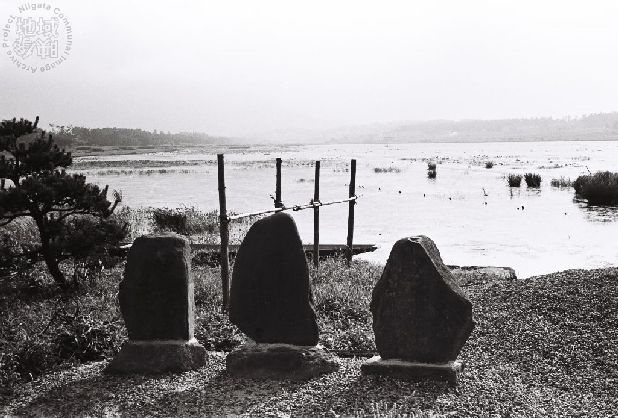
上堰~松山~松ノ屋~佐潟
1973(昭和48)年7月8日 新潟県新潟市西蒲区 上堰~松山~松ノ屋~佐潟の風景 松尾芭蕉の句碑
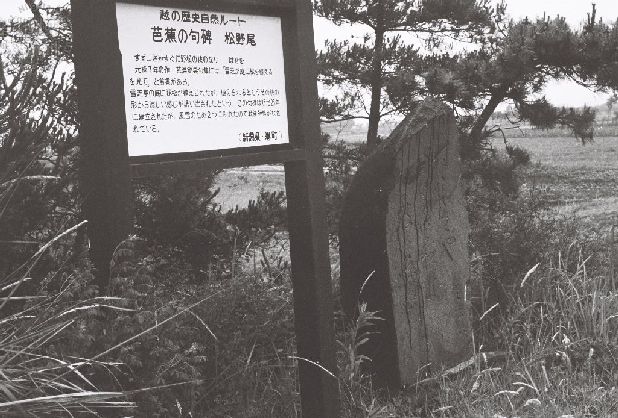
松野尾
1973(昭和48)年6月23日 新潟県新潟市西蒲区 松野尾の山林 松尾芭蕉の句碑と、解説の立て看板


奥の細道
松尾芭蕉の著作、特に奥の細道についてまとめる。
ほかの著書
更科紀行 芭蕉自筆稿本
縦20.1cm、全長2.28m。更科紀行は貞享5(1688)年、芭蕉が信濃国更科の名月を観、善光寺詣でて江戸に帰った折の紀行文である。もとは懐紙5枚に書き継がれたもので、料紙は薄美濃紙を用い、本文は「さらしなの里、おはすて山の月見の事」云々以下八二行を存し、末に「はせを」の自署がある。文中には訂正の跡が著しく、所掲の句も抹消加等があって、芭蕉紀行文の現存唯一の草稿本である上、更科紀行の推敲課程を明らかにする意味でも貴重である。


師匠と弟子
松尾芭蕉の師匠と弟子をまとめた。
師匠として有名なのは、北村季吟 北向雲竹である。北村季吟は俳諧の師匠であり、北向雲竹は芭蕉に書法を授けた。
弟子として有名なのは、其角 嵐雪 去来 丈草 支考 北枝 許六 曽良 野坡 越人の十名であり、
「蕉門十哲」といわれる。
師匠
Draft Kaishi by Kitamura Kigin
北村季吟〈きたむらきぎん・1624-1705〉は、江戸時代前期の俳人・歌人・古典学者。名は静厚、通称を久助、別に慮庵・七松子・拾穂・湖月亭などと号した。近江の人。医家の嫡男として生まれ、上洛後、16歳で安原貞室〈やすはらていしつ・1610-73〉に入門。俳諧を学び、ついで松永貞徳〈まつながていとく・1571-1653〉に師事した。天和2年〈1682〉新玉津嶋神社社司となり、元禄2年〈1689〉幕府歌学方に召されて、江戸へ移住した。同4年、66歳で法眼、同12年、法印に叙された。俳諧に古典の解釈を交えた新境地を開拓した人物で、多くの門弟を集めた。松尾芭蕉〈まつおばしょう・1644-94〉は、江戸における弟子の一人。これは発句の詠草。枯淡の味わいを醸しており、晩年の執筆であろう。
Tanzaku by Kitamura Kigin
The multi-talented Kitamura Kigin (1624-1705) was a haikai and waka poet and a scholar of Japanese Classical Studies during the early Edo Period. Kigin’s family was originally from Ohmi Province (Shiga Prefecture) and, for generations, had worked as physicians. Kigin was a physician himself, but like his grandfather and father, he was also a good renga poet, as he had studied under Yasuhara Teishitsu (1610-73) from a young age. When he turned 19, he went to study Japanese classic literature, waka, and haikai under Matsunaga Teitoku (1571-1653). After Teitoku passed away, Kigin, then 30, further deepened his waka learning under Asukai Masaaki and Shimizudani Sanenari. In 1689, Kigin was commissioned by the military government and appointed waka instructor in 1701. All of his descendants eventually assumed this post. In haikai, Kigin was admired to be one of the “Seven Saintly Haikai Poets”, and is remembered for one of his outstanding disciples, Matsuo Basho (1644-94), who later became the haiku master. Kigin contributed greatly to the studies of the Japanese classics by authoring a number of critiques and commentaries, like the “Genji Monogatari (The Tale of Genji) Kogetsu-Sho” (lit. “Commentaries of the Moon over the Lake”) and the “Makurano-Soshi (The Pillow Book) Shunsho-Sho” (lit. “Commentaries of the Spring Daybreak”). Here Kigin wrote down his own waka on undecorated tanzaku strips. With attention paid to the technique of replenishing the brush with ink, he wrote in a carefree, classical style.
Waka Kaishi by Kitamura Kigin
北村季吟〈きたむらきぎん・1624-1705〉は、江戸時代前期の俳人・歌人・古典学者。名は静厚、通称を久助、別に慮庵・七松子・拾穂・湖月亭などと号した。近江の人。医家の嫡男として生まれ、上洛後、16歳で安原貞室〈やすはらていしつ・1610-73〉に入門。俳諧を学び、ついで松永貞徳〈まつながていとく・1571-1653〉に師事した。天和2年〈1682〉新玉津嶋神社社司となり、元禄2年〈1689〉幕府歌学方に召されて、江戸へ移住した。同4年、66歳で法眼、同12年、法印に叙された。俳諧に古典の解釈を交えた新境地を開拓した人物で、多くの門弟を集めた。松尾芭蕉〈まつおばしょう・1644-94〉は、江戸における弟子の一人。多数の著作をのこし、特に古典注釈書は『伊勢物語拾穂抄』『和漢朗詠集註』『源氏物語湖月抄』『万葉拾穂抄』などがあり、後世の古典学者に多大な影響を与えた。俳書『山井』『埋木』『新続犬筑波集』のほか、歌集『新玉津嶋月次百首和歌』などがある。これは、和歌会での詠と思われる3行3字の書式。「「花を待つ」ということを詠める和歌/季吟/恋すてふ心を思ひならふまであやしく花のなど待るらん」
“Eight views of the Xiao and the Xiang” Poem by Kitamuki Unchiku
Kitamuki Unchiku (1632-1703) was a famous calligrapher of the early Edo Period who had been trained by Priest Docho of Mt. Koya (the site of a powerful temple). He showed skill in all three different writing forms, namely the regular script (kaisho), semi-cursive script (gyosho) and cursive script (sousho). However, many of Unchiku’s works are rendered in the Daishi School style as he also studied under Fujiki Atsunao (1582-1649), the head administrator of the Kamo Shrine. Paintings of bamboo in black ink were also among Unchiku’s favorite pursuits. On the other hand, he also showed talent in waka and haiku writing and was, in fact, the calligraphy teacher for the haiku master Matsuo Basho (1644-1694).The exhibit is Chinese poem entitled “Eight views of the Xiao and the Xiang” (Jp. Shoushou Hakkei; Ch. Xiaoxiang bajing; The eight well-known scenes of the area around the confluence of the Xiao and Xiang rivers and Lake Dongting in Hunan Province, China.) is written in the formal regular script, which is followed by a Japanese waka written with Daishi-style influence. The writer’s note at the scroll’s end reveals that this exhibit was written as a decorated exemplar, commissioned by a certain noble.
WakanRoeishu by Kitamuki Unchiku
Kitamuki Unchiku (1632-1703) was a famous calligrapher of the early Edo Period who had been trained by Priest Docho of Mt. Koya (the site of a powerful temple). He showed skill in all three different writing forms, namely the regular script (kaisho), semi-cursive script (gyosho) and cursive script (sousho). However, many of Unchiku’s works are rendered in the Daishi School style as he also studied under Fujiki Atsunao (1582-1649), the head administrator of the Kamo Shrine. Paintings of bamboo in black ink were also among Unchiku’s favorite pursuits. On the other hand, he also showed talent in waka and haiku writing and was, in fact, the calligraphy teacher for the haiku master Matsuo Basho (1644-1694).Five Chinese poems (kanshi) and five Japanese poems (waka) from Wakan Roeishu (Anthology of Japanese Chinese Poems for Recitation) alternate in this brushwork. While the Chinese letters follow the mixture of regular and semi-cursive script, thus reducing the rigid appearance of the kaisho script, the Japanese syllables are written with a Jodai-style influence. From the date written at the scroll’s end, November 1701, we know Unchiku was 69 when he wrote this piece. In both Exhibits A and B, one can see Unchiku’s characteristics that are reflected in Basho’s hand.
北向雲竹筆墨竹自画賛
Kitamuki Unchiku (1632-1703) was a calligrapher in the early Edo Period. He was taught the Daishi-style of calligraphy by the head administrator, Fujiki Atsunao (1582-1649), of the Kamo Shrine. He excelled in detailed small-character writing and later became one of the representative Chinese-style calligraphers of his day. He later taught brush-ink writing to the famous haiku poet Matsuo Basho (1644-1694). Being a talented painter as well as a waka and haiku poet, Unchiku often made drawings of bamboos, this artist’s favorite motif. It is also seen in the exhibit. The refreshing bamboo stalks under the pale moonlight are accompanied by a five-character quatrain written in a typical Chinese style. The letters and the drawing match exquisitely, a testimony to his artistic skills.


弟子
Plum by Takarai Kikaku
宝井(榎本)其角〈たからいきかく・1661-1707〉は、江戸時代前期の俳人。医者竹下東順〈たけしたとうじゅん・1622-93〉の子。榎本は母方の姓。のち、宝井氏を称した。医学を草刈三越に、儒学を服部寛斎〈はっとりかんさい・1667-1721〉に、漢詩を円覚寺の大顛(だいてん)和尚に学ぶ。延宝期(1673~81)の初めに松尾芭蕉〈まつおばしょう・1644-94〉の門に入り、伊達風流で豪放磊落の性格をもって、蕉門の高弟としていよいよ才覚を発揮、蕉門十哲の1人に数えられた。芭蕉没後は、洒落と頓智を本領とした独自の俳風をおこした。本図は、薄墨の月を背景に梅樹を略画する。画を英一蝶〈はなぶさいっちょう・1652-1724〉に学んだというが、大胆で洒脱な筆致はかれの真骨頂であろう。また、独特の筆線は、大師流(弘法大師空海の書流)の書家・佐々木玄龍〈ささきげんりゅう・1650-1723〉の影響。鋭い感覚と豊かな感受性はこの書画の世界にも十分に投影されている。「御秘蔵に墨をすらせて梅見哉其角」
Letter by Kagami Shiko
Mid-Edo Period haiku poet Kagami Shiko (1665-1731) was born in Mino Province (today’s Gifu Prefecture). There, he became a monk, serving at Daichiji Temple, but after about ten years of training, he left the temple and returned to the lay world, thereby adopting the name “Shiko.” His literary talent was first recognized by noted haiku poet Iwata Ryoto (1661-1717), and in 1690, he became one of the disciples of Matsuo Basho (1644-94) and learned his style well. Toward the end of Basho’s life, Shiko accompanied his master from Iga Province (today’s Mie Prefecture) to Osaka and closely served him even to the point of writing the dying poet’s last will. After Basho’s death, Shiko combined his master’s haiku style with his own, named it the Mino Style, and endeavored to disseminate it. He authored many books, including Kuzu-no-Matsubara (Kuzu Pine Fields) and Oinikki (The Diary of worn Satchel).With three haiku poems written in this letter, Shiko asks the addressee, a Hakufu (perhaps a poetry friend), to ask around among other friends to come up with a fourth haiku. This letter sheds light on Shiko’s interesting friendships.


評価される芭蕉
全集に集められた句


他人が書いた松尾芭蕉
松尾芭蕉像
高岡初の町絵師で俳諧にも造詣の深い堀川敬周(1789頃~1858)が俳聖・芭蕉を描き、現三重県出身の画家で俳人の西村十丈園(?~1830)が芭蕉の句を書いた合作。「朝夜さを誰松島ぞ片心」とある。 芭蕉の日本三景の松島への憧れを女性への思いになぞらえ詠んだ句とされていたが、近年この「誰」は平安後~鎌倉初期の僧・見仏上人と解釈されている。
Oku no Hosomichi (The Narrow Road through the Provinces)
<p>The text comes from the famous travelogue Oku no hosomichi by the haiku poet Matsuo Bashō (1644–1694). It describes the poet’s epic journey on foot through north-eastern Japan and was written in form of verse and prose. For this set of handscrolls, Buson copied its text and added his own illustrations.</p>


〈参考〉
大垣市奥の細道むすびの地記念館 展示
http://www.basho-ogaki.jp/